In the slums of Rio, communities have to choose between hunger and coronavirus
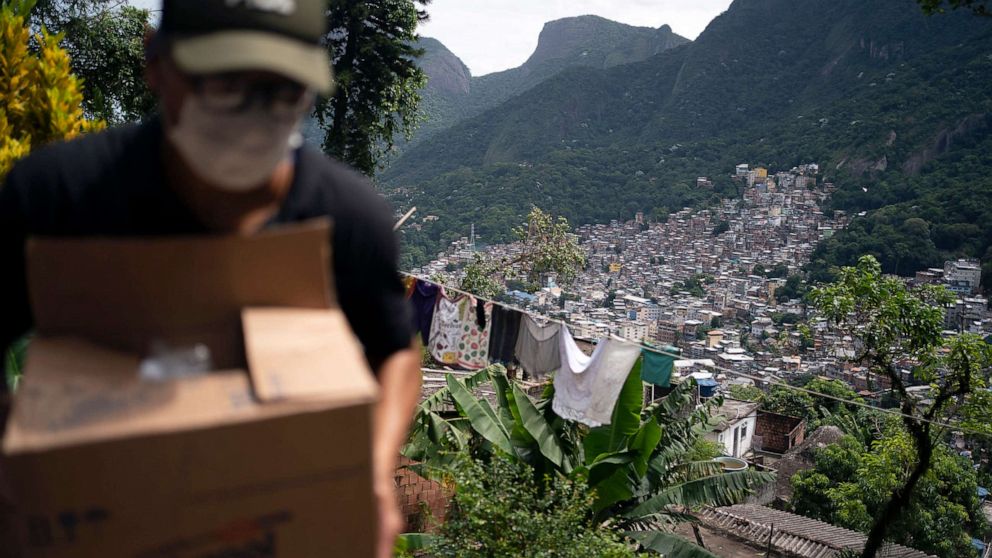
RIO DE JANEIRO -- Many of the 1.5 million people living in the slums of Rio de Janeiro have been forced into making heartbreaking decisions as the novel coronavirus threatens their very survival.
According to the Data Favela research institute, 70% of families living in Brazil’s slums, known as favelas, have already experienced a drop in income due to the coronavirus outbreak.
The institute's research was based on interviews with more than 1,000 residents in 262 communities across Brazil.
"This is so strange, this virus has been brought by the riches[t] from holiday," Vinicius Magalhaes, a 67-year-old who makes his living selling sunglasses in the streets of Leblon, one of the richest neighborhoods in Rio de Janeiro, told ABC News. "What can I do except working? If I stay home I will die of starvation.”
With the closing of stores, typically low-paid workers such as doormen, waiters, dishwashers and street-sellers have been fired or laid off with unpaid vacations until further notice.
There have been four confirmed cases of COVID-19 in Rocinha, the largest favela in Brazil situated on the hills overlooking Rio’s Sao Conrado district, according to the health secretary.
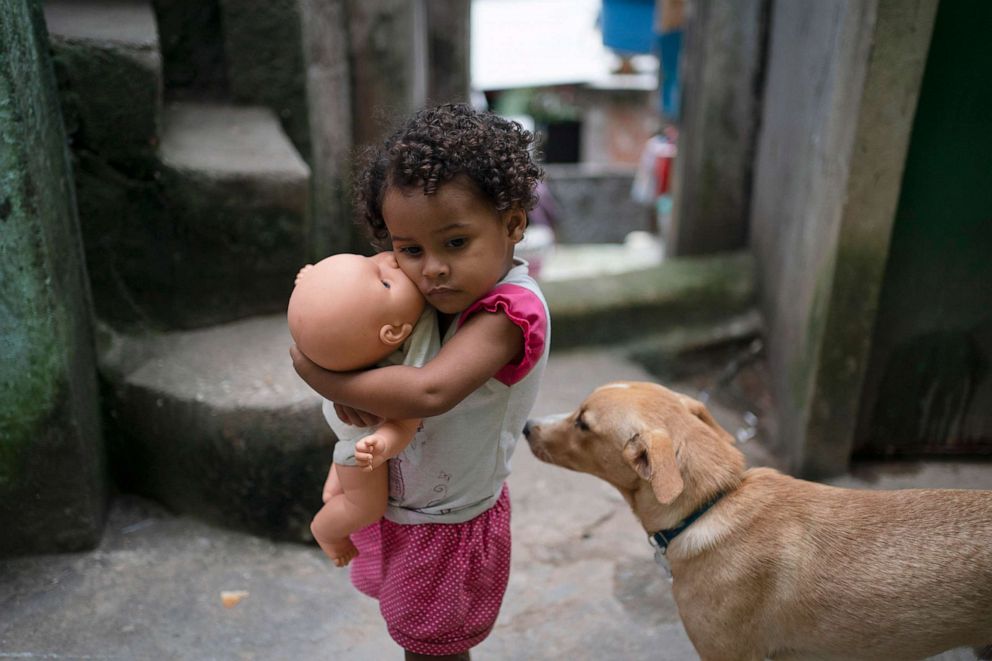
Edith C, 39, who moved to Rocinha 25 years ago, is now divorced with three children. She performs pedicures and manicures in a salon in a commercial gallery which closed three weeks ago after all non-essential stores were ordered to shutter their doors.
"When I don't work, I don't earn money. If I don't leave my house I don't give food to my children," she told ABC News. "My life was always fighting but I never thought I would sacrifice eating at night."
According to DataFavela, as many as 47% of favela residents are self-employed and are particularly vulnerable to the economic hardships wrought by coronavirus.
What to know about Coronavirus:
- How it started and how to protect yourself: Coronavirus explained
- What to do if you have symptoms: Coronavirus symptoms
- Tracking the spread in the US and Worldwide: Coronavirus map
But the luxury of staying home as recommended by the governor of Rio is clearly not possible for all classes of the Brazilian population.
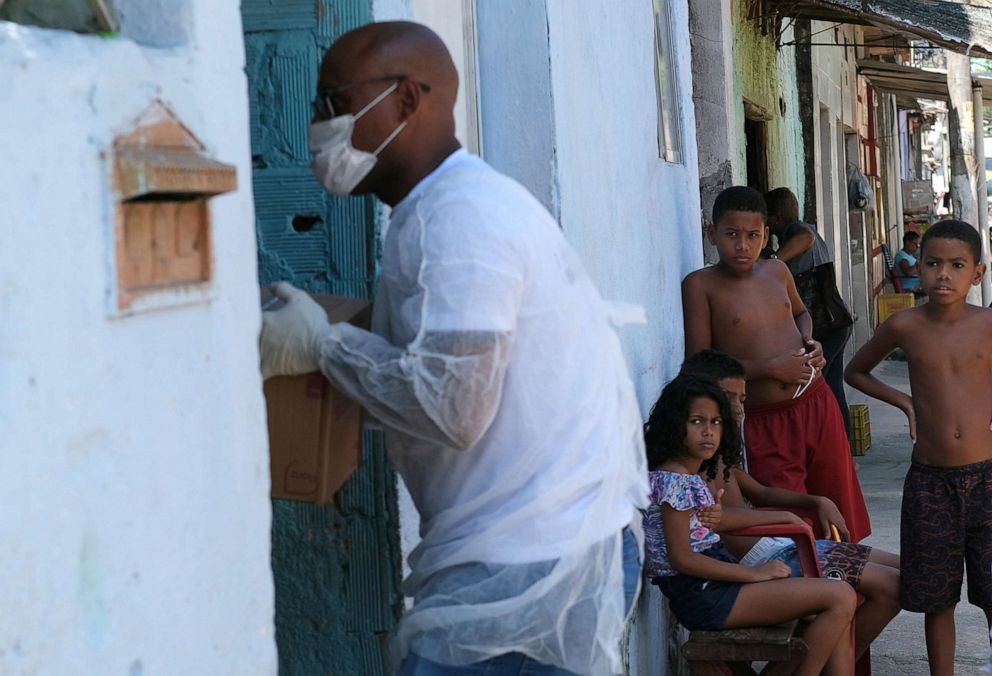
Despite the pandemic, Edith continues to work. She leaves her house to attend to a few regular customers at their homes in the south zone of Rio. Last week, Edith only made 120 reais (around $20), just enough to buy rice for her family and to buy her transportation tickets.
Renato Meirelles, the founder of DataFavela, told ABC News that it is very different to be confined in a house with a full range of amenities versus the cramped conditions in a favela.
The types of behavior displayed by Edith, he added, poses a further risk as she could bring back the virus to her community.
Meirelles said the government should subsidize incomes during the pandemic in order to avoid social chaos.
"If people are hungry and do not receive support it could turn very bad. People could just start robbing to eat. We are convinced of it,” he said.
President Jair Bolsonaro, meanwhile, has minimized the impact of the coronavirus. He has repeatedly called for Brazilians to resume economic activity, describing the virus as a "small cold."
For many Brazilians the choice is stark – either sickness or poverty. And with 11,450 confirmed and 491 deaths in the country, Brazil is only at the beginning of the pandemic.