Earth Day 2020: How social distancing may impact park and marine life
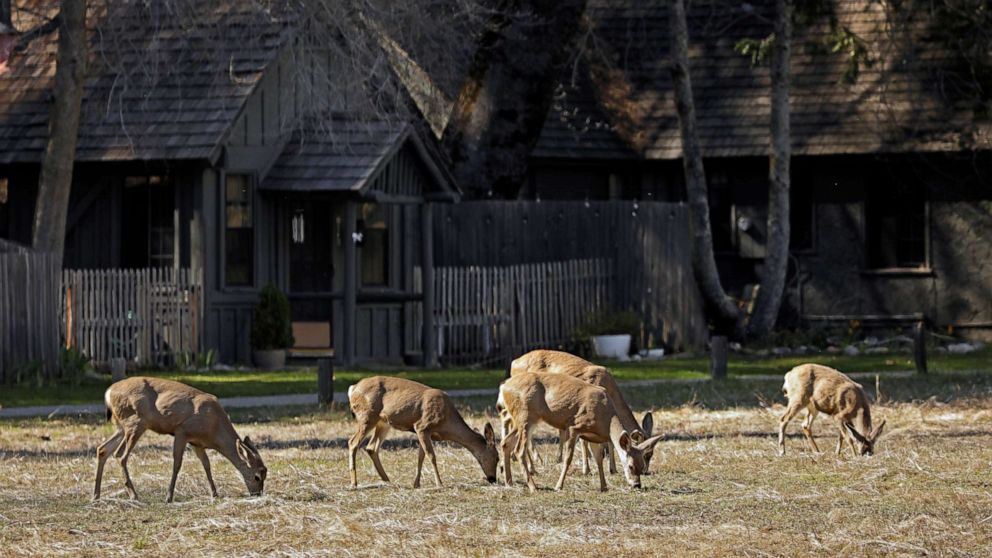
Earth Day is focusing attention on the impact COVID-19 social distancing measures have on the environment. With fewer people on roads, beaches and waterways, that could mean benefits for protected wildlife.
Vehicle mortalities are a "big issue" for national park wildlife, Todd Suess, chief of the National Park Service's Biological Resources Division, told ABC News. "We know that it is a large number and does have an impact on populations."
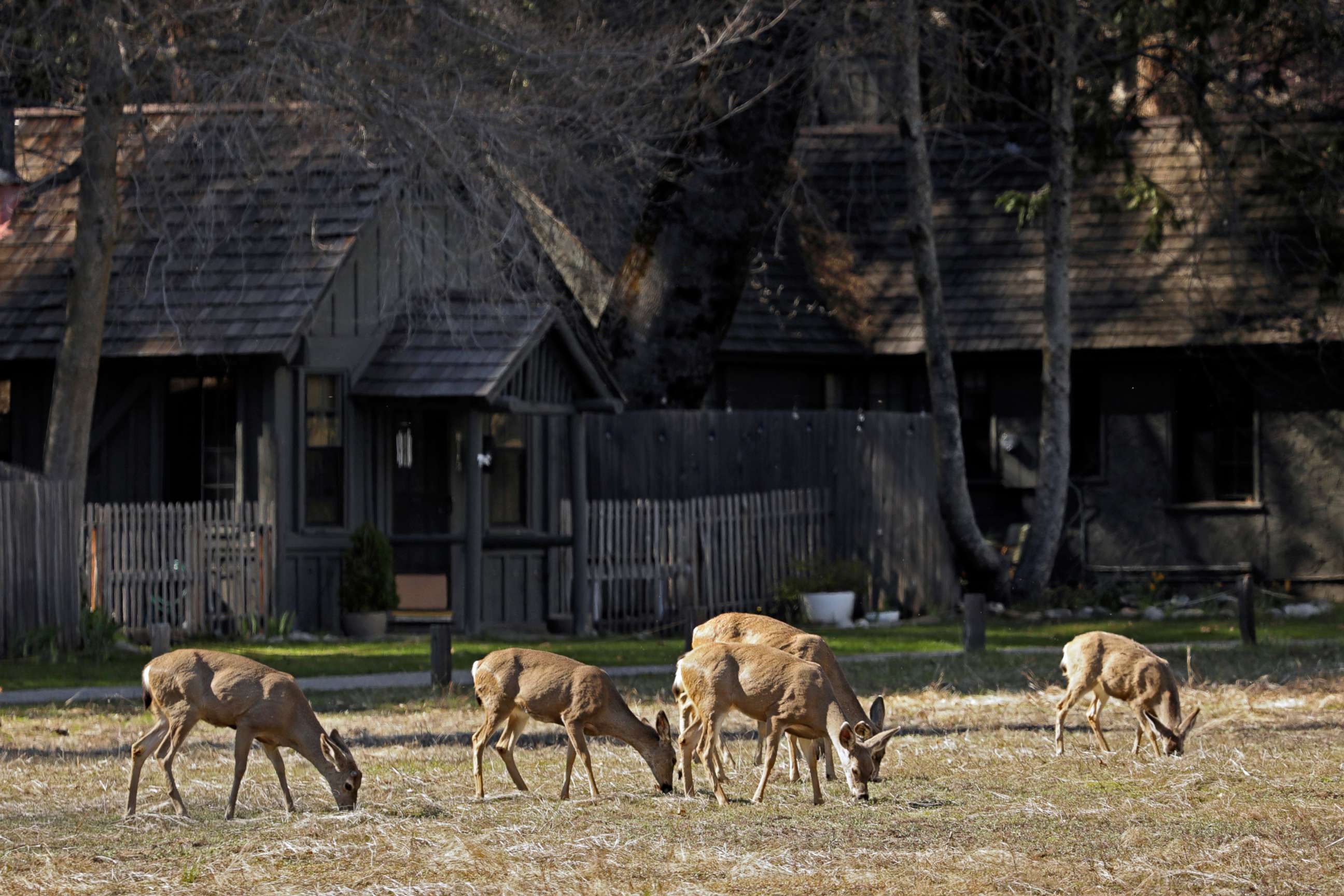
Parkgoers are often encouraged to slow down to look out for animals big and small, from elk and deer to frogs and rabbits. The desert tortoise, a threatened species common to desert areas like California's Mojave National Preserve and Joshua Tree National Park, is often killed by vehicles while crossing park roads, Suess said. "That in itself has a huge impact on the viability of that species."
Tune into ABC at 1 p.m. ET and ABC News Live at 4 p.m. ET every weekday for special coverage of the novel coronavirus with the full ABC News team, including the latest news, context and analysis.
Since many national parks have closed, however, vehicle wildlife deaths across parks have decreased, Suess said. "There's a whole lot less of that occurring now."
In Grand Canyon National Park, which has been closed since the beginning of April, there have been fewer vehicle-caused mortalities involving elk, mule deer and other species, according to the National Park Service.
Marine life may also benefit from decreased human activity during stay-at-home orders.
Leatherback turtle nesting season is underway on the East Coast of Florida, the only state in the continental U.S. where the turtles regularly nest. The rare giant turtles, which are vulnerable to extinction, have been swimming upwards of thousands of miles to lay their eggs on the beaches. Often, the turtles are killed by boats before they even reach the shore, David Godfrey, executive director of the Florida-based Sea Turtle Conservancy, told ABC News. On land, nests may be accidentally trampled by beachgoers, and hatchlings may become disoriented by light pollution near the beach, heading inland instead of toward the water to their detriment.
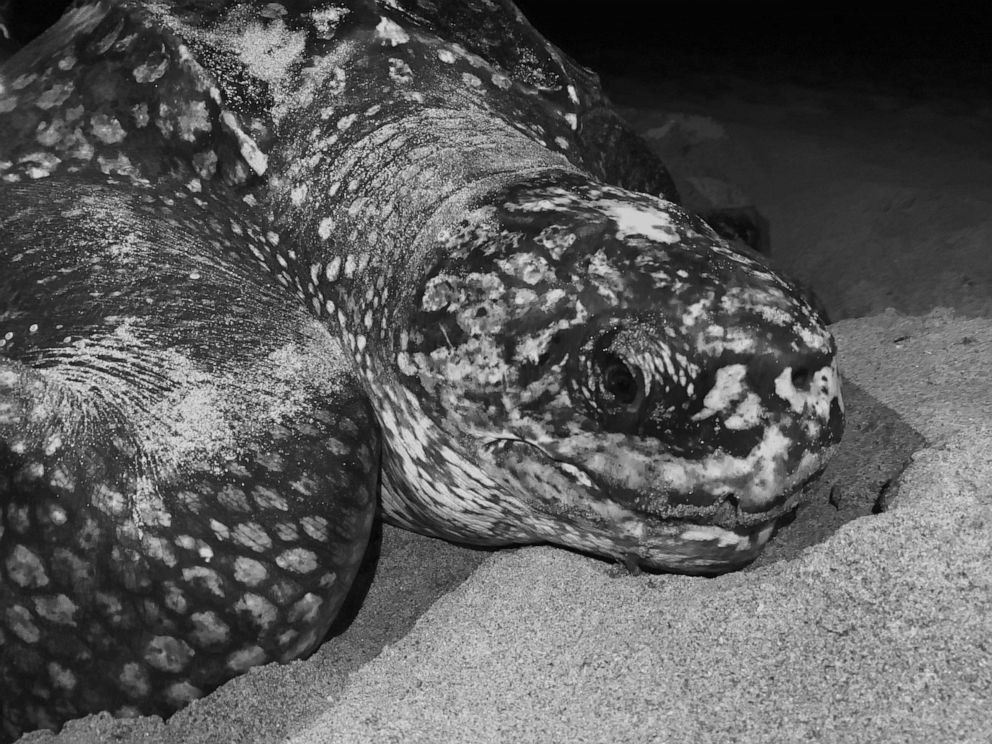
Decreases in boat and cruise traffic and water-based recreation during quarantine could mean fewer deaths, Godfrey said.
"It is almost a definite thing that we are going to see fewer boat-strike deaths of turtles," said Godfrey. "That may be visible in the numbers of nests that we see."
So far, the season has started off "fairly robust," Godfrey said, with good levels of nesting.
The Loggerhead Marinelife Center in Juno, Florida, has seen an increase in leatherback numbers this year, with 85 nests marked on its 9.5-mile stretch of beach as of Tuesday, spokesperson Lauren Eissey told ABC News.
Godfrey posits that decreased boating activity may be behind a large number of leatherback turtles reported nesting on empty Thai beaches this season, as turtles often get caught in fishing gear.
Godfrey expects to see greater survivorship of nests and hatching success - referred to as productivity - in the areas his organization monitors due to decreased human activity and light pollution on the beaches during quarantine.
"That productivity is likely to go up," he said. "There are definitely going to be benefits that can be measured when this summer's all over."
Preliminary data may show benefits for Florida's state marine mammal during COVID-19 restrictions. During the spring, manatees are more prevalent in Florida waters, making the threatened species vulnerable to deadly boating encounters. As of April 10, there have been 24 manatee deaths by boat so far this year, down from 41 for the same period last year, according to the latest data available from the Florida Fish and Wildlife Conservation Commission.
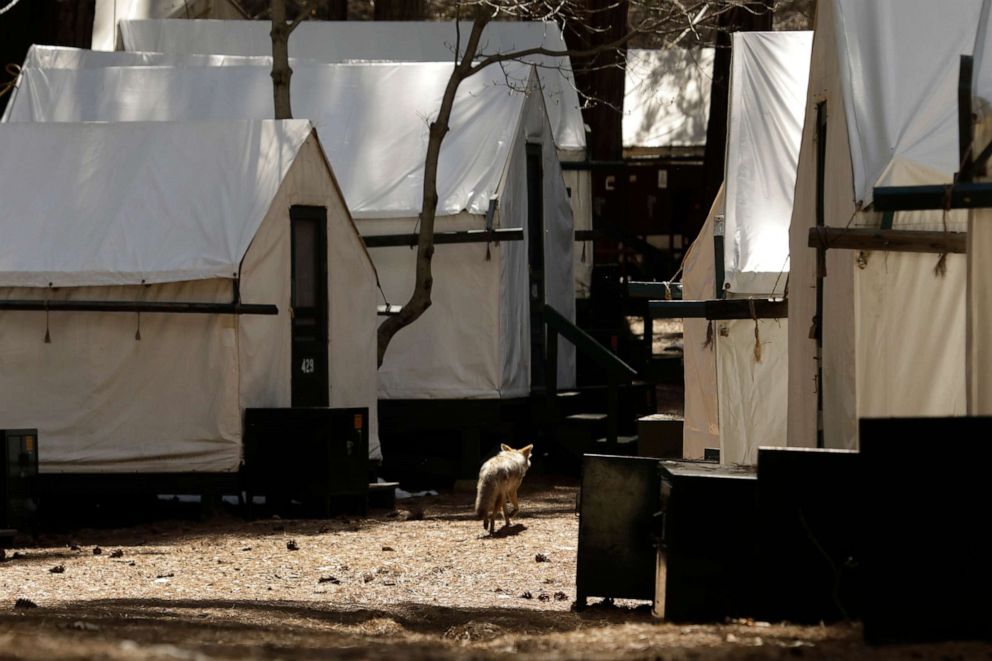
Human activity - or, rather, the lack thereof - also influences animal behavior. With fewer people in the national parks, wildlife may venture into areas they haven't been seen before, like parking lots or visitor centers, Suess said.
"There's less noise and less distraction, and the wildlife will expand into those areas where the visitors might in the past been in heavy numbers," Suess said. "Now they're not there, so animals will expand."
In Yosemite National Park, which closed to the public on March 20, bobcats and coyotes have been spotted near administrative buildings and cabins, and bear sightings are up in the California park.
Animals that have been habituated to food handouts from park visitors are also venturing out to find those meals.
"For decades, we've been asking park visitors not to feed wildlife," Suess said. "But there are ravens and coyotes [in Yosemite] following and finding people to get those handouts because that's what they come to rely on."
This habituation is one of the reasons the National Park Service advises parkgoers to keep their distance from animals they may encounter.
What to know about coronavirus:
- How it started and how to protect yourself: Coronavirus explained
- What to do if you have symptoms: Coronavirus symptoms
- Tracking the spread in the U.S. and worldwide: Coronavirus map
It's too early to tell the long-term effects of quarantine on wildlife behavior and population. But for Godfrey, the beach closures may provide an opportunity to see if these measures work in aiding sea turtle recovery.
"The fate of turtles is in our hands," Godfrey said. "The reason that their numbers have plummeted over the last century, the reason that they're in trouble is because of human behavior."
When the national parks reopen, Suess hopes visitors continue to heed three key points: "Don't feed the animals. Slow down. And keep your distance."