These South Korean workers came to the US to build an EV battery plant. They left in shackles. They still want to know why
Mr. Kim is one of hundreds of skilled engineers brought to the nearly 3,000-acre Hyundai-LG Energy Solution factory in southeastern Georgia.
He came to share his expertise and train Americans to get the new electric-vehicle battery plant up and running -- a multi-billion dollar project expected to create thousands of new jobs.
Kim, who asked to be identified by only his surname, thought he was playing a part in fueling the manufacturing boom President Donald Trump had promised.
But on Sept. 4, that mission was abruptly halted.
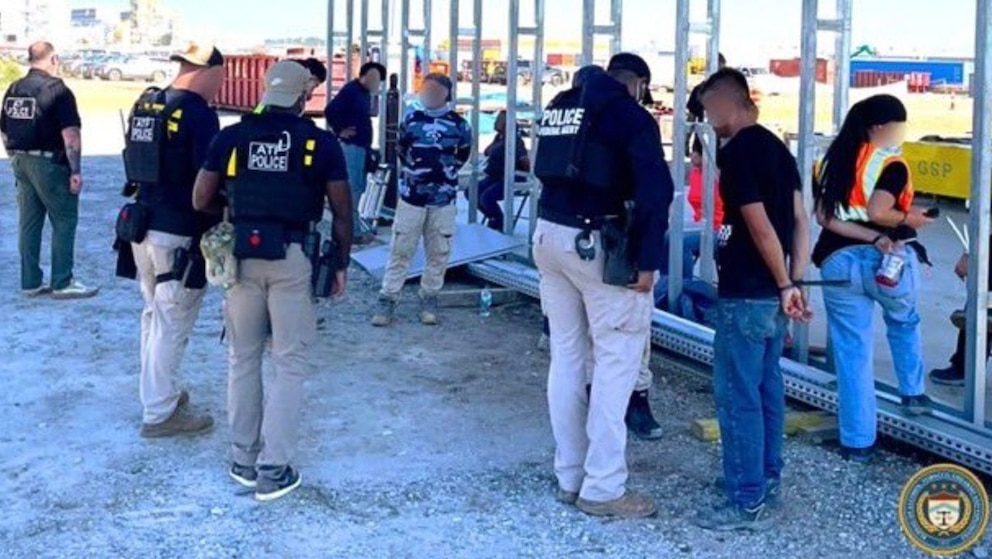
That morning, as engineers were testing equipment, Kim said he heard murmurs that armed law enforcement officers were entering the factory. They were told to go outside, where immigration officers started dividing workers based on their visa status.
Hours later, Kim says ICE agents started issuing arrest warrants. But since many of the engineers couldn't read English, they didn't know what the paperwork was.
"The scene was like something out of a movie -- fully armed officers, drones and helicopters overhead, rifles in hand," Kim said.
Scores of federal agents had swarmed the site, detaining more than 500 workers, including more than 300 from South Korea who were contractors for Hyundai and LG, like Kim.
Federal officials called it the "largest, single site enforcement operation in the history of homeland security investigations."
'Utterly powerless'
Kim said the agents confiscated the workers' phones. They were shackled around their wrists, ankles and chest. That's when Kim says he started to panic.
"Being confined in a space controlled by armed personnel, unable to see what was happening ahead or behind, with no explanations -- it was terrifying. I felt utterly powerless," Kim said. "We were completely cut off from the outside world and had no understanding of what was going on."
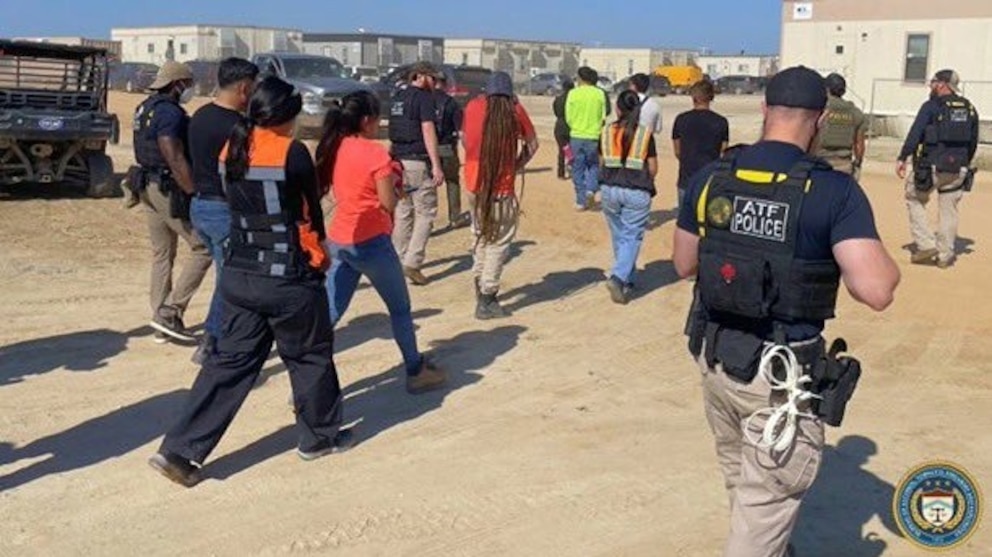
As they struggled to walk in restraints, some tripped and fell while being loaded onto buses, Kim said. Hours later, they arrived at an ICE detention center.
When they arrived, he said workers were held in "pods" with 60 to 80 people.
He described the facility as cold and unsanitary -- with moldy mattresses, water that smelled bad and toilets with no privacy.
Kim said the detainees were in a complete state of panic, fearful they could be locked up indefinitely.
"Not once -- neither before nor after the arrest did anyone read us our rights or explain anything," he said.
"While we were detained, the guards' behavior was very negative. I understand that there's a power imbalance between detainees and guards. But they went beyond that. Making comments about Kim Jong Un, pulling their eyes sideways to mock Asians," he said, referring to the North Korean leader, even though the detainees were South Korean.
"We had no way to respond, so we just endured it," he said.
The Korean workers were detained for a week, until the U.S. and South Korea governments negotiated for them to return home.
"Any foreign workers brought in for specific projects must enter the United States legally and with proper work authorizations," Abigail Jackson, a White House spokesperson, said in a statement to ABC News. "President Trump will continue delivering on his promise to make the United States the best place in the world to do business, while also enforcing federal immigration laws."
'They treated our workers…like a terrorist'
The workplace raid was the result of Trump's aggressive immigration crackdown -- a policy that at times clashed with his economic ambitions. It shattered the perception of the U.S among many South Koreans, coming just weeks after their government pledged to invest $350 billion in the U.S.
Kim Joon Hyung, a member of South Korea's National Assembly, said he was stunned.
"We -- all Koreans -- think the U.S. is a model for human rights," he said. "But the scene that we saw, is like they treated our workers, even with a residence card and the right visa, they treated [them] like a terrorist."
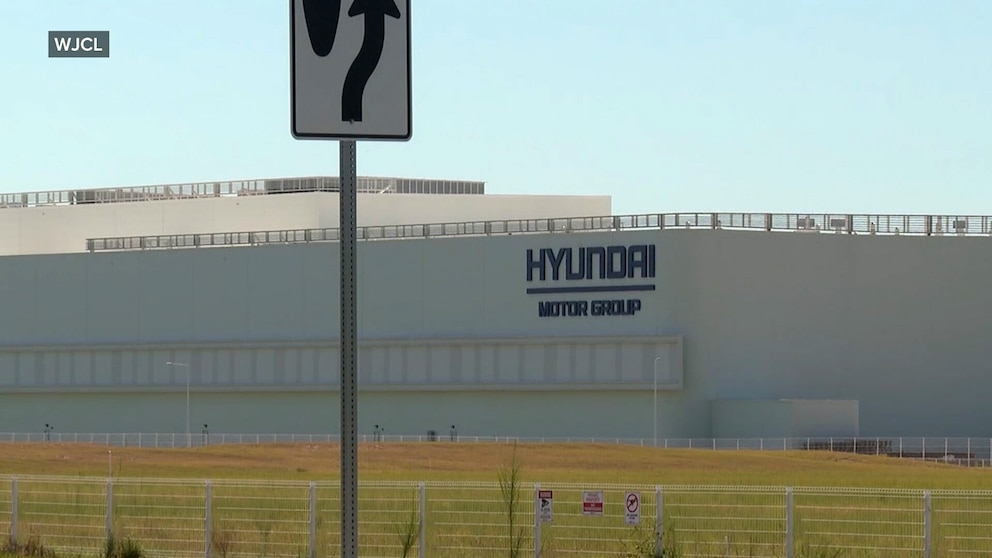
Hyundai's CEO José Muñoz said the factory's opening would be delayed by at least two to three months.
Other South Korean companies grew nervous. James Kim, the CEO of the American Chamber of Commerce in Korea, estimates thousands of workers left the U.S. to return to Korea in the immediate aftermath of the raid.
“Well, obviously, a lot of them wanted to return their workers back to Korea; people who are traveling to the US were very concerned about going,” James Kim said. “So there was a lot of concern.”
He recalled a conversation with the owner of one of the world’s largest airlines, who told him business had dropped sharply after the raid -- a reflection, James Kim said, of just how concerned many workers had become about traveling to the United States.
Hyundai later told ABC News the Georgia factory is now "scheduled to be operational in the first half of 2026" and remains "dedicated to full compliance with all laws and regulation."
In a statement, LG Energy Solution said "we immediately suspended all business trips to the U.S." after the raid, but said it has since resumed construction and travel.
'We weren't taking anyone's employment'
Immigration and Customs Enforcement said the historic raid sent "a clear and unequivocal message that those who exploit our workforce, undermine our economy and violate federal laws will be held accountable."
Days after the raid, Trump's border czar Tom Homan warned that there would be more worksite enforcement operations to come.
"No one hires an illegal alien out of the goodness of their heart. They hire them because they can work them harder, pay them less, undercut the competition that hires U.S. citizen employees," Homan said.
But Kim says he was in the U.S. legally on a B-1 Visa -- for short-term business activities -- which was approved after submitting documentation and a consular interview to justify his work.
"Our goal was always to finish setup and stabilization, train the operators and technicians, and then return home as soon as possible," Kim said. "Maybe the U.S. authorities didn't fully understand that. We weren't there to get jobs or immigrate. We weren't taking anyone's employment. That idea that we were 'taking their jobs' is wrong."
'Trauma for the workers'
Experts say there simply aren't enough skilled workers in the U.S. to build these factories.
Munoz, Hyundai's chief executive, pointed to the skills gap at an auto conference in Detroit soon after the raid.
"For the construction phase of the plants, you need to get specialized people. There are a lot of skills and equipment that you cannot find in the United States," Munoz said.
On his recent trip to South Korea to meet with President Lee Jae Myung, Trump acknowledged that gap in comments about the Hyundai raid.
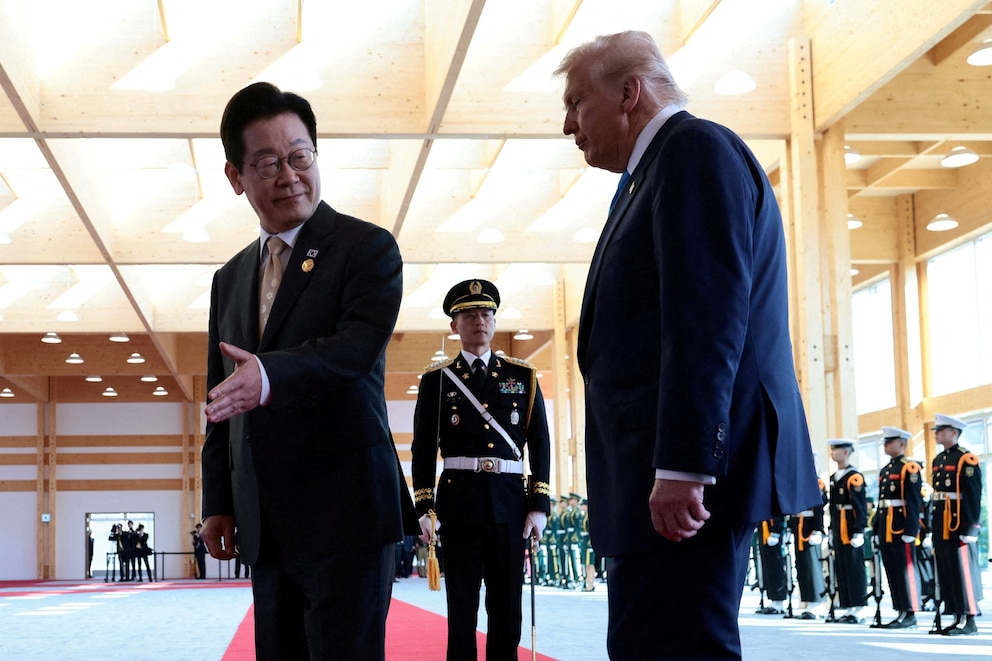
"When they come in, they're making very complex machinery, equipment, things," Trump told reporters at the end of October. "They're going to have to bring some people in, at least at that initial phase."
Ahead of his meeting with Trump, President Lee told Bloomberg News he expects a solution to the visa issue "in the not-too-distant future."
"This has also caused severe trauma for the workers as well and I have heard that some workers do not want to go back," Lee said. "Without taking measures to ensure the safety and rational treatment of these workers, there is a high possibility that factory construction in the U.S. may be significantly postponed."
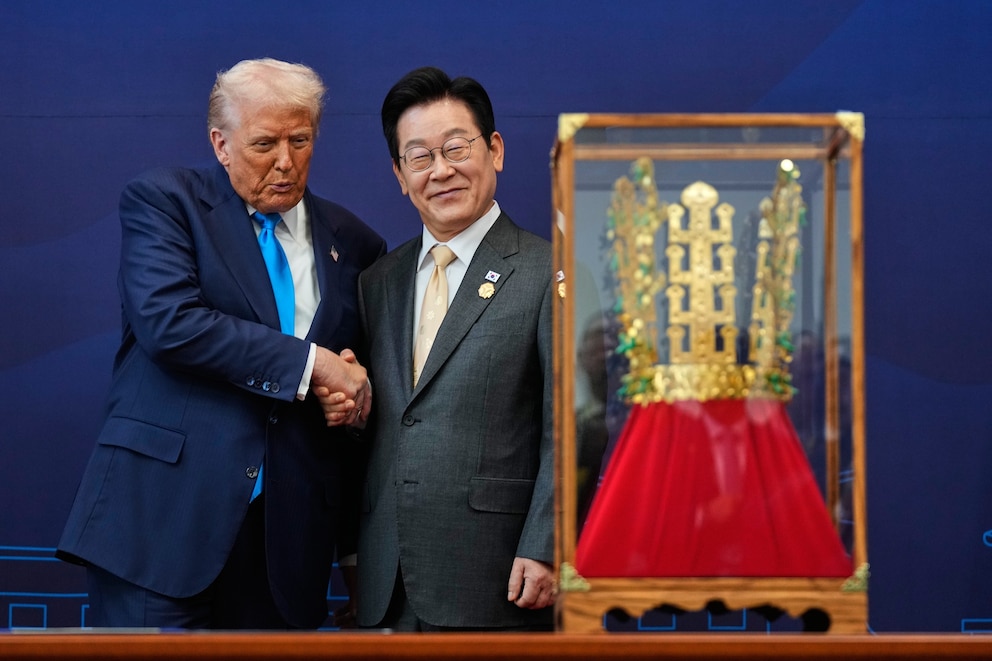
When the two leaders met in October, Lee presented Trump with a replica of an ancient royal crown, awarded him Korea's highest honor, and reaffirmed billions in Korean investment.
Hours later, Seoul announced Washington had agreed to lower tariffs on Korean auto exports from 25% to 15%.
U.S.-South Korea relations
South Korea's Foreign Ministry tells ABC News the incident has "ultimately reaffirmed the trust and resilience of the Korea-U.S. alliance," with both sides "discussing preventive measures, including visa system improvements."
South Korean companies sometimes send workers on short-term visas that operate in a gray zone.
According to the South Korean lawmaker Han Jeong-ae's office, more than half of the detained Korean engineers were in the U.S. on a 90-day visa waiver under the Electronic System for Travel Authorization, or ESTA, which permits travel for business or tourism.
Another 170 individuals were staying on B-1 visas meant for "consulting with business associates," while 146 others entered on B-2 tourist visas.
According to South Korea's Foreign Ministry, the two countries agreed that the definition of permissible business activities under the B-1 and ESTA categories are ambiguous, and are working to fix it.
"In the longer term, the two governments will continue discussing structural reforms, such as creating a dedicated visa category for Korean professionals and securing visa quotas, though the U.S. side noted legislative limitations," the ministry said.
James Kim said that South Korean companies remain confident in their investments in the U.S.
"This is a small blip in the overall equation, and this trade deal we just had is the beginning of a new partnership between the U.S. and Korea," he said.
'I don't think I'll ever go to the U.S. again'
But for Kim and the detainees, what happened was more than a blip.
Back in Seoul, he's still struggling to process what happened.
"I still don't understand it. I know what ICE does in general. I've seen reports and news stories. But even now, I can't comprehend why we were detained at all, or why we were held for as long as seven days."
Kim is one of nearly 200 detainees now preparing to sue ICE, alleging unlawful policing, racial profiling, human rights violations, excessive force and unlawful arrest.
"We just want to correct the record, because even now, we've never received neither an apology nor an explanation," Kim said. "I didn't do anything wrong. I want people to know that. I'm trying to have that acknowledged, to have the truth recognized."
He said after what happened, he can't imagine any of the workers willingly returning to work in the U.S.
"I don't think I'll ever go to the U.S. again, even for travel. But if I have to go for a business trip, I'll have no choice but to go."