• Video
  • Shop
  • Culture
  • Family
  • Wellness
  • Food
  • Living
  • Style
  • Travel
  • News
  • Book Club
  • Newsletter
  • Privacy Policy
  • Your US State Privacy Rights
  • Children's Online Privacy Policy
  • Interest-Based Ads
  • Terms of Use
  • Do Not Sell My Info
  • Contact Us
  • © 2026 ABC News
  • News

Sperm whale found dead on Scotland beach with 220 pounds of trash in stomach
0:50
Getty Images
Humans eat 5 grams of plastic per week: Report
Melvin Nicholson/Bav Media/REX via Shutterstock
ByJulia Jacobo
December 02, 2019, 5:57 PM

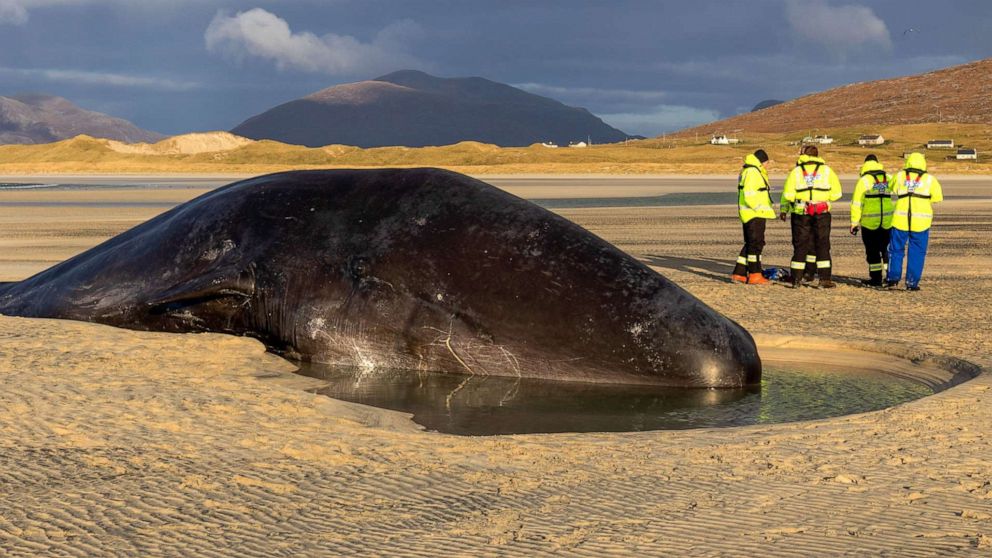
A sperm whale found stranded on a beach in northeast Scotland had more than 220 pounds of trash in its stomach when it died, according to the organization that found it.

The whale was found on Luskentyre beach on Saturday and had been dead for 48 hours by the time workers from the Scottish Marine Animal Strandings Scheme (SMASS) got there.

Related Articles

(MORE: Deer found dead in Thailand with over 15 pounds of trash in its stomach, including plastic bags and hand towels)

The debris found inside the whale included "a whole range of plastic," including plastic cups, gloves, packing straps and tubing as well as bundles of rope and sections of netting, Scottish Marine Animal Strandings Scheme said in a Facebook post.
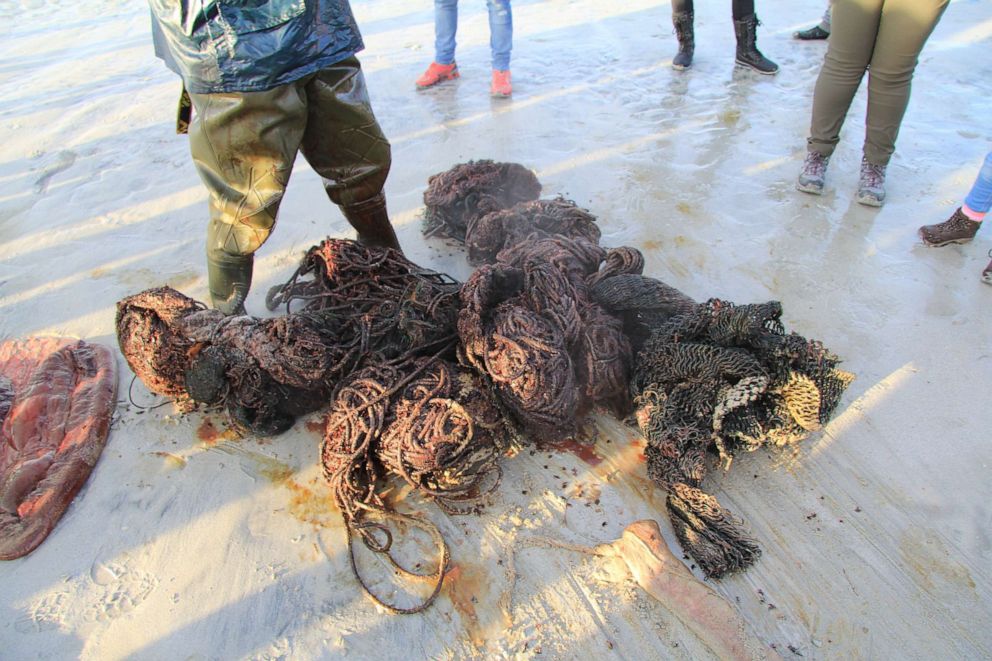
A sperm whale that died on a beach on the Isle of Harris in Scotland on Nov. 28, 2019, was found to have approximately 220 pounds of litter and marine debris in its stomach, according to the Scottish Marine Animal Strandings Scheme.
Courtesy SMASS

The material was packed into the whale's stomach "in a huge ball" and some of it had likely been ingested some time ago, according SMASS.

Related Articles

(MORE: 104 pieces of plastic found in baby sea turtle that washed ashore in Florida)

Overall, the whale was not in poor condition, and it is unclear whether the trash contributed to its death.

"This amount of plastic in the stomach is nonetheless horrific, must have compromised digestion, and serves to demonstrate, yet again, the hazards that marine litter and lost or discarded fishing gear can cause to marine life," the organization said, describing the issue as being caused "by a whole host of human activities."
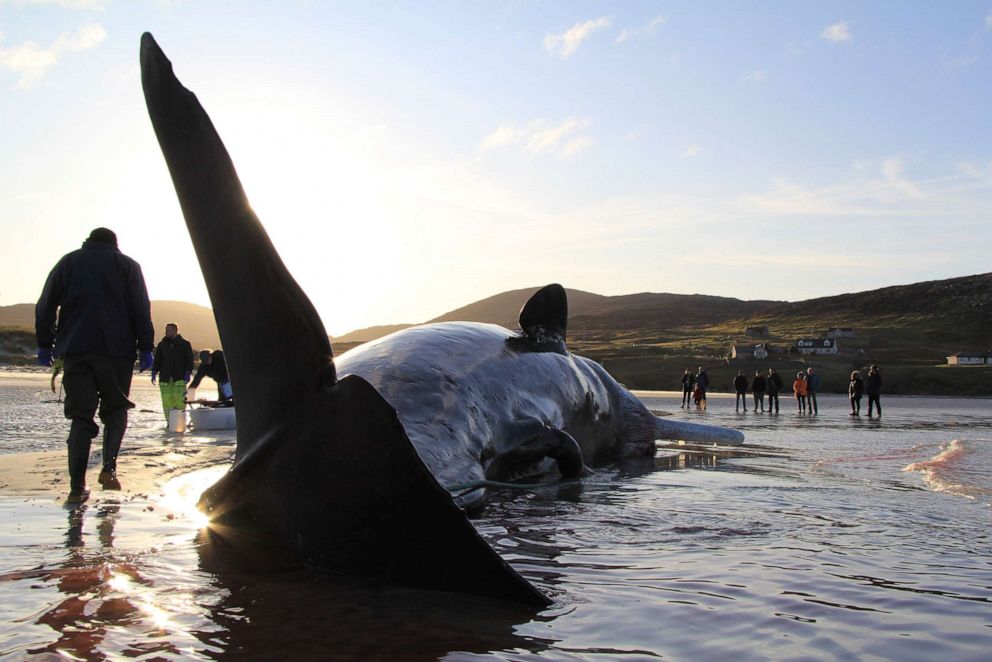
A sperm whale that died on a beach on the Isle of Harris in Scotland on Nov. 28, 2019, was found to have approximately 220 pounds of litter and marine debris in its stomach, according to the Scottish Marine Animal Strandings Scheme.
Courtesy SMASS

The organization believes the whale swallowed debris from both land and fishing sectors at some point between Norway and the Azores, an autonomous region of Portugal in the mid-Atlantic.

Related Articles

(MORE: Animal that went viral for hugging its helpers dies, loads of plastic found in her stomach)

The necropsy for the whale was done on the beach because it was impossible to transport the 20-ton marine animal. The marine veterinarians buried the animal once the necropsy was complete.


Up Next in News—

Family seeks answers after influencer Ashlee Jenae is found dead on vacation in Tanzania

April 14, 2026

Couple shares warning after nearly losing down payment in mortgage fraud

April 10, 2026

Student speaks out after train clips school bus in incident caught on camera

April 8, 2026

IRS warns of AI tax collection scams ahead of Tax Day

April 8, 2026

Shop GMA Favorites

ABC will receive a commission for purchases made through these links.

Sponsored Content by Taboola

The latest lifestyle and entertainment news and inspiration for how to live your best life - all from Good Morning America.
  • Contests
  • Terms of Use
  • Privacy Policy
  • Do Not Sell My Info
  • Children’s Online Privacy Policy
  • Advertise with us
  • Your US State Privacy Rights
  • Interest-Based Ads
  • About Nielsen Measurement
  • Press
  • Feedback
  • Shop FAQs
  • ABC News
  • ABC
  • All Videos
  • All Topics
  • Sitemap

© 2026 ABC News
  • Privacy Policy— 
  • Your US State Privacy Rights— 
  • Children's Online Privacy Policy— 
  • Interest-Based Ads— 
  • Terms of Use— 
  • Do Not Sell My Info— 
  • Contact Us— 

© 2026 ABC News