• Video
  • Shop
  • Culture
  • Family
  • Wellness
  • Food
  • Living
  • Style
  • Travel
  • News
  • Book Club
  • Newsletter
  • Privacy Policy
  • Your US State Privacy Rights
  • Children's Online Privacy Policy
  • Interest-Based Ads
  • Terms of Use
  • Your Privacy Choices
  • Contact Us
  • Recalls and Product Safety Alerts
  • © 2026 ABC News
  • News

Stephen Hawking Gets an Upgrade: How the Physicist's New Speech Software Works
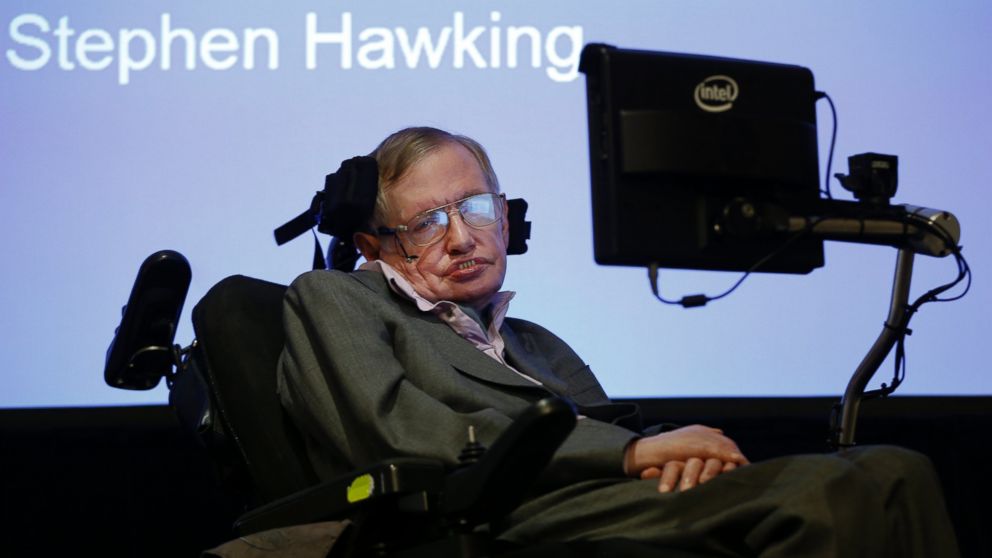
Professor Stephen Hawking during a press conference in London, Dec. 2, 2014. Professor Hawking and Intel discussed the latest developments on how technology enhancements are going to have a wider impact on those, like Professor Hawking that suffer from Amyotrophic lateral sclerosis (ALS).
Kirsty Wigglesworth/AP Photo
ByALYSSA NEWCOMB
December 02, 2014, 4:07 PM

— -- Stephen Hawking's computer speech system got a modern upgrade from engineers at Intel who added predictive text to the decades-old program the scientist uses to communicate with the world.

Hawking, 72, who has a motor neuron disease and is almost entirely paralyzed, relies on the technology to speak. He joined Intel in London today to show off the new speech system, which the computer chip maker developed after spending three years collaborating with Hawking.

The result is a system that allows Hawking to type faster, browse the Internet much easier and seamlessly switch between tasks.

Related Articles

Rare Photos of Stephen Hawking Through the Years

Related Articles

The Conversation: Stephen and Lucy Hawking

Related Articles

Stephen Hawking: 'Science Makes God Unnecessary'

Intel said it was able to increase the efficiency of Hawking's system by integrating predictive text technology from SwiftKey. The software knows Hawking's communication patterns, meaning he has to type less than 20 percent of all characters to convey what he wants to say.

Hawking's existing cheek sensor syncs with a switch on his glasses, allowing him to choose characters he wishes to type, which can then be processed by his speech synthesizer and spoken out loud from his Lenovo laptop.

"Intel has been supporting me for almost 20 years, allowing me to do what I love every day," Hawking said in a statement. "The development of this system has the potential to improve the lives of disabled people around the world and is leading the way in terms of human interaction and the ability to overcome communication boundaries that once stood in the way."

Intel said the technology Hawking is using will be made available for free in January, allowing researchers and technologists to build on the software and tailor it in different ways that could help the more than 3 million people worldwide who have motor neuron disease or quadriplegia better communicate.


Up Next in News—

E. coli outbreak linked to raw milk cheese brand: CDC, FDA

September 26, 2026

Judge in Lindsay Clancy case indefinitely impounds jury questionnaires

September 23, 2026

Simone Biles says 3 masked men stole luxury sports car from Chicago-area home

September 23, 2026

Capt. Chesley 'Sully' Sullenberger shares new details of Alzheimer's diagnosis, his 'last flight'

September 23, 2026

Shop GMA Favorites

ABC will receive a commission for purchases made through these links.

Sponsored Content by Taboola

The latest lifestyle and entertainment news and inspiration for how to live your best life - all from Good Morning America.
  • Contests
  • Terms of Use
  • Privacy Policy
  • Your Privacy Choices
  • Children’s Online Privacy Policy
  • Advertise with us
  • Your US State Privacy Rights
  • Interest-Based Ads
  • About Nielsen Measurement
  • Press
  • Feedback
  • Shop FAQs
  • ABC News
  • ABC
  • All Videos
  • All Topics
  • Sitemap
  • Recalls and Product Safety Alerts

© 2026 ABC News
  • Privacy Policy— 
  • Your US State Privacy Rights— 
  • Children's Online Privacy Policy— 
  • Interest-Based Ads— 
  • Terms of Use— 
  • Your Privacy Choices— 
  • Contact Us— 
  • Recalls and Product Safety Alerts— 

© 2026 ABC News