Study Finds Why Zebras Have Stripes Isn't So Black and White
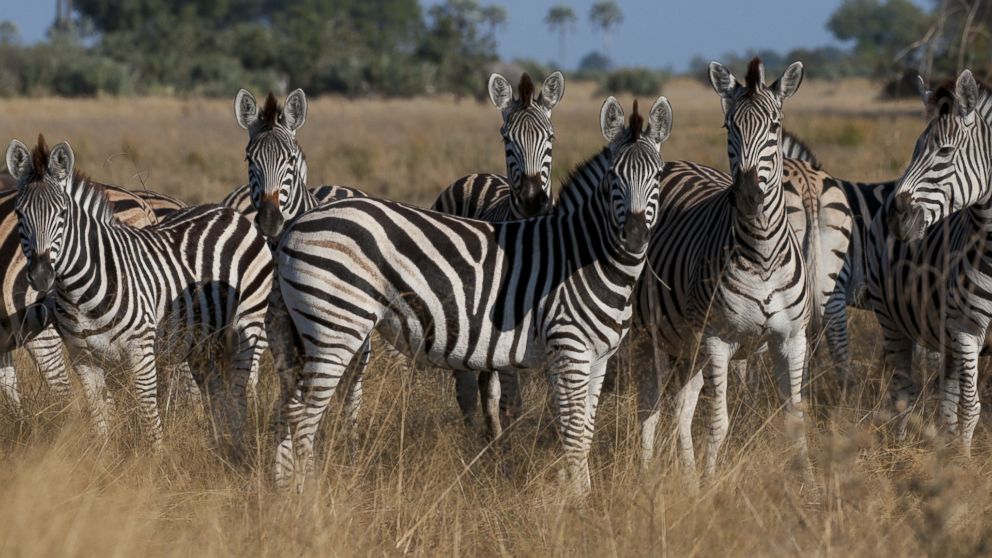
— -- It’s an age old question: Why do zebras have stripes?
There have been many theories -- four of them, to be exact -- according to researchers of a new study.
The issue isn’t so black and white, it appears.
The four theories include confusing predators, regulating temperature, helping zebras recognize each other and avoiding biting flies. However, temperature has the highest correlation to the number of stripes on a zebra, the researchers reported in the journal Royal Society Open Science.
They also found that the warmer it is, the more stripes a zebra has.
Brenda Larison, co-author of the study, told ABC News that there are two ways temperature could affect striping.
One is called the “cooling eddy” theory that suggests there are opposing airflows on a zebra’s black and white stripes because of the different speeds heat rises on black and white fur. At the intersections of these currents, there are whirlpools of air that cool their skin.
These cooling swirls of air could also repel biting insects that prefer the heat, such as tsetse flies.
The researchers of the study came to this conclusion by checking the relationship between stripes and 29 different environmental factors at 16 different wildlife sites within Central and Southern Africa. They also chose to study zebras that live on plains because they are the most common.
Larison said the study is the first to look at the correlation between all the theories, which had only been tested one at a time until now.
“What we really feel is important about our study is that most studies so far have only taken one hypothesis and studied it by itself,” said Larison, “but that doesn’t help disprove or help prove the others. We made an effort to throw some of these ideas against each other.”
Larison adds that they think there are still more complex and multiple factors that influence striping, so for now, the issue still isn’t so black and white.