Sudan's suffering continues as civil war passes 1,000 days
LONDON -- Dr. Mohammed Ibrahim Mohammed was one of the last doctors left in El Fasher, a city in Sudan’s beleaguered Darfur region, when he finally made his escape.
"As I ran for my life, I passed dead and injured people, some of whom I knew personally," Mohammed told ABC News. "I heard people crying out for help, but I could not stop. It was about personal survival at that point. I couldn’t offer any help. As a doctor, it was my duty to help the wounded, yet I was unable to offer any help."
The city had been under siege by the Rapid Support Forces (RSF), the powerful paramilitary group now in control of around half of Sudan, for 18 months. Food supplies had run out in the summer of 2025, meaning the tens of thousands of civilians trapped there were forced to survive on animal feed, Mohammed said.
"Drones were everywhere," he told ABC News. "The RSF fighters came on the city from four directions in massive numbers. They began killing civilians, destroying buildings, and launching shells indiscriminately. People were running in every direction. It looked like an apocalypse. Everyone was trying to survive."
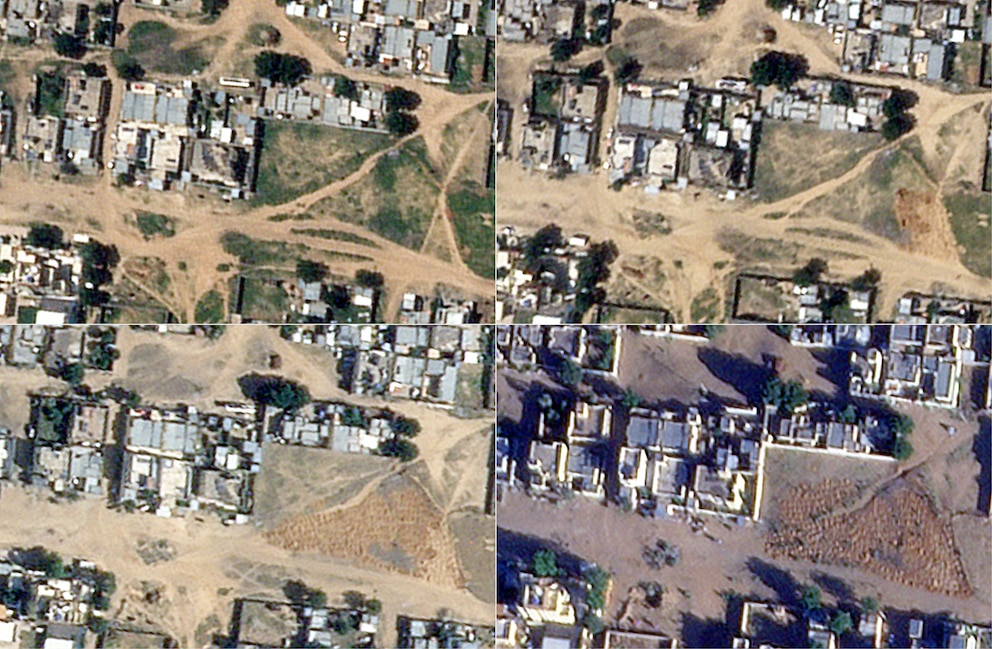
The city was cut off from the world -- with aid groups prevented from entering -- but evidence of the violence in El Fasher was visible from space, with clusters of bodies, burning buildings and pools of blood seen in satellite imagery released by Yale University in October.
El Fasher became a byword among locals and international observers for the horrors that have been inflicted in the Sudanese Civil War, which has now gone past 1,000 days.
1,000 days of fighting
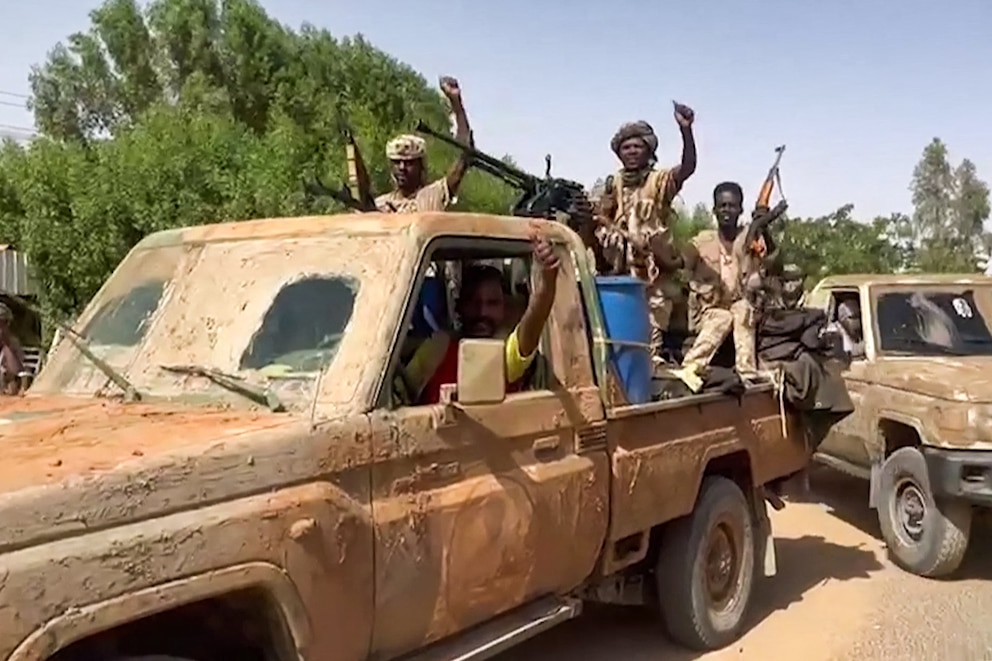
A power struggle in April 2023 saw the RSF launch attacks on its ally-turned-rival the Sudanese Armed Forces (SAF). The clashes have since descended into an all-out civil war, characterized by ethnic violence, attacks on civilians and atrocities committed by all sides, according to humanitarian groups and foreign governments. The U.S. said in January that members of RSF and their allies had committed acts of genocide, and that both the RSF and SAF had committed war crimes.
The fighting initially broke out in the capital, Khartoum, but has spread to all corners of the northeastern African nation. Now, the RSF are in control of roughly half of Sudan, including the entirety of the Darfur region, experts said.
Now, the battle lines in the civil war have become "more entrenched," according to Jehanne Henry, a human rights lawyer and researcher at the Middle East Institute, a think tank based in Washington DC. But the violence continues to affect the entire country, with drones increasingly used by both sides.
"Attacks can be done by drone into the rear areas of control, as opposed to just fighting along front lines," she told ABC News. "It's been characterized by urban warfare because it started in Khartoum. So this is unlike any other war that Sudan has ever seen, at least in the last hundred years."
"In terms of the death toll, we think it's in the hundreds of thousands," she said.
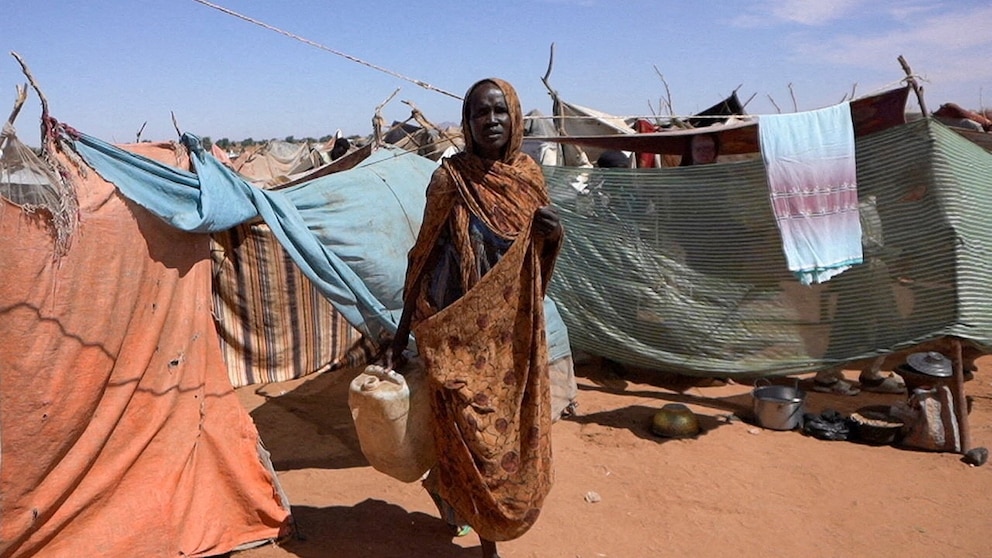
While the true death toll is unknown, the scale of the suffering in Sudan can also be seen in the vast numbers of people who have been displaced by the war. Twelve million people have been displaced, with 33.7 million people -- about two-thirds of the population -- in need of humanitarian support, according to the International Rescue Committee.
"The numbers are the numbers, but I think of seeing two or three children share a bed in malnutrition units gives you an idea of what's going on," Dr. Yasir Elamin, the president of the Sudanese Americans Physicians Association (SAPA), told ABC News.
"I lived most of my life in Khartoum. We weren't used to that. You needed to go to the south or go to Darfur to be able to see them, but to go the heart of the capital to see that the malnutrition units are crowded is certainly a new level to this crisis,” he added. "I think the worst part of this, it's a man-made crisis. Nothing about this should have happened in the first place."
Despite the scale of the suffering, Sudan has been relatively overlooked by the international community, compared to conflicts in Gaza and Ukraine, according to Dame Rosalind Marsden, the former EU special representative for Sudan from 2010-2013.
"The diplomatic efforts that have been made to resolve the Sudan crisis are absolutely not proportionate to the gravity of what's been going on," she said.
A path to a ceasefire?
As the civil war has continued, external powers have also played an increasing role in the conflict. The United Arab Emirates has been accused by human rights groups of directly supplying the RSF with weaponry, an allegation the country strongly denied, while Saudi Arabia and Egypt have allied with the SAF. Some analysts have gone as far as to describe the development in the conflict as a "proxy war."
"Sudan is an opportunity for different powers in the region to play one another off each other," said Henry, of the Middle East Institute. "It represents this really vast area of potential. Sudan occupies some really strategic land on the Red Sea coast. It's really this gateway to the Middle East, it bridges the Middle East and Africa."
All three countries, along with the U.S., are now part of the "Quad," a diplomatic initiative to try to bring the conflict to an end. Those efforts, led by the U.S., saw all four countries issue a joint statement on Sept. 12, laying out a framework for a potential deal in Sudan.
The "Quad" statement represented an "important diplomatic breakthrough," Marsden said, which saw key players lay out a “road map” and all agree that there was "no viable military solution to the conflict." That statement, she said, crucially puts civilians at the center of a post conflict transition.
"However, there are still many obstacles to peace,” Marsden said. "The flow of arms to the conflict parties continues. RSF have said that they are ready to accept a humanitarian truce but have continued to press their attacks, while the SAF have rejected a truce unless the RSF surrenders and disarms first -- an unrealistic demand at a time when the RSF is making rapid military gains."
While the fighting continues, though, the U.S. for now is continuing to push both sides to agree to a humanitarian truce.
"The Quad initiative is a golden opportunity that should not be allowed to slip away and deserves strong support from international partners," Marsden said.
In the meantime, however, the tireless work of humanitarians continues on the ground, with no end to the fighting in sight.
"I pray for Darfur to live in peace, for its people to return to their homes and for life to begin again," Mohammed, the doctor who fled El Fasher, told ABC News from Tawila, a refugee camp near El Fasher where he continues to treat refugees. "Enough of war, enough of the death. Darfur has been bleeding since 2003, and the war has never truly stopped."