Supreme Court denies Rastafarian's lawsuit after he was forcibly shaved bald behind bars
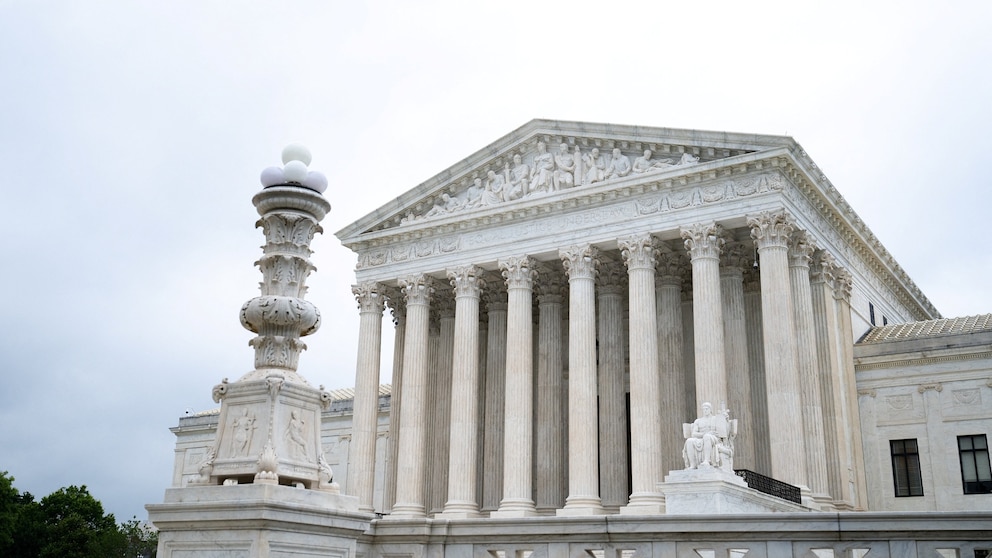

A narrowly divided Supreme Court on Tuesday denied a Louisiana man the ability to sue state prison officials for damages after they forcibly shaved him bald behind bars, allegedly violating his religious rights as a devout Rastafarian.
In a 6-3 decision, the court's conservative majority said federal law did not permit the plaintiff, Damon Landor, to seek money from individual state employees.
Landor, whose locks of hair had grown uncut for 20 years, has said he felt "raped" by the experience.
"I am disappointed but not defeated. What happened to me violated my faith and my dignity," Landor said in a statement on Tuesday. "I will continue pursuing accountability. What happened to me should not happen to anyone else."
The ruling was a victory for states, which said such claims could bankrupt them.
"Religious liberty is deeply important, and Louisiana has laws on the books protecting it. Ten federal courts of appeals held that the federal Religious Land Use and Institutionalized Persons Act does not allow prisoners to sue prison officials in their personal capacities for damages, and now the Supreme Court has agreed. We condemn the conduct as alleged in this case and have taken steps to prevent this problem from recurring, but we are grateful the Court agreed with the State in this matter," Louisiana Attorney General Liz Murrill said in a statement.
Religious rights advocates warned that it would severely restrict the ability of victims of religious discrimination to sue for justice and accountability.
At issue in the case was the Religious Land Use and Incarcerated Persons Act of 2000, which requires states that receive federal funding for their prisons to accommodate the sincere religious beliefs of inmates and allow them to bring lawsuits seeking "appropriate relief."
Justice Neil Gorsuch, in the court's opinion, said the law did not allow individual prison officials to be held personally liable since they were not technically part of the financial "contract" between the federal government and the state.
"Under the Spending Clause, Congress's power to spend money does not include the power to regulate," Gorsuch wrote of the Constitution's provision that allows Congress to put conditions on funds sent to states. "Spending Clause statutes can bind only those who voluntarily and knowingly undertake obligations by agreement with the federal government."
"That essential element is missing here," Gorsuch concluded.
Justice Ketanji Brown Jackson, in a dissent joined by Justices Sonia Sotomayor and Elena Kagan, accused her colleagues of "pulling a rabbit out of the hat" and ignoring decades of precedent.
"The Court reduces some of Congress's greatest legislative achievements--federal laws that secure civil rights, environmental stability, healthcare, and more--to nothing more than the wheelings-and-dealings of an especially wealthy private party," Jackson wrote.
"Prisoners like Landor who suffer violations of their religious freedom in state prisons -- no matter how blatant -- will often be left remediless," Jackson said in dissent. "And encroachments on prisoners' statutory rights are likely to happen with fair frequency, as state-empowered prison officials will have little incentive to abide by federal law, even if it is handed to them on a piece of paper."
The American Civil Liberties Union, which had supported Landor in the case, called the decision a "devastating blow to the religious freedom and dignity of incarcerated people."
"This decision sends a dangerous message that prison officials may escape accountability even for egregious violations of federal law," said Daniel Mach, director of the ACLU’s program on Freedom of Religion and Belief.
Richard Garnett, a Notre Dame Law professor and expert on religious rights, said the ruling highlights the Constitution's limits on Congress' ability to regulate states by offering money with strings attached.
"Our fundamental constitutional commitment to religious freedom for all does and should extend to those being punished for crimes. Today's ruling, and its understanding of federal-state relations, make it all the more important for state governments to respond by putting in place policies, and remedies, that will protect vulnerable inmates from abuses like the one suffered by Mr. Landor," Garnett said in a statement.