Supreme Court doesn't exonerate Trump, will soon decide if he can be charged: ANALYSIS


The Supreme Court's unanimous decision Monday invalidating attempts to remove former President Donald Trump from the 2024 ballot was the justices' most direct intervention in a presidential election in more than two decades and marked the first time ever that they weighed in on Section 3 of the 14th Amendment.
In short, the court delivered a technical answer to a historic and politically explosive question unanswered by the text of the Constitution: Who gets to decide when a candidate, who previously took an oath, has "engaged in insurrection" and is therefore disqualified from office in the future?
A majority of justices agreed that only Congress has the power to make that determination and enforce the Amendment -- not individual states. "The patchwork that would likely result from state enforcement would sever the direct link that the Framers found so critical between the national government and the people of the U.S. as a whole," they wrote.

Trump notched a significant win, and, as expected, will remain on the ballot in all 50 states. But he was not exonerated in the divisive and still ongoing legal and political debate over his conduct in the aftermath of the 2020 election that led up to the violent events of Jan. 6, 2021. The court left the substance of those major underlying questions untouched.
Did Trump's efforts to overturn results of the 2020 election amount to "engaging in insurrection"? Did the former president help incite the deadly riot that consumed the U.S. Capitol? Could his conduct have reasonably been considered "obstruction of an official proceeding" in Congress? And, at the very least, can he be charged and put on trial for any of those alleged actions he took as president?
The justices in their ruling Monday did not directly or indirectly address the merits of allegations that Trump is unfit for office because he tried to subvert the will of voters in order to remain in power. Those questions remain active and unresolved by the high court.

Next month, the court will get a second chance to wade in. The justices will take up Trump's appeal of a unanimous appeals court ruling rejecting his claims of absolute presidential immunity for his conduct in the aftermath of the 2020 election. The outcome could decide if and how soon he could face a criminal trial.
The high court is also set to decide whether one of the four charges Trump faces in that case – "Obstruction of and attempt to obstruct an official proceeding" – is valid and a proper reading of federal law as applied to dozens of criminal defendants involved with the Jan. 6 riot.
The cases provide an opportunity for the court to leave its mark on history and offer some degree of commentary on its view of the former president's behavior, which many Americans have viewed as a threat to democracy. But there are also numerous ways for the justices to resolve both cases - again - avoiding any comment on the propriety or legality of Trump's conduct.
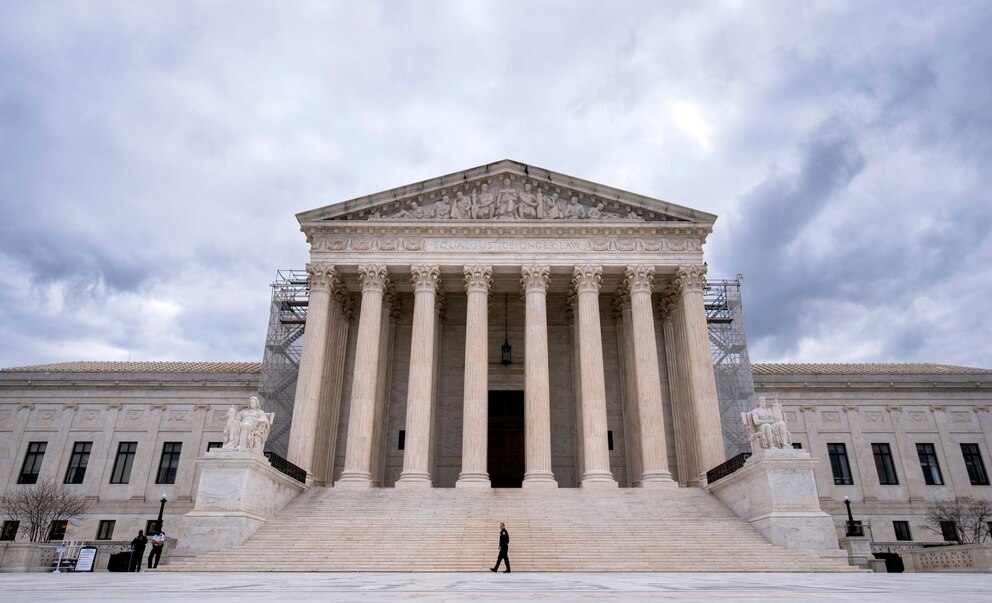
In her concurring opinion Monday, Justice Amy Coney Barrett, whom Trump appointed to the bench late in his term, suggested there may be a core cohort of justices who may well want to remain above the fray.
"In my judgment," she wrote, "this is not the time to amplify disagreement with stridency. The Court has settled a politically charged issue in the volatile season of a presidential election. Particularly in this circumstance, writings on the court should turn the national temperature down, not up."