Supreme Court justices show hints of unconventional splits in arguments over Trump's tariff authority: ANALYSIS

The Supreme Court appeared deeply divided on Wednesday -- and not necessarily in its regular 6-3 ideological arrangement -- over whether President Donald Trump exceeded his authority in imposing sweeping tariffs under a 1977 emergency-powers law -- a case that could redefine the boundary between presidential discretion and Congress' power to tax.
The justices probed whether the International Emergency Economic Powers Act (IEEPA) authorizes the president to impose tariffs on nearly all imports or whether such measures intrude on Congress’s exclusive taxing authority.
Several conservative justices voiced concern about unchecked executive power, while others emphasized the need for flexibility during emergencies.
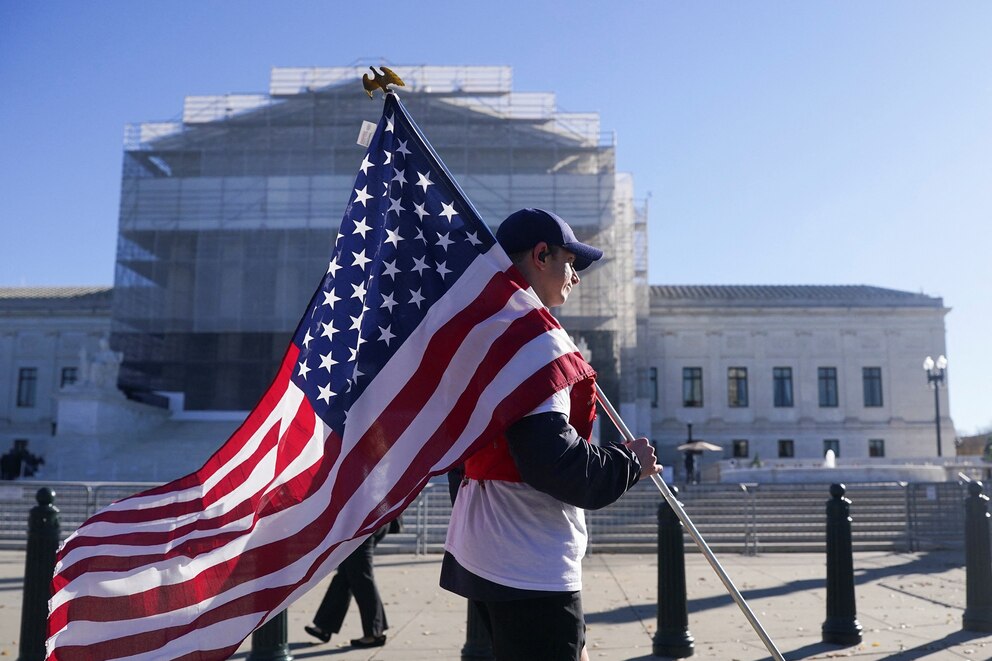
Lower courts agreed with the challengers. The Court of International Trade and the U.S. Court of Appeals for the Federal Circuit both held that IEEPA does not permit revenue-raising tariffs, finding that the law authorizes only regulatory restrictions necessary to counter genuine foreign threats.
Still, those courts stayed their rulings pending Supreme Court review, leaving the tariffs in place for now.
A reversal would mark the first major break between the Supreme Court and the Trump administration during his second term, which has otherwise seen a consistent run of victories expanding presidential control over the executive branch.
A reversal is far from the only possible outcome, but during Wednesday’s oral argument even conservative justices who have championed strong executive authority seemed wary of endorsing a theory that could allow any president -- of either party -- to impose sweeping taxes under the banner of an “economic emergency.”
Three trios?
While drawing a direct line between oral arguments and the outcome is challenging, Wednesday’s session suggested the justices approaches to the case might be loosely grouped into three blocs, reflecting different instincts about presidential authority, congressional prerogatives and the definition of an economic emergency.
Most likely to favor upholding the tariffs: Justices Clarence Thomas, Samuel Alito and Brett Kavanaugh appeared likely to be the justices most aligned with the administration’s position.
As the most senior justice, Thomas asked the first question of Solicitor General John Sauer and seemed to suggest that the "major questions doctrine" -- which requires explicit congressional authorization for policies of “vast economic and political significance” -- should not even apply to the context of this case.
Thomas, instead, suggested that the statutory phrase "regulating importation" is easily understood to include tariffs.
Alito noted that emergencies, by definition, often require expansive authority. “Isn’t it the very nature of an emergency to confer broader powers?” he asked.
Kavanaugh emphasized the president’s broad prerogatives in matters of foreign affairs, and asserted that Congress designed IEEPA to be broad in scope precisely so as to allow presidents to act “in an appropriate way” during crises.
Most skeptical of the tariffs: Unsurprisingly, Justices Sonia Sotomayor, Elena Kagan, and Ketanji Brown Jackson appeared most skeptical of the tariffs, emphasizing that Congress would be unlikely to give up its core revenue-raising power merely by implication as opposed to expressly.
Sotomayor pressed Sauer on whether the statute truly permits the president “without limit” to impose what she called “a tax by another name.”
Kagan pointed out that IEEPA’s language focused on freezing assets, not reshaping global trade.
Jackson asked pointedly, “If this is permissible, what wouldn’t be?” suggesting that the government’s interpretation left no meaningful boundary on presidential power.
Torn as to the tariffs: Chief Justice John Roberts and Justices Neil Gorsuch and Amy Coney Barrett appeared to occupy a middle ground, posing challenging questions to both sides, but at times perhaps leaning toward skepticism of Trump’s position.
Roberts pressed firmly against the government’s contention that any revenue raised via the tariffs is merely “incidental.”
The chief justice noted that the tariffs “look like taxes on Americans,” and that taxation is “a core power of Congress.” He noted that asserting authority to impose tariffs “on any product, from any country, in any amount, for any time” sounded like precisely the kind of “major question” that requires clear legislative authorization.
Gorsuch voiced the sharpest structural warning. “Isn’t this just one more step in the one-way ratchet of power flowing to the executive branch?” he asked.
When Sauer responded that a future president could indeed impose massive tariffs on, say, gas-powered cars during a climate emergency, Gorsuch effectively highlighted that, whatever the near-term results in this case, the alarm raised about the threat of unchecked executive power varies based on one’s perception of the executive’s relative benevolence.
Barrett focused on statutory precision and practical consequences, asking both sides how tariffs might be unwound if invalidated.
When told the refund process could take years, she concluded, “So -- a mess?” Her questioning reflected concerns emphasized by both sides -- as to constitutional limits and economic disruption.
The cognitive dissonance problem
Beyond the statutory and doctrinal debates, Wednesday’s argument revealed a striking tension between the administration’s courtroom position and the president’s own rhetoric.
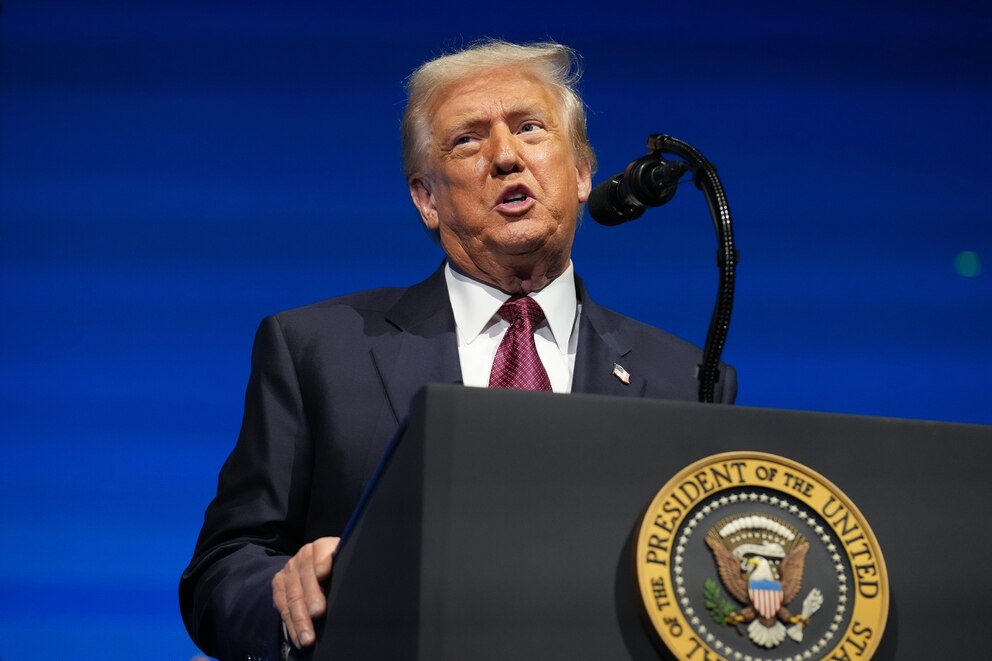
While Sauer argued that tariffs under IEEPA are regulatory tools -- “not revenue-raising tariffs” and that any money collected is “merely incidental” -- Trump, regularly boasts that “the tariffs are going to make us rich as hell.”
Reconciling those two accounts requires a kind of cognitive dissonance. Both cannot be true.
If the tariffs were primarily regulatory, as the solicitor general told the court, their purpose would be to reshape trade flows or protect national security, not to generate government revenue. Yet the president himself has repeatedly framed them as a financial windfall — a de facto funding stream bypassing Congress’s power of the purse.
That tension lies at the heart of the case.
The contradiction underscores why the major questions doctrine looms so large: when policies carry vast economic and political implications, the court expects Congress, not the president, to speak clearly.
High stakes and uncertain outcomes
As the argument closed, what emerged most clearly was not a neat ideological divide but a shared recognition of the stakes: whether to sanction a model of presidential power that treats emergency declarations as open-ended licenses for unilateral executive policymaking, or to reaffirm that the Constitution vests the power to tax and spend in Congress alone.
James Sample is an ABC News legal contributor and a constitutional law professor at Hofstra University. The views expressed in this story do not necessarily reflect those of ABC News or The Walt Disney Company.