Supreme Court limits Voting Rights Act in historic decision
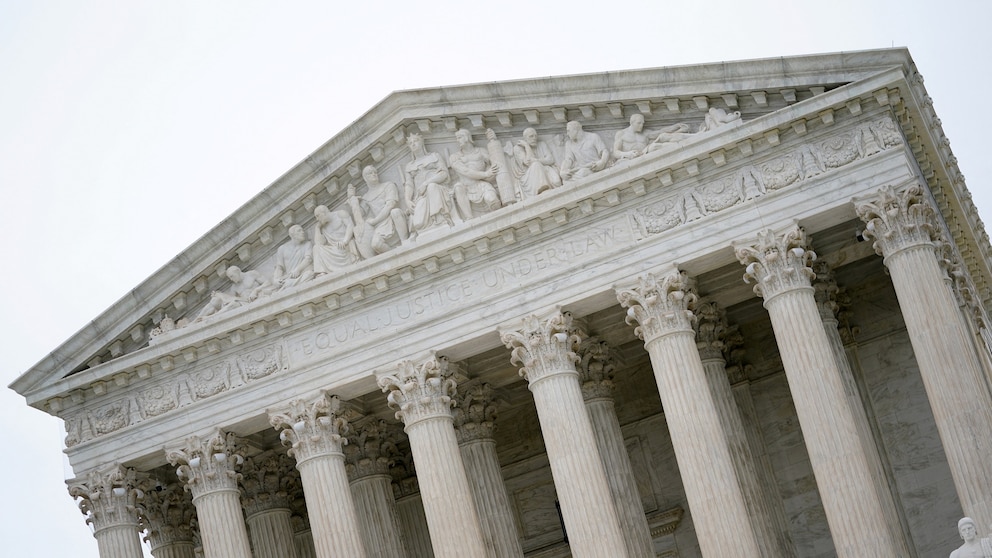
The Supreme Court on Wednesday struck down Louisiana's congressional map as an unconstitutional racial gerrymander and dealt a blow to Section 2 of the Voting Rights Act, landmark legislation that has long prohibited election practices that have the effect of diluting the influence of racial minority voters.
In a 6-3 decision, the Supreme Court's conservative majority effectively raised the bar for challenges to election maps that limit the equal opportunity of minority voters to elect candidates of their choosing, even if lawmakers did not have deliberate intent to discriminate.
Justice Samuel Alito authored the opinion, which said that states only violate the Voting Rights Act when "evidence supports a strong inference that the State intentionally drew its districts to afford minority voters less opportunity because of their race."
The ruling reverses lower court decisions that said Louisiana's map, drawn after the 2020 census, violated the Voting Rights Act because only one of six districts was majority Black. More than a third of the state's voting age population is Black.
Those courts had ordered Louisiana to add a second majority-Black district, a process which in turn explicitly relied on race. Alito said that move infringed on the rights of white voters under the 14th Amendment's equal protection clause.
"That map is an unconstitutional gerrymander, and its use would violate the plaintiffs' constitutional rights," Justice Alito wrote for the majority.
"In considering whether the Constitution permits the intentional use of race to comply with the Voting Rights Act, we start with the general rule that the Constitution almost never permits the Federal Government or a State to discriminate on the basis of race," the court added.
In a dissent read aloud from the bench, Justice Elena Kagan said the ruling was "far-reaching and grave." Justices Sonia Sotomayor and Ketanji Brown Jackson joined Kagan's dissent.
"If other states follow Louisiana's lead," Kagan wrote, "the minority citizens residing there will no longer have an equal opportunity to elect candidates of their choice."
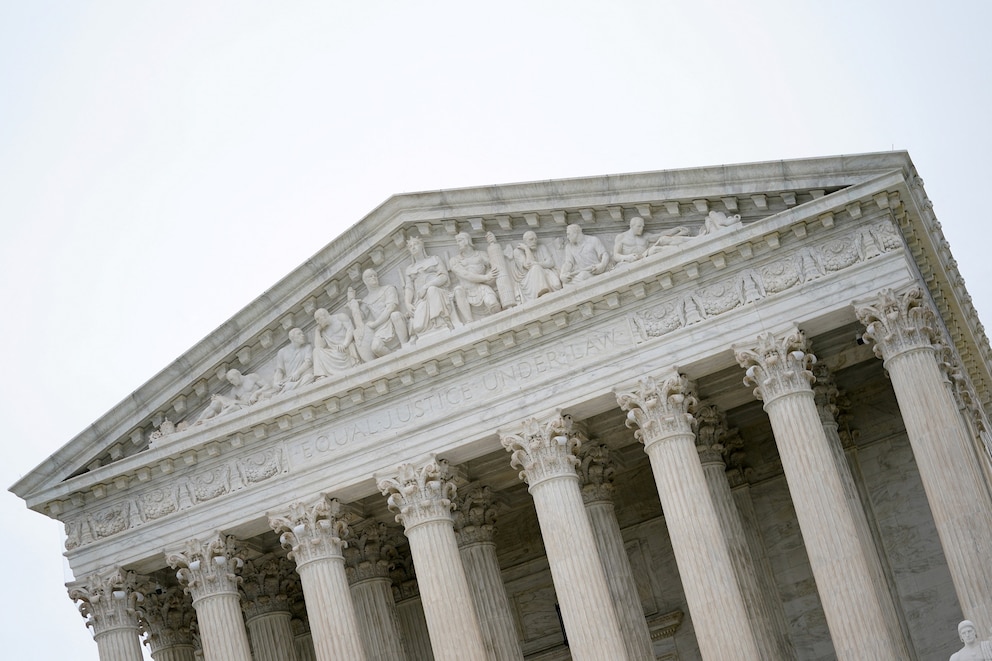
Section 2 of the Voting Rights Act has long been a guardrail against states "packing" Black voters into districts and "cracking" communities of color into other districts with an aim of diluting their electoral influence.
Courts that have found a violation of Section 2 then order states to redraw their maps, with an eye on race, to ensure minority voters are given fair chance at political participation. The law does not require proof of intent to discriminate, instead prohibiting any discrimination in effect.
"Under the Court's view of Section 2," Kagan wrote, "a State can, without legal consequence, systematically dilute minority citizens' voting power. ... The majority claims only to be updating our Section 2 law, as though through a few technical tweaks. But in fact, those 'updates' eviscerate the law, so that it will not remedy even the classic examples of vote dilution."
The White House celebrated the Supreme Court decision as a "complete and total victory for American voters."
"The color of one's skin should not dictate which congressional district you belong in. We commend the court for putting an end to the unconstitutional abuse of the Voting Rights Act and protecting civil rights," White House spokesperson Abigail Jackson said in a statement.
Civil rights groups had warned the case could have a catastrophic impact on minority voters' influence across the South and result in reduced minority representation in Congress going forward.
The NAACP called the court's ruling a "devastating blow to what remains of the Voting Rights Act" and "a license for corrupt politicians who want to rig the system by silencing entire communities."
"The Supreme Court betrayed Black voters, they betrayed America, and they betrayed our democracy," NAACP President Derrick Johnson said in a statement. "This ruling is a major setback for our nation and threatens to erode the hard-won victories we’ve fought, bled, and died for. But the people still can fight back. Our best defense and offense is the ballot box, and we’re going to turn out voters in the midterm elections to make sure we can elect representatives who look out for us."
More than a dozen states, mostly in the South, that have court-ordered majority-minority congressional districts could potentially try to redraw their maps to eliminate those districts for political advantage. Most majority-minority districts are represented by Democrats.
It's not immediately clear how far-reaching the ruling in the Louisiana case will be or whether more states will attempt to redraw their maps so close to the November election.
The court's decision did not go as far as some civil rights advocates had feared, striking down Section 2 altogether. Instead, Justice Alito expressly noted that election maps can still be challenged for diluting the influence of minority voters, and courts can still order maps redrawn -- with an eye on race -- to improve equal opportunity.
However, the court impose significant new limits on the force of the law, setting a much tougher standard for proving that an election map discriminates against minority voters in the first place.
"To prevail, the plaintiff must disentangle race from politics by proving that the former drove a district's lines," Alito wrote, and that how districts were drawn "gives rise to a strong inference that intentional discrimination occurred."
Outraging many supporters of the Voting Rights Act, the court also effectively declared that historic racial inequities in elections have substantially abated nationwide.
"Discrimination that occurred some time ago, as well as present-day disparities that are characterized as the ongoing 'effects of societal discrimination,' are entitled to much less weight" in a case alleging a Section 2 violation, Alito wrote.
"Far more germane are current data and current political conditions that shed light on current intentional discrimination," he said for the majority.