5 takeaways from the CBO's analysis of the Republican health care plan
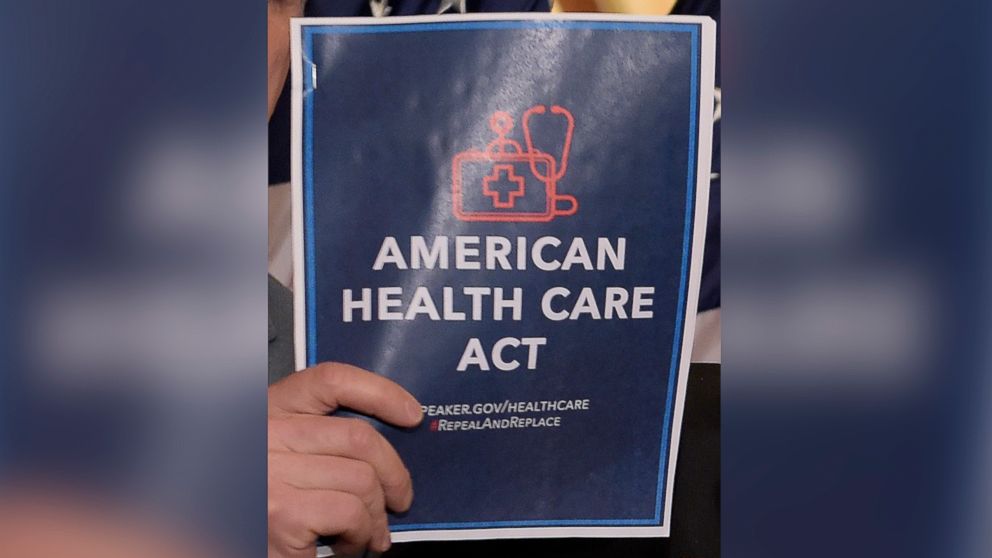
— -- The Congressional Budget Office released its scoring of the White House-backed Republican plan to repeal and replace Obamacare Monday -- indicating the legislation will leave 24 million more uninsured than the current law after a decade, but reduce the deficit by $337 billion.
Although Republican advocates of the American Health Care Act assailed the nonpartisan CBO over the past week for perceived inaccuracies in its past analyses, there were aspects of Monday's report that they were quick to tout following its release.
Here are some of the key takeaways from the report:
More uninsured
One of the first effects identified by the report is a large increase in the number of uninsured Americans under the AHCA as opposed to the current law. The second page of the CBO's analysis states that the office and the Joint Committee on Taxation "estimate that, in 2018, 14 million more people would be uninsured under the legislation than under current law."
The report goes on to say that the number would rise to "21 million in 2020 and then to 24 million in 2026." Both the repeal of penalties for being uninsured and an increase in premiums could lead to more Americans choosing not to buy insurance. Changes in Medicaid eligibility could also lead to further losses in coverage.
Deficit reduction
According to the CBO, the AHCA will "decrease federal deficits by $337 billion" over a 10-year period from 2017-2026. The vast majority of savings result from reduction in Medicaid expenses, the report says. Halting the expansion of the program would lead to greater numbers of uninsured Americans but a savings of over $800 billion over the next decade.
Proposed tax credits and a decrease in revenue from eliminating the penalty for not holding insurance, among other costs, would bring the net savings back down to the $337 billion number.
Increased costs for elderly, especially low-income
Rules under the new legislation relax limits on premiums for older Americans. Currently, under the ACA, insurers can charge older policyholders up to three times as much as younger insurees. The ACHA allows for rates to increase up to five times as much for the older enrollees than younger ones.
The CBO and JCT further recognize the possibility that, without penalties for declining coverage, more younger and healthy people might choose not to purchase insurance. Without that population subsidizing the cost for those with more frequent health needs, the overall cost of coverage could rise.
Additional rules that govern tax credits based on age rather than income disproportionately affect low-income enrollees. In an "illustrative example" provided by the CBO, a 64-year-old earning $26,500 per year receives the same tax credit of $4,900 to contribute to insurance costs as a 64 year old earning $68,200.
Under the current plan, the $26,500 earner receives a tax credit of $13,600 -- an $8,700 difference. The current plan provides no credit to the $68,200 earner.
Decreased premiums eventually, especially for younger enrollees
While noting that premiums would vary "significantly" based on age, the CBO and JCT estimate that the average costs for a single policyholder under the AHCA will begin to decrease in 2020 and eventually 10 percent lower by 2026 than they would be otherwise.
The report attributes lower premiums to rules allowing insurers to offer more flexible plans and "a younger mix of enrollees" who could opt to select options with lower rates without being negatively affected by less comprehensive coverage.
Additionally, whereas the plan to tie tax credits to age could hurt older enrollees, younger coverage-seekers would benefit. Under the aforementioned "illustrative example," a 21 year old earning $68,200 would receive a $2,450 tax credit under the AHCA as opposed to no credit under the current law. Coupled with lower premiums, they could save $3,650 overall.
For a 21 year old earning much less -- $26,500 -- their tax credit would fall under the AHCA from $3,400 to $2,450, but the difference would be made up for by the lower cost of premiums. The $26,500 would save $250 overall, according to the CBO's example.
Continued uncertainty
The report concedes that it is difficult to predict the law's effects with complete precision. The CBO and JCT note a vast number of variables in the behavior of agencies, states, insurers, employers and health care professionals that could all change the ultimate outcome of the legislation.
"CBO and JCT have endeavored to develop estimates that are in the middle of thedistribution of potential outcomes," states the report.
However, the analysis does note there is more confidence behind certain projections than others.
"Spending on Medicaid would almost surely be lower than under current law. The cost of the new tax credit would probably be lower than the cost of the subsidies for coverage through marketplaces under current law. And the number of uninsured people under the legislation would almost surely be greater than under current law," the report states.
ABC News' Mary Bruce, John Parkinson, MaryAlice Parks and Ryan Struyk contributed to this report.