Tech company workers agree to have microchips implanted in their hands
— -- Some workers at a company in Wisconsin will soon be getting microchips in order to enter the office, log into computers and even buy a snack or two with just a swipe of a hand.
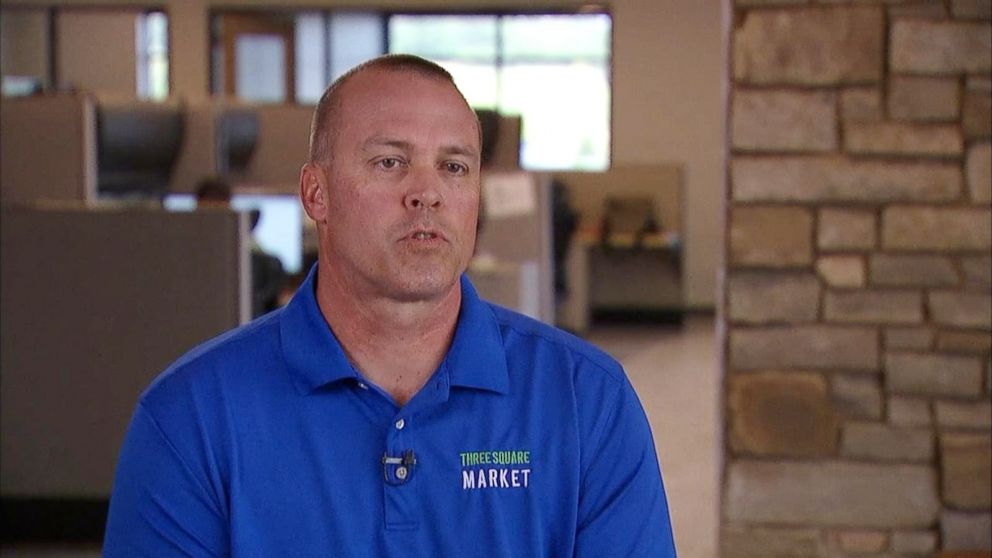
Todd Westby, the CEO of tech company Three Square Market, told ABC News today that of the 80 employees at the company's River Falls headquarters, more than 50 agreed to get implants. He said that participation was not required.
The microchip uses radio frequency identification (RFID) technology and was approved by the Food and Drug Administration in 2004. The chip is the size of a grain of rice and will be placed between a thumb and forefinger.
Swedish company implants microchips in employees
Westby said that when his team was approached with the idea, there was some reluctance mixed with excitement.
But after further conversations and the sharing of more details, the majority of managers were on board, and the company opted to partner with BioHax International to get the microchips.
Westby said the chip is not GPS enabled, does not allow for tracking workers and does not require passwords.
"There's really nothing to hack in it, because it is encrypted just like credit cards are ... The chances of hacking into it are almost nonexistent because it's not connected to the internet," he said. "The only way for somebody to get connectivity to it is to basically chop off your hand."
Three Square Market is footing the bill for the microchips, which cost $300 each, and licensed piercers will be handling the implantations on Aug. 1. Westby said that if workers change their minds, the microchips can be removed, as if taking out a splinter.
He said his wife, young adult children and others will also be getting the microchips next week.
Critics warned that there could be dangers in how the company planned to store, use and protect workers' information.
Adam Levin, the chairman and founder of CyberScout, which provides identity protection and data risk services, said he would not put a microchip in his body.
"Many things start off with the best of intentions, but sometimes intentions turn," he said. "We've survived thousands of years as a species without being microchipped. Is there any particular need to do it now? ... Everyone has a decision to make. That is, how much privacy and security are they willing to trade for convenience?"
Jowan Osterlund of BioHax said implanting people was the next step for electronics.
"I'm certain that this will be the natural way to add another dimension to our everyday life," he told The Associated Press.