Texas court blocks Biden's student loan forgiveness policy

A federal judge in Texas on Thursday blocked the Biden administration's student debt forgiveness policy, ruling that it goes beyond the authority of the Education Department and the power of the executive branch -- a decision that marks the second major legal obstacle to the program, which had hoped to begin implementation this fall.
The U.S. district judge, Mark T. Pittman, was appointed by former President Donald Trump, and the lawsuit was brought in October by the conservative Job Creators Network Foundation.
The debt cancellation program was already on hold, unable to discharge any loan payments because of a temporary stay in a federal appeals court that is reviewing a separate lawsuit brought by six conservative states. A final decision is that case is pending.
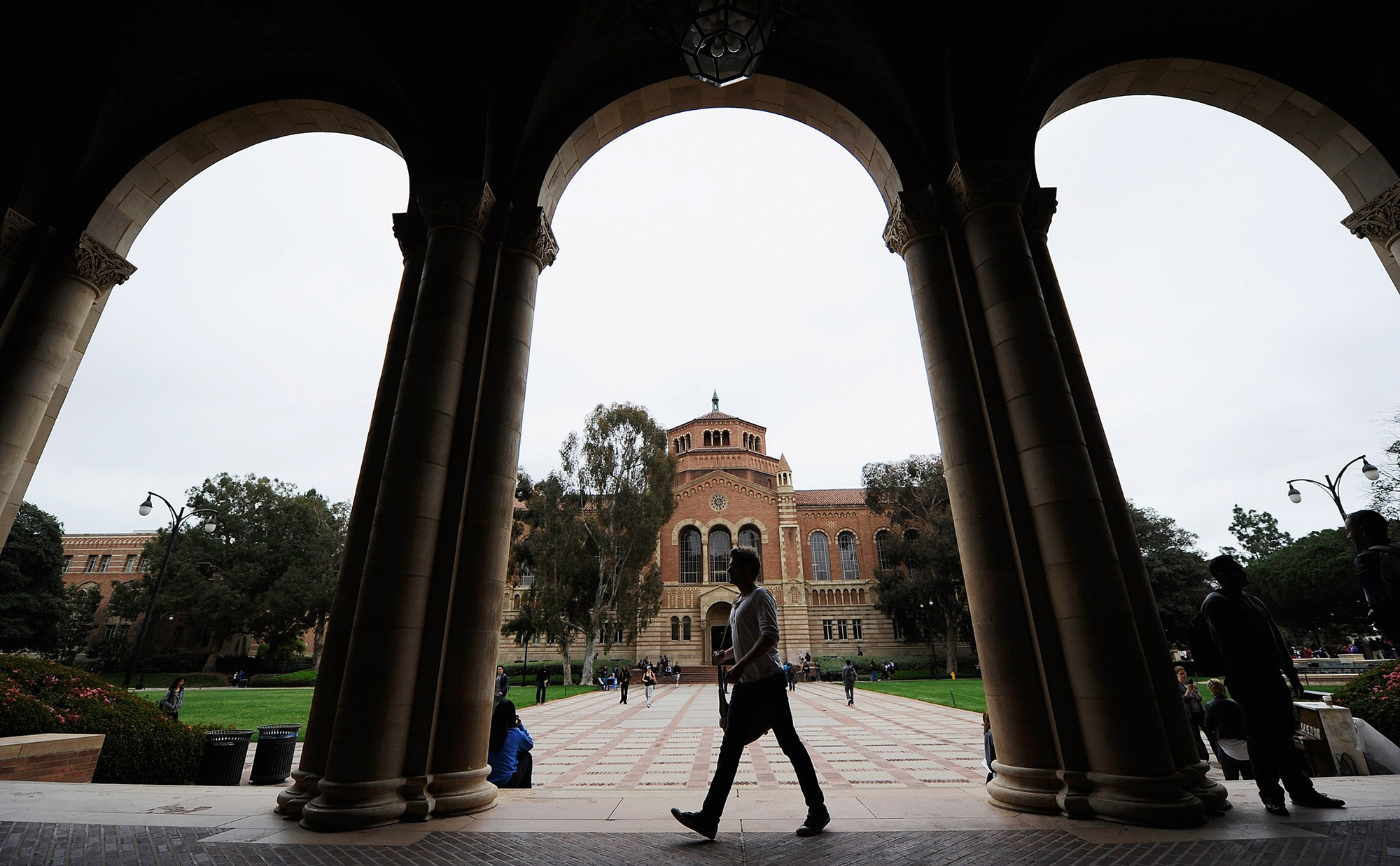
The federal government has said some 43 million people would be eligible for student debt cancellation under the policy.
As of Nov. 3, 26 million people had applied. Of those, the Biden administration said 16 million peoples' applications had been reviewed and prepared for relief, if and when the program is allowed to move forward.
But in the Texas ruling, Pittman found that whether the loan relief "constitutes good public policy is not the role of this Court to determine," instead focusing on government overreach: "No one can plausibly deny that it is either one of the largest delegations of legislative power to the executive branch, or one of the largest exercises of legislative power without congressional authority in the history of the United States," he wrote.
Pittman wrote that there wasn't clear justification for the Biden administration to wield such influence.
"The Court is not blind to the current political division in our country. But it is fundamental to the survival of our Republic that the separation of powers as outlined in our Constitution be preserved," he wrote.
"And having interpreted the HEROES Act, the Court holds that it does not provide 'clear congressional authorization' for the Program proposed by the Secretary," he wrote, referring a Bush-era law that provides broader-than-usual authority to the secretary of education during emergency periods, which the Biden White House says includes the COVID-19 pandemic.
White House press secretary Karine Jean-Pierre said in a statement Thursday they "strongly disagree" with the Texas court's ruling on the administration's student loan program, and that the Department of Justice has filed an appeal.
Education Secretary Miguel Cardona reiterated the White House's commitment to fighting the ruling, stating the Department of Education is "not standing down."
"We are disappointed in the decision of the Texas court to block loan relief moving forward. Amidst efforts to block our debt relief program, we are not standing down. The Department of Justice has appealed today's decision on our behalf, and we will continue to keep borrowers informed about our efforts to deliver targeted relief," Cardona said.
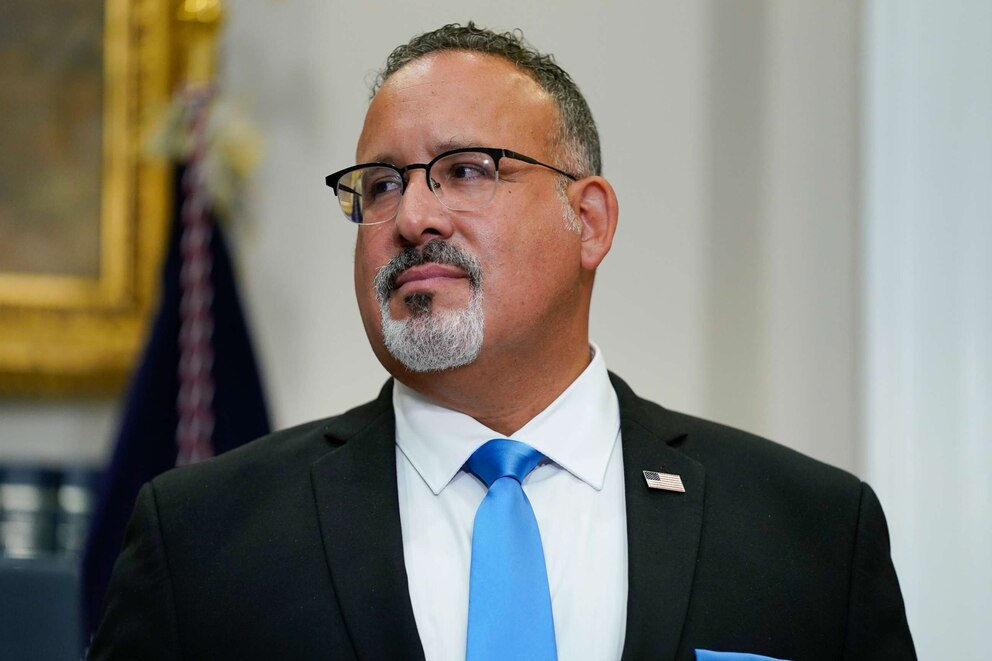
Cardona said the administration is still confident that the program is "lawful and necessary."
Administration officials have previously dismissed other such legal challenges, arguing that loan forgiveness is trying to help Americans get some "breathing room" while critics are "siding with special interests."
"While opponents of our plan are siding with special interests and trying every which way to keep millions of middle class Americans in debt, the President and his Administration are fighting to lawfully give middle-class families some breathing room as they recover from the pandemic and prepare to resume loan payments in January," White House deputy press secretary Abdullah Hasan said in October.
The case so far
The lawsuit from the Job Creators Network Foundation argued that the Biden administration should have let the public weigh in before announcing the policy.
However, the Biden administration argued in its response that there was no requirement for a notice-and-comment period in this situation, though that is typical for certain agency policies.
"Instead of providing notice and seeking comment from the public, the Department hammered out the critical details of the Program in secret and with an eye toward securing debt forgiveness in time for the November election," the suit argues -- also contending that the forgiveness policy excludes people unfairly.
"The result of this arbitrariness is predictable: some will benefit handsomely, some will be shortchanged, and others will be left out entirely," the lawsuit states.
One plaintiff in the lawsuit, Myra Brown, didn't qualify for the program because of a rule change that disqualified about 700,000 borrowers from the program -- a late change that the Biden administration made seemingly in order to protect the policy against another lawsuit.
The other plaintiff, Alexander Taylor, qualified for $10,000 in student loan forgiveness but not the $20,000 because he wasn't a Pell grant recipient, which is reserved for people from low-income families.
The president of the Job Creators Network Foundation has called the program an "unprecedented executive power grab" that would allow "greedy and bloated colleges" to keep raising tuition.
"Bailing out this debt only kicks this problem down the road. By blocking this inflationary taxpayer bailout, JCN's lawsuit can lay the groundwork to actually solve the student debt crisis by holding its college perpetrators accountable," Elaine Parker said in an earlier statement.