Will the thick layers of smog in Beijing affect the performance of athletes at the Olympics? Experts weigh in.
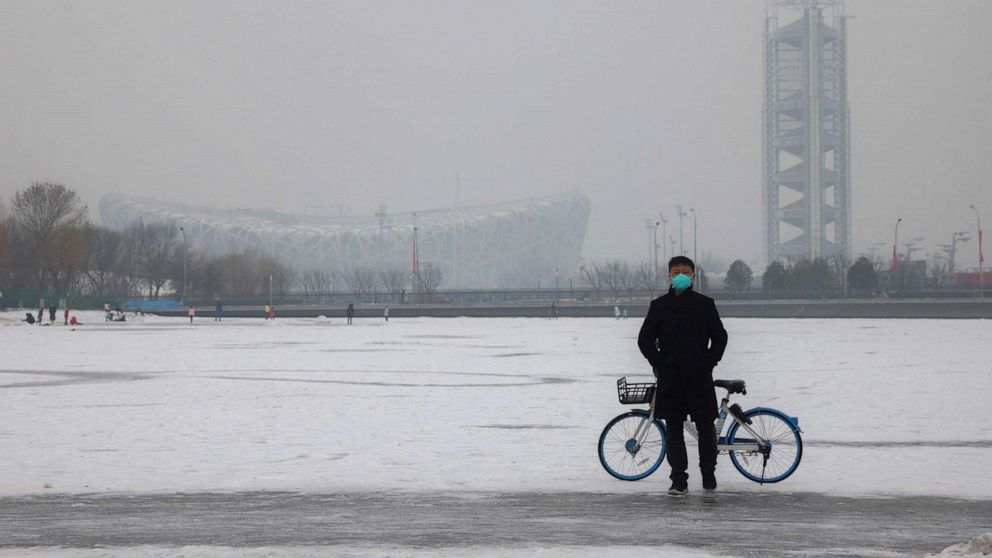
Over the past few weeks, thousands of the world's most elites athletes have journeyed from their home countries to Beijing, a city often shrouded in a thick cloud of smog, for the Olympic Games.
The Olympians, who have spent years honing their skills to peak at the 2022 Winter Olympics, are now entering a region where the atmosphere could hinder them from achieving their best performance, experts told ABC News.
While people with underlying health conditions such as asthma or chronic obstructive pulmonary disease are at risk for heart attack are often the most affected by poor air quality, young people, healthy people and athletes can suffer adverse health consequences as well, Dr. Meredith McCormack, associate professor of medicine at Johns Hopkins University and spokeswoman for the American Lung Association, told ABC News.
Any additional particulate, such as the hazardous pollutant PM2.5 or even high counts of tree pollen, can cause inflammation in the airways and diminish the athlete's ability to breath efficiently, Dr. Matthew Heinz, an internist and hospital physician in Tucson, Arizona, and Pima County supervisor for District 2, told ABC News.
"When you're exercising, you are breathing and turning over more air," McCormack said. "And so you're potentially exposed to even more air pollution during those times of intense air exercise."
It is difficult to know the long-term implications of smog exposure, but even very short exposure can have immediate health effects, including coughing, wheezing, nausea, phlegm, headaches and the triggering of asthma attacks, McCormack added. Something as simple as taking a deep breath can become difficult, Ed Avol, an air pollution expert and professor in the Department of Population and Public Health Sciences at the University of Southern California, told ABC News.
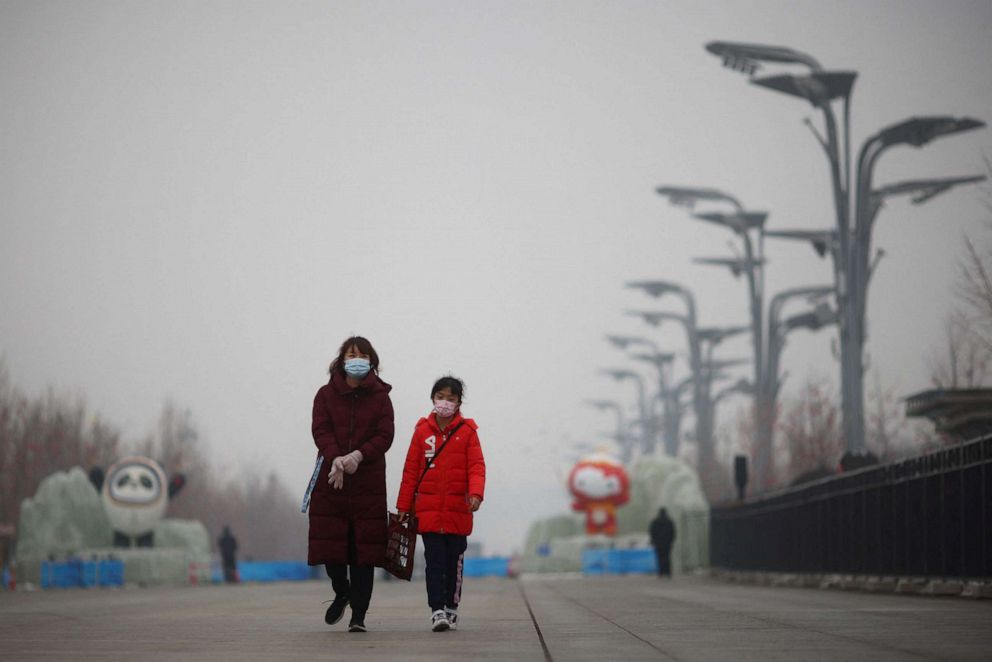
And for athletes who perform at higher altitudes, such as the skiers and snowboarders, the lower oxygen tension combined with the poor quality can make it ever harder to breathe, McCormack said.
"That will make it more difficult for them to take in a deep breath and as effectively and efficiently get that oxygen into their muscles to convert to usable energy," Avol said. "They may again have periphery irritation, which may lead them to cough or not taking a deep breath, and that will affect their performance."
Elite athletes are often "considered a susceptible segment of the population" because of their training habits and the unlikelihood that they will adjust them amid heavy air pollution, Avol said.
"Because they train so hard, they go to such high ventilation rates, they don't seem to adjust their training schedules when it's smoggy or more polluted outside because they don't want to take the time off," he said. "They tend to sort of push themselves into that area that could be potentially dangerous for their short-term, and maybe long-term, health."
Performance while exercising is mainly determined by cardiovascular function rather than lung function, Dr. Carol Cross, a professor of internal medicine and physiology at University of California at Davis, told ABC News.
"It's hard to limit maximal exercise performance from a small decrement in lung function," Cross said.
But some people who are extremely sensitive could also experience cardiovascular abnormalities or even irregular heartbeats as a result of the air pollution, Avol said.
While China is among the world's worst air polluted countries, on Thursday, the Air Quality Index in Beijing was ranked at 25, a "good" rating likely resulting from the Chinese government instituting strict restrictions on industry and traffic as a way to reduce the pollutants and present the country in the best light while on the world stage, the experts said.
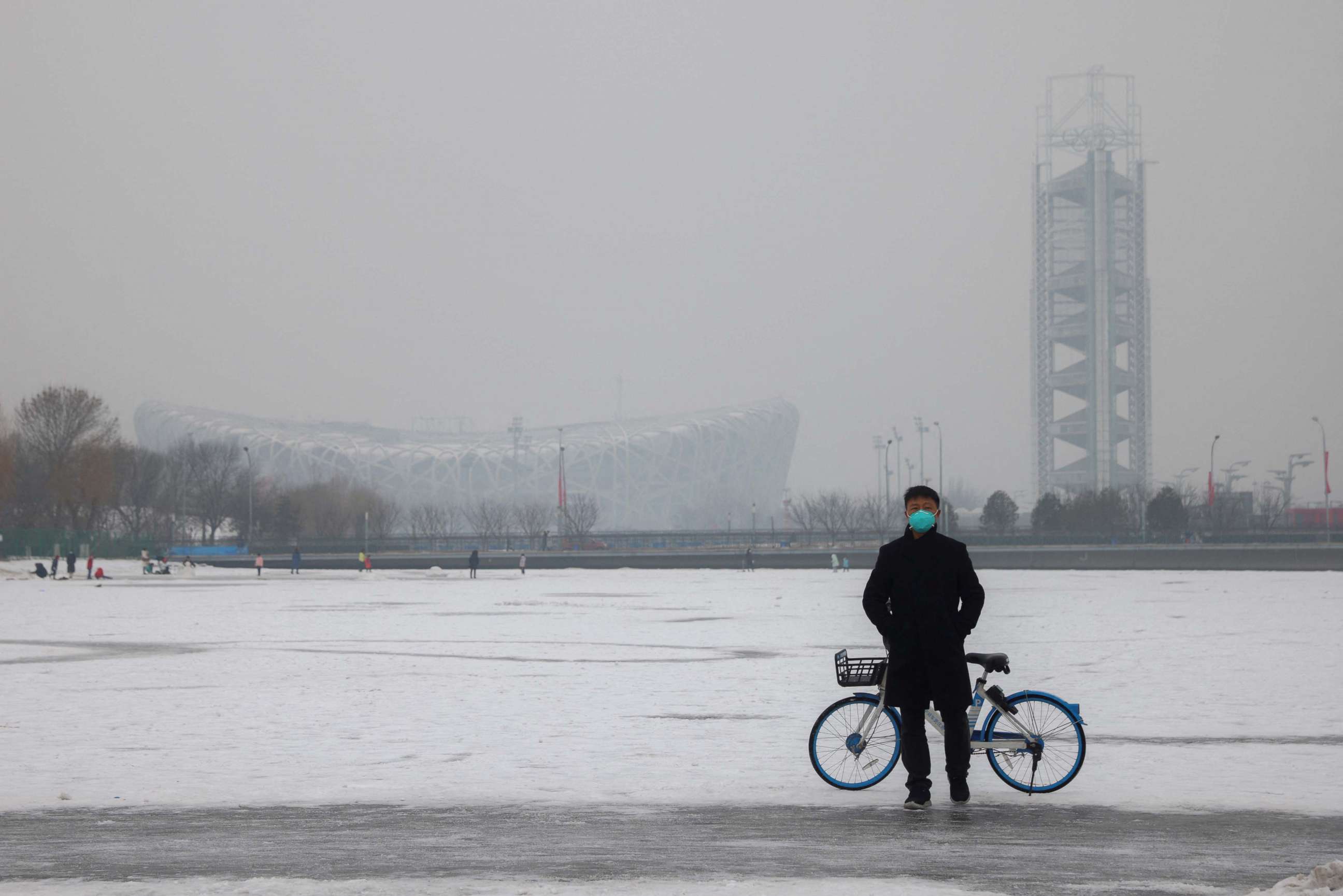
Research published in 2013 that measured the inflammation in the blood of healthy people during the 2008 Summer Olympics in Beijing found that, when the pollution went down due to the traffic and industry bans, so did the inflammation present. When the country returned to business as usual and the pollution went back up, the inflammation got worse, the study found.
But as early as last week, the city was still struggling with thick smog as concentrations of PM2.5 measured at 205 micrograms per cubic meter on Jan. 24, exceeding recommendations by the World Health Organization, the South China Morning Post reported.
Fireworks at celebratory events could worsen the air quality even more and exacerbate symptoms, McCormack said, while Heinz described the conditions the athletes must train and perform in as unfortunate.
"To have some external environmental effects, in this case, tremendous smog or pollution, basically diminished their ability to do their best is terribly unfair," Heinz said.
The experts advised anyone living or traveling to a region with poor air quality to wear a mask, stay indoors as much as possible and use an air purifier with a HEPA filter. People with preexisting conditions such as asthma should make a plan ahead of time, McCormack said, such as bringing extra inhalers or prednisone, in the event of a severe reaction.
The athletes would be wise to check the air quality on days they are scheduled to train or compete and alter their plans accordingly, Avol said.