Top US general monitoring Israel-Hamas conflict in case it spreads to Lebanon
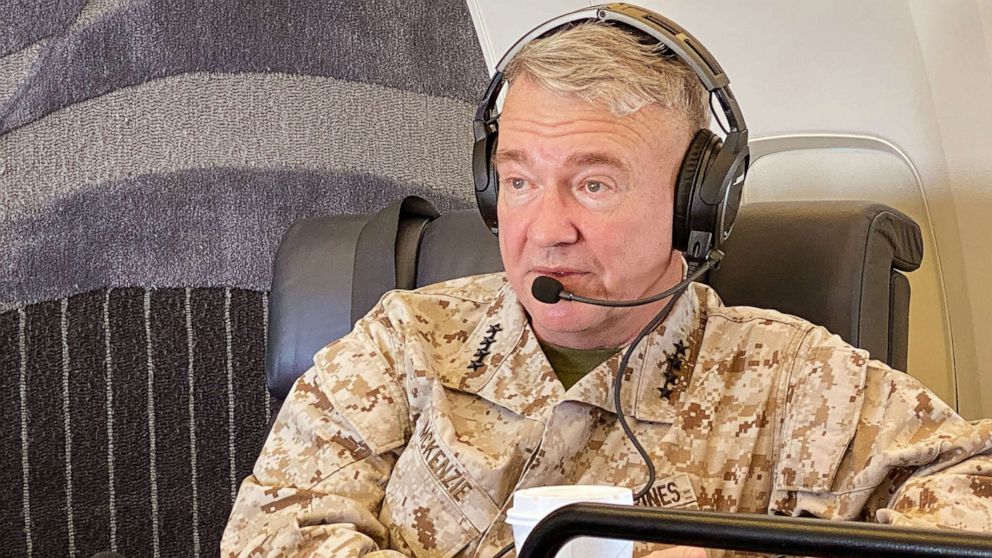
ABOARD A U.S. MILITARY AIRCRAFT -- Gen. Frank McKenzie, the top U.S. general in the Middle East, said he is closely monitoring the conflict between Israel and Hamas in case it widens into Lebanon.
McKenzie, who is overseeing the withdrawal of U.S. forces in Afghanistan, also said that he would present a plan in early June to Defense Secretary Lloyd Austin for how the U.S. would carry out its "over-the-horizon" operations after all 2,500 American troops have left.
The U.S. Central Command commander talked with a small group of reporters traveling with him to the Middle East Wednesday about how CENTCOM will soon incorporate Israel into its area of responsibility, assuming the primary U.S. military relationship that for decades has been undertaken by U.S. European Command.
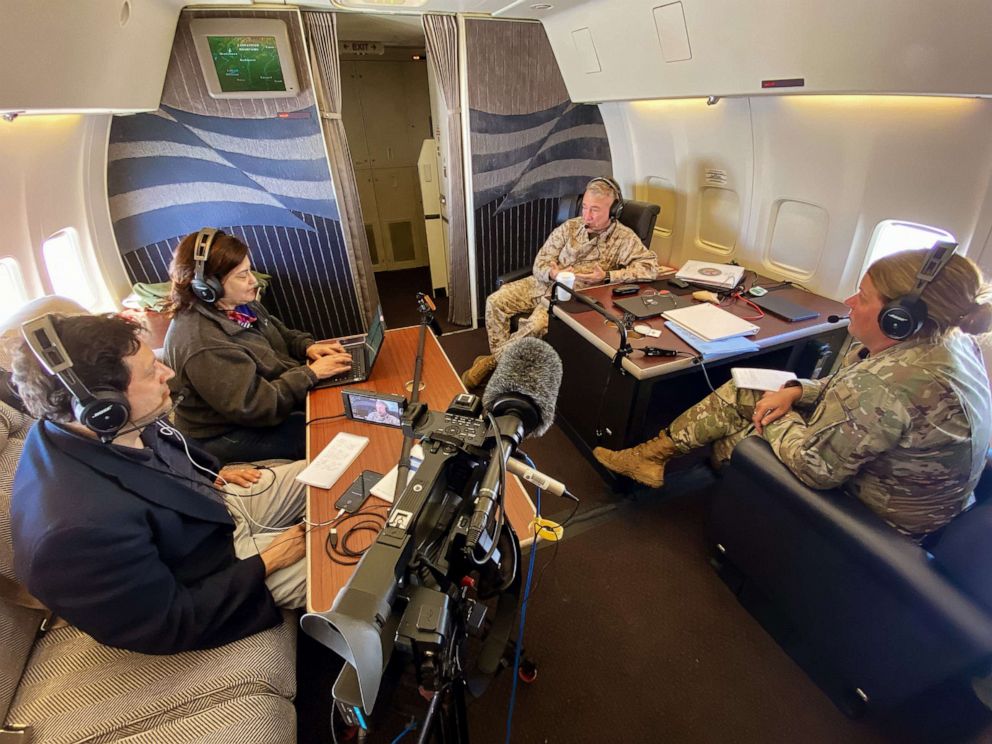
McKenzie said the current conflict between Israel and Hamas has not affected the planned transition in any way, but he said CENTCOM is "closely monitoring" the conflict in case it should widen further.
"I think a conflict on that scale isn't good for any kind of stability anywhere," said McKenzie. "There is a danger any time that a conflict like this drags on -- of it widening -- that would be dangerous."
"We certainly don't want that to happen, I'm sure that Israel doesn't want that to happen," he added.
McKenzie said the main concern is that the conflict could widen into neighboring Lebanon, which is home to some Palestinian extremist groups and Hezbollah.
"That is very concerning," said McKenzie. "Although it looks like there haven't been any significant attacks from Lebanon, that could change."
"I hope that the status quo remains and that does not occur," said McKenzie. "But I think that would be the principal area where it could widen, I hope it doesn't happen."
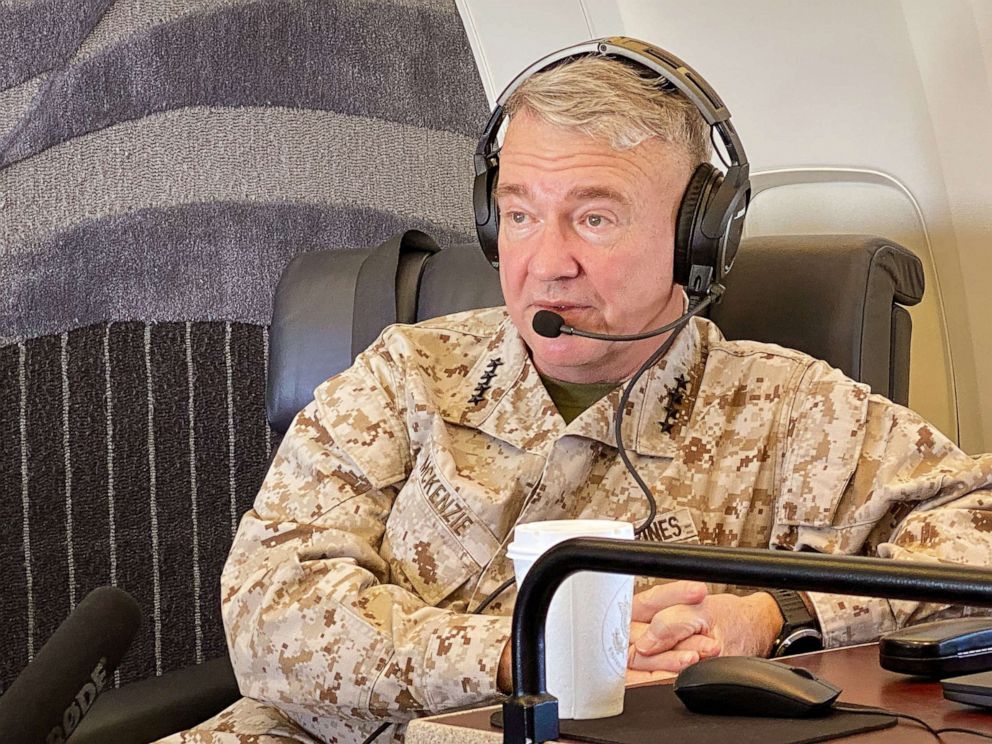
McKenzie also talked Wednesday about the withdrawal of the 2,500 remaining troops in Afghanistan and their equipment -- a process that CENTCOM said on Monday was between 13 to 20% complete, a vague statistic intended to not telegraph to the Taliban precise details about U.S. troop levels.
Once all U.S. troops leave Afghanistan, CENTCOM plans to maintain an "over-the-horizon" counterterrorism capability against the Islamic State and al-Qaida, as well as a persistent drone presence to gather intelligence on those groups.
Just how CENTCOM will be able to do that is still being developed with McKenzie presenting plans to the defense secretary for his approval in early June.
McKenzie has acknowledged that while the over-the-horizon capability will be "a very difficult task, it is not an impossible task" and he said that he foresees a seamless transition beginning once all U.S. troops have left. That likely means the U.S. will initially start over-the-horizon operations from existing military bases in Gulf countries, which could mean less of a presence given the long distances involved.
In the meantime, the State Department has begun reaching out to neighboring countries that would make such operations easier.
"Obviously, geography is very important to these types of things," said McKenzie.
All of the U.S. military equipment in Afghanistan is either being taken out by military aircraft, being given to the Afghan military or -- in some cases -- is being destroyed.
A major military airlift operation coordinated by U.S. Transportation Command has taken out most of the equipment so far, particularly the most sensitive equipment.
For now, the Taliban has continued to focus its attacks against Afghan Security Forces and "they've not yet turned against us, at least not yet."
According to McKenzie the U.S. will do all it can to support the Afghan military from a distance, but "it's time for the Afghan military to stand up and show that they can fight alone."
"I think they have a fighting chance to be successful," he added.