New travel ban drops Iraq but keeps 6 other majority-Muslim countries
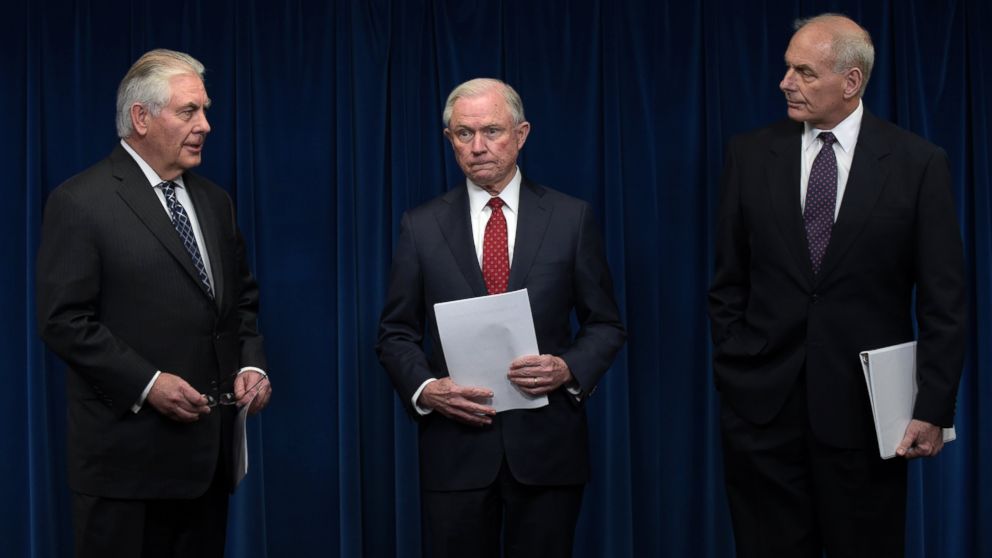
— -- President Trump has signed a new executive order that temporarily bars people from six majority-Muslim countries from entering the United States.
The new executive order, which will go into effect next week, revokes and replaces the controversial order that Trump signed in late January and the 9th Circuit Court of Appeals blocked last month. The new order has been crafted to attempt to withstand legal challenge, exempting permanent legal residents and applying only to future visa applicants, not to those who already hold valid visas.
The new order narrows the list of countries; it’s now six majority-Muslim countries instead of seven. Iraq has been removed from the original list at the urging of the Pentagon and State Department. The countries that remain on the list are Iran, Libya, Yemen, Syria, Somalia and Sudan. It's a 90-day ban on new visa applications from those countries.
Iraq is no longer one of the banned countries "because we have received firm commitments from the government of Iraq about increased cooperation in terms of info sharing and other related activities," a senior U.S. official said on a background call with reporters before the executive order signing.
Secretary of State Rex Tillerson said this morning at a news conference, "Iraq is an important ally in the fight to defeat ISIS."
Attorney General Jeff Sessions and Secretary of Homeland Security John Kelly were also on hand to defend the new ban.
"This executive order responsibly provides a needed pause so we can carefully review how we screen people coming from these countries of concern," Sessions said at the news conference.
Kelly said, "We cannot risk the prospect of malevolent actors using" the immigration system to their advantage.
"The fact remains that we are not immune to terrorist threats and our enemies use our own freedoms and generosities against us," Kelly said.
Trump was not at the news conference. White House press secretary Sean Spicer shared a tweet with a picture that he said shows Trump signing the executive order.
A source told ABC News that Trump was reluctant to replace the original executive order and wanted to continue to defend it in court, preferring the new one as a supplement to the first. Members of his legal team, however, made the case that the first one had to be revoked, and he reluctantly decided to defer to them, the source said.
A senior Department of Homeland Security official said today that there was "nothing wrong with the first executive order as a legal matter."
Still, the provision on refugees has been changed. The new order puts a 120-day halt on all refugees entering the United States. The first order put an indefinite halt on Syrian refugees. They are no longer singled out.
"More than 300 people, according to the FBI, that came here as refugees are under an FBI investigation today for potential terrorism-related activities," Sessions said today.
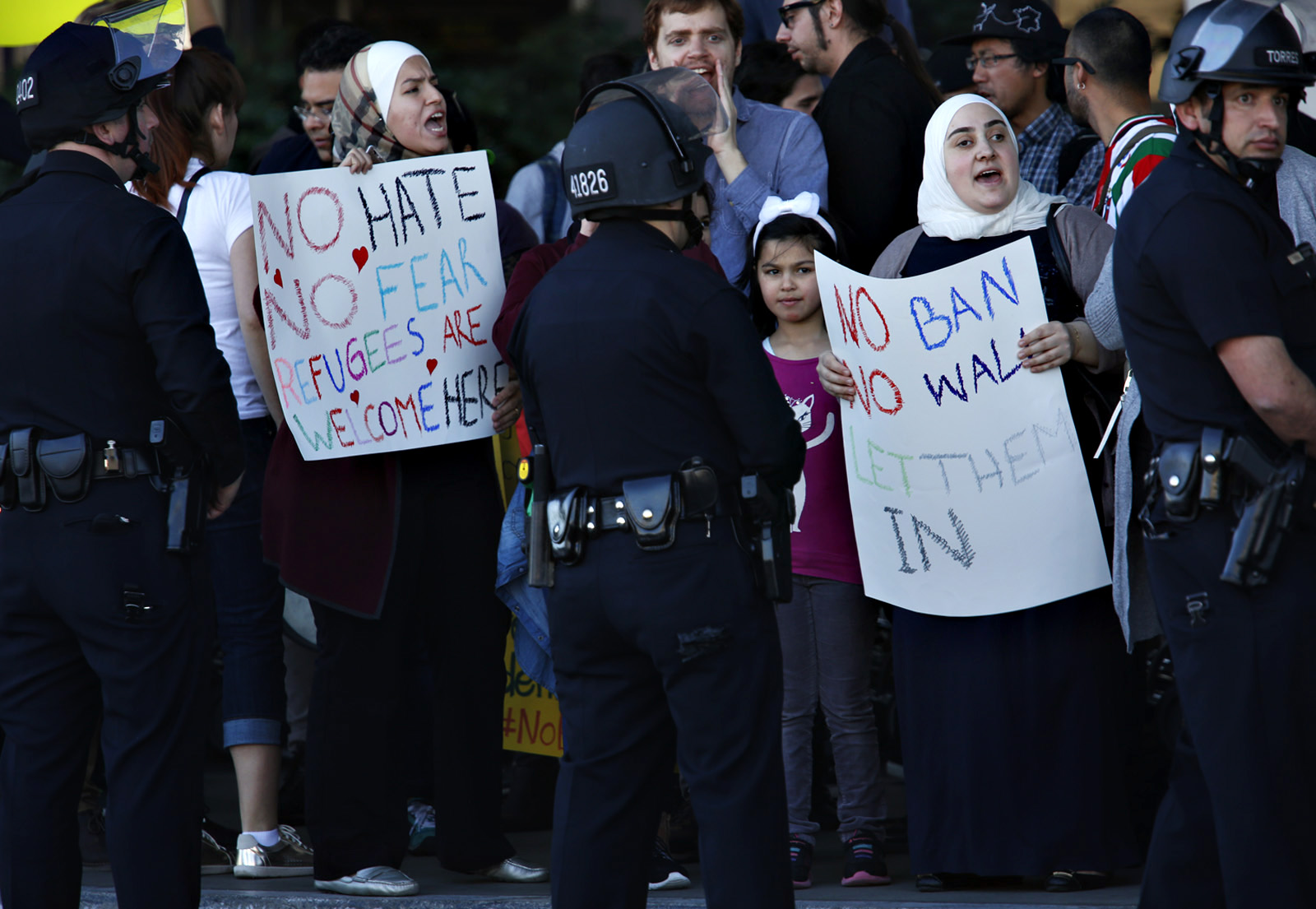
But the new executive order gives just two examples of refugees who have been convicted of terrorism-related crimes in the U.S.: In January 2013 two Iraqi nationals were sentenced for multiple terrorism-related offenses, and in October 2014 a native of Somalia who had been brought to the United States as a child refugee was sentenced for plotting to detonate a bomb at a Christmas tree lighting ceremony in Portland, Oregon.
The administration has not provided additional examples.
Federal officials today said the new order was coordinated with the DHS, the Department of Justice and the Department of State, emphasizing that this would be an orderly rollout.
"You should not see any chaos or alleged chaos at airports," one official said.
In addition, the prioritization of admissions of religious minorities as refugees, which was part of the previous executive order, is absent from the one issued today.
This ban will not go into place immediately; it is slated to to into effect March 16 at 12:01 a.m. Eastern time.
Americans "can have high confidence that we are identifying ways to improve the vetting process," Tillerson said today.