Treacher Collins syndrome: What you need to know
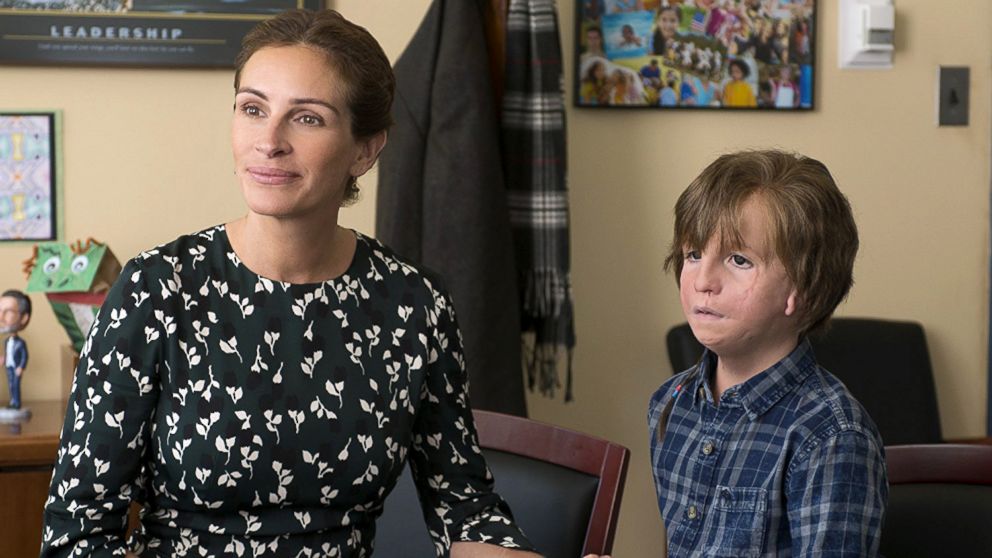
— -- Now a feature-length film starring Julia Roberts and Owen Wilson, "Wonder" is based on a children’s novel by R.J. Palacio and documents the story of a young boy with a genetic disorder called Treacher Collins syndrome. It’s a movie that may have many taking the opportunity learn more about the features and complications that go along with this condition.
Below are answers to some of the more common questions about this disorder.
What is Treacher Collins syndrome?
Treacher Collins, also called mandibulofacial dysostocis, is a genetic condition that affects the development of bones and structures of the face. It was first described in 1900 by a physician named Edward Treacher Collins.
This condition can be diagnosed in a pregnancy through invasive prenatal genetic testing such as amniocentesis, in which doctors collect a sample of the amniotic fluid that surrounds a developing fetus and analyze it in a lab. However, the diagnosis is usually first suspected during a physical exam of a young child after birth.
Not all facial deformities are caused by Treacher Collins. Other disorders with similar characteristics include Nager syndrome, Miller syndrome and Goldenhar syndrome -- just to name a few.
How does someone get this disorder? How common is this?
Treacher Collins is caused by an abnormality in someone’s genes, and it arises before they are born. The specific anomaly is found in a gene known as TCOF1. Genetic mutations are usually thought of as inherited, but the majority of the mutations that cause this syndrome are found in people without any affected relatives. Treacher Collins is normally caused by a new mutation that occurs at random in a sperm or egg cell before or at the time of conception. There are over 120 different identified mutations that can cause this disorder.
The disease itself, however, is very rare. It affects approximately 1 in 50,000 children, and doctors do not routinely screen for it unless there is a concern that a parent who carries the gene will pass it along.
What are the features of this disease?
The mutation in Treacher Collins results in abnormal development of multiple body parts as an embryo. Commonly seen in this condition are abnormalities of the external ears, hearing loss, abnormally developed eyelids and abnormal development or complete absence of facial bones -- including the jaw, cheekbones and palate. However, cognition and intelligence are usually not affected in these individuals.
There are a spectrum of symptoms and findings with this condition, meaning some individuals may be so mildly affected that they are never even diagnosed, while others may develop serious or life-threatening complications.
Is there a cure?
There is no cure for Treacher Collins. Researchers are looking into the use of stem cells to treat it, and they are also studying the way the disease affects the cells on a microscopic level to try to develop ways to better treat this condition. Treacher Collins patients usually require the care of multiple medical specialists that treat the problems unique to the individual.
Patients will commonly need help with ensuring their airways remains open, and they may in some cases require a tracheostomy -- an incision on the neck opening a direct airway in the trachea. Those with hearing loss may need devices or procedures to improve hearing. Some patients need craniofacial reconstruction surgery to repair cleft palates, jaws, or even repair bones in the skull. Speech therapists and educational counselors also play an important role in helping these patients maximize their potential.
What is the prognosis?
Patients usually grow to become functioning adults with normal intelligence levels. In fact, life expectancy for these individuals is about the same as those without Treacher Collins. There are, however, advanced cases where patients die around the time of birth, usually due to airway issues. Overall, those with Treacher Collins should be integrated into regular schools and activities, and it is important to educate young children and community members about those living with the diagnosis.