Trump administration moves to dismantle prominent US weather and climate research center

For more than six decades, the National Center for Atmospheric Research in Boulder, Colorado, has been a cornerstone of United States weather and climate research, producing science that is fundamental in advancing our understanding of Earth’s climate, weather and atmosphere and how those systems contribute to severe weather events, climate change and disasters.
In a post on X, the Trump administration announced plans to dismantle the center, saying “a comprehensive review is underway,” and adding that “any vital activities such as weather research will be moved to another entity or location.”
The move has drawn swift condemnation from meteorologists, climate scientists and lawmakers, who warn that breaking up NCAR could undermine essential research used to forecast severe weather, study climate change and protect public safety.

Office of Management and Budget Director Russell Vought announced Tuesday that “The National Science Foundation will be breaking up the National Center for Atmospheric Research (NCAR) in Boulder, Colorado.” He called the facility “one of the largest sources of climate alarmism in the country."
In a statement to ABC News on Wednesday, a senior White House official appeared to place the blame on Colorado's Gov. Jared Polis.
"Maybe if Colorado had a governor who actually wanted to work with President Trump, his constituents would be better served," the official said.
The White House official also said that, "Following a comprehensive review, the National Science Foundation will be breaking up NCAR to eliminate Green New Scam research activities. Any vital functions, such as weather modeling and supercomputing, will be moved under the purview of another entity or location. Parts of the lab may be moved to another entity."
The U.S. National Science Foundation issued a statement on Wednesday saying it is reviewing the structure of the research and observational capabilities operated by the NSF National Center for Atmospheric Research.
“NSF remains committed to providing world-class infrastructure for weather modeling, space weather research and forecasting, and other critical functions,” the agency said. NSF said it will “engage with partner agencies, the research community, and other interested parties to solicit feedback for rescoping the functions of the work currently performed by NCAR.”
Since 1960, NCAR has studied weather, climate and other Earth system processes to improve forecasting, provide long-term climate predictions, and support planning for environmental challenges such as extreme weather, drought and air quality management.
Antonio Busalacchi, president of the University Corporation for Atmospheric Research (UCAR), which manages NCAR, released a statement saying he was aware of reports that the White House is proposing to break up the U.S. National Science Foundation National Center for Atmospheric Research, but had no further information.
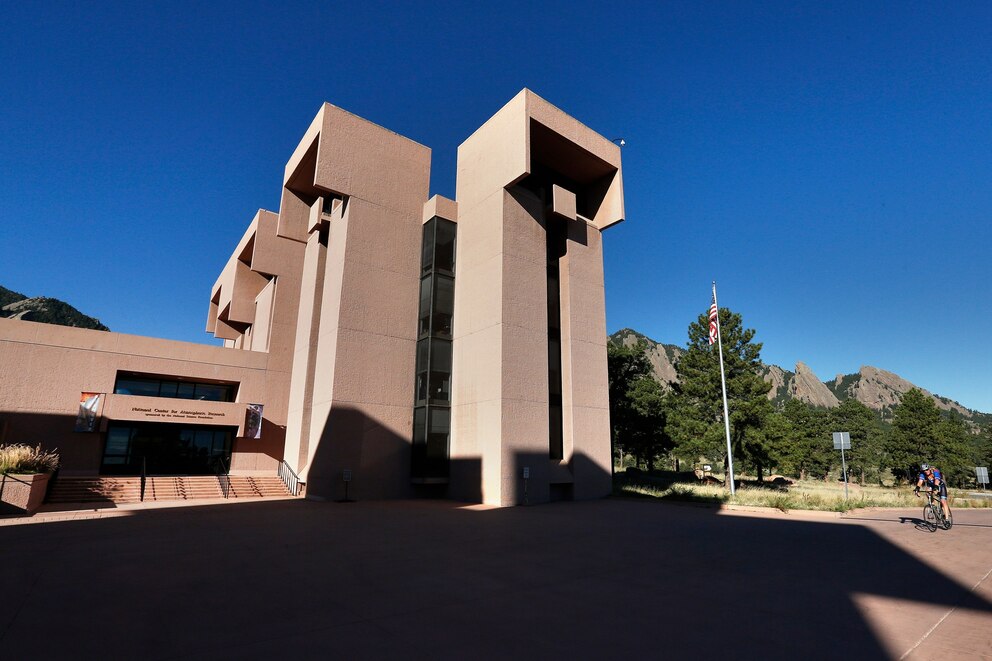
Busalacchi said NCAR’s research “is crucial for building American prosperity by protecting lives and property, supporting the economy, and strengthening national security.” He added that its closure “would set back our nation's ability to predict, prepare for, and respond to severe weather and other natural disasters.”
NCAR is a federally funded research and development center managed by the nonprofit University Corporation for Atmospheric Research and receives most of its funding from the U.S. National Science Foundation, an independent federal agency.
Although it is not a government agency, NCAR works closely with federal partners such as the National Oceanic and Atmospheric Administration and NASA, providing scientific tools, computer models and data that help governments, researchers and communities make informed decisions about public safety, natural resources and environmental management.
In addition to conducting climate research, NCAR also provides the tools, platforms, models and datasets used to study and forecast weather and understand its impacts on communities.
“NCAR is quite literally our global mothership,” Katharine Hayhoe, chief scientist at the Nature Conservancy, said in a post on Bluesky. “Everyone who works in climate and weather has passed through its doors and benefited from its incredible resources.”
“Dismantling NCAR is like taking a sledgehammer to the keystone holding up our scientific understanding of the planet,” Hayhoe said.
“The Trump administration has put a bullseye on one of the United States’ premier weather and climate research and modeling centers, threatening to destroy decades of public investment,” Dr. Carlos Martinez, a senior climate scientist at the Union of Concerned Scientists, said in a statement. “Without NCAR’s infrastructure and supercomputing abilities, many small colleges and universities wouldn’t be able to conduct climate or weather research with the latest models.”
"The research done at NCAR influences every piece of weather and climate prediction in the United States, enabling air quality monitoring, forecasting of droughts and extreme precipitation events, and improving hurricane intensity forecasts,” Martinez added.
NCAR is responsible for developing the GPS dropsonde, a weather instrument released from hurricane hunter aircraft into tropical cyclones and winter storms to collect vital data used to forecast a storm’s path, timing and strength.
Since the production of the first dropsonde in the 1970s, NCAR engineers have refined and improved the technology in collaboration with scientists from universities, federal agencies and international partners, as well as the companies that manufacture the instruments. Dropsonde data have helped drive major advances in understanding the atmosphere and improving weather prediction.
The GPS dropsonde “revolutionized the understanding of tropical cyclone structure, improved forecasts, and validated remote sensing platforms, as documented in more than 400 peer-reviewed publications over the past 25 years,” James Franklin, former chief of the National Hurricane Center’s Hurricane Specialist Unit, said in a post on Bluesky. “And that’s just one of NCAR’s countless advances.”
NCAR has also played a central role in developing and supporting widely used weather and climate models, including the Weather Research and Forecasting (WRF) model, a critical tool for forecasting severe thunderstorm and extreme rainfall events. The agency has conducted advanced research on tornadoes and contributed to the understanding of human-caused climate change, including the impact of greenhouse gases and long-term climate projections.
Proposed steep budget cuts to climate and weather programs and agencies by the Trump administration have faced strong bipartisan pushback from lawmakers in recent months. Congressional spending bills from both the House and Senate restored much of the funding for several weather and climate-related agencies, including NOAA and the NSF.
The Trump administration’s latest proposal to dismantle NCAR has drawn strong criticism from some lawmakers. Several Colorado lawmakers, where the center is housed, have voiced concerns, saying the move could undermine U.S. weather and climate research.
U.S. Senators John Hickenlooper and Michael Bennet from Colorado and Congressman Joe Neguse, who represents the Boulder area, issued a joint statement condemning the proposed dismantling.
“The National Center for Atmospheric Research and its 830 employees are leading the nation’s climate science research, delivering life-saving breakthroughs that provide early warnings for natural disasters and deepen our understanding of Earth’s systems. They are a core component of our state’s economy and an integral part of the fabric of Colorado,” the lawmakers said.
They added, “Efforts to dismantle this institution and its essential programs are deeply dangerous and blatantly retaliatory. This reckless directive would have devastating consequences for families in Colorado and communities across the nation. We intend to fight back against attempts to gut this cutting-edge research institution with every tool we have.”
Colorado Gov. Jared Polis also weighed in Tuesday, saying in a statement that he had not received official confirmation of the proposal but warned that if the closure and cuts move forward, “we will lose our competitive advantage against foreign powers and adversaries in the pursuit of scientific discovery.”
He added, “Climate change is real, but the work of NCAR goes far beyond climate science. NCAR delivers data around severe weather events like fires and floods that help our country save lives and property, and prevent devastation for families.”