Trump says he didn't want to 'create panic' over the pandemic, but stoking fear has been his trademark: ANALYSIS
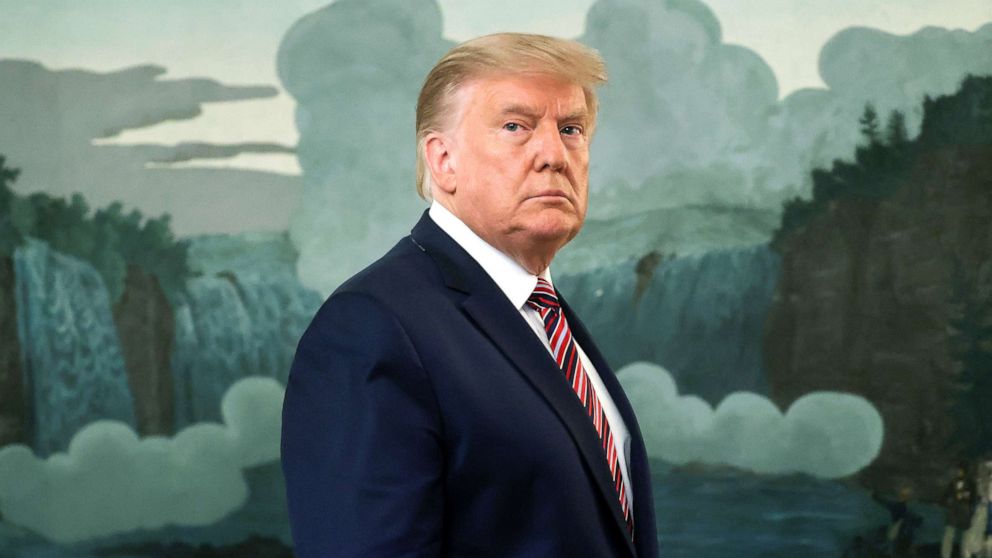
While President Donald Trump said he downplayed the threat of the novel coronavirus earlier this year because he did not "want to create panic," there's a glaring contradiction: He has run a reelection campaign -- and based much of his presidency -- on promoting fear.
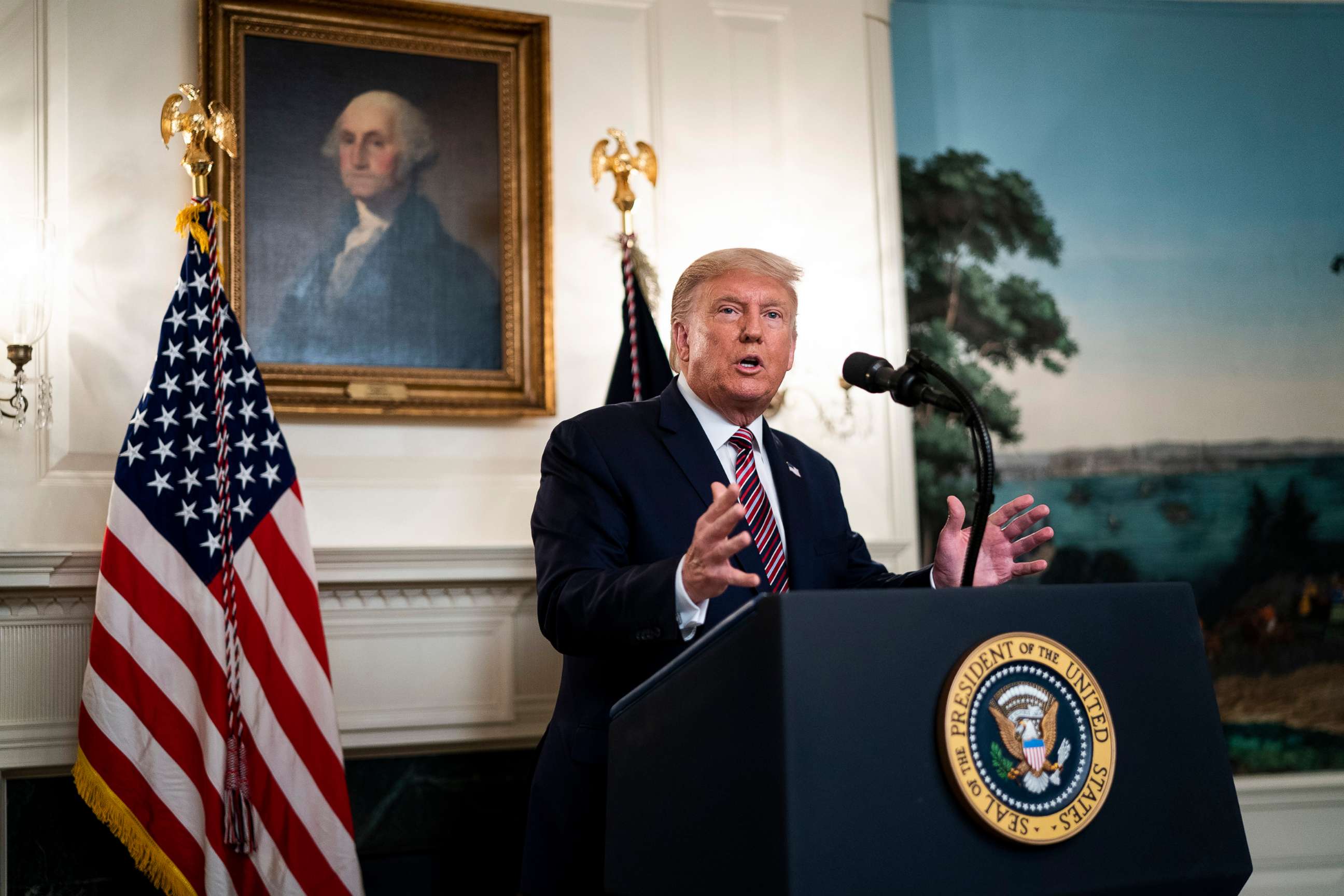
From dire warnings about undocumented immigrants during his run in 2016, and issuing a Muslim ban shortly after taking office, to now warning the suburbs would be "destroyed" under a Biden administration, Trump has used fear -- often laced with racist undertones -- to fire up his base and turn out voters.
And while some might view panic as an extreme manifestation of fear, the president has at times used the words interchangeably.
“I don’t want people to be frightened," Trump said Wednesday, explaining why he admitted in a March interview with the veteran journalist Bob Woodward that he intentionally downplayed the danger posed by COVID-19, despite understanding the true threat. "I don’t want to create panic."
It wasn't clear what evidence he had, if any, that Americans would react with panic if told a straight version of all the facts about the virus -- or whether he, himself, feared a damaged economy might hurt his reelection hopes.
But less than 24 hours later, the president seemed to lean on the opposite impulse -- with a tweet Thursday morning exaggerating what the country would look like if he was not reelected.
"The Democrats never even mentioned the words LAW & ORDER at their National Convention,” Trump tweeted. “That’s where they are coming from. If I don’t win, America’s Suburbs will be OVERRUN with Low Income Projects, Anarchists, Agitators, Looters and, of course, ‘Friendly Protesters’."
Trump’s long history of pushing fear
This is not a unique tone for Trump to take, which is why his multiple proclamations Wednesday of not wanting to incite panic seem off-brand for a president desperately trying to win reelection.
His social media platforms are full of claims -- exaggerated or baseless -- that American cities are burning to the ground, “thugs” and lawlessness could take over the suburbs, and that millions -- including foreigners -- could commit voter fraud with mail-in ballots.
And it doesn’t stop with his tweets. In both his campaign rallies and official White House events -- which almost always delve deeply into politics and attacks on his Democratic opponent, former Vice President Joe Biden -- he doesn’t shy away from using fear to motivate his supporters.
At the same event at the White House Wednesday where he claimed to not want to incite panic as the country's leader, he did so by painting a dark picture of what the United States would look like if Biden was elected president and had the opportunity to nominate Supreme Court justices.
“Radical justices will erase the Second Amendment, silence political speech and require taxpayers to fund extreme late-term abortion,” Trump proclaimed, without providing evidence. “They will give unelected bureaucrats the power to destroy millions of American jobs. They will remove the words ‘under God’ from the Pledge of Allegiance. They will unilaterally declare the death penalty unconstitutional, even for the most depraved mass murderers. They will erase national borders, cripple police departments and grant new protections to anarchists, rioters, violent criminals and terrorists.”
Also on Wednesday, in an interview with Fox News, he warned that if Biden wins, "China will end up owning the United States, owning it" and that "you will have a stock market crash the likes of which you've never seen before."
Trump has repeatedly made those dire predictions to thousands on the campaign trail and in multiple interviews.
Stoking fear helped send Trump to the White House
Looking even farther back, stoking fear and uncertainty helped propel Trump to the presidency.
“People are scared,” Trump said in 2016 after winning the state of New Jersey in the primaries.
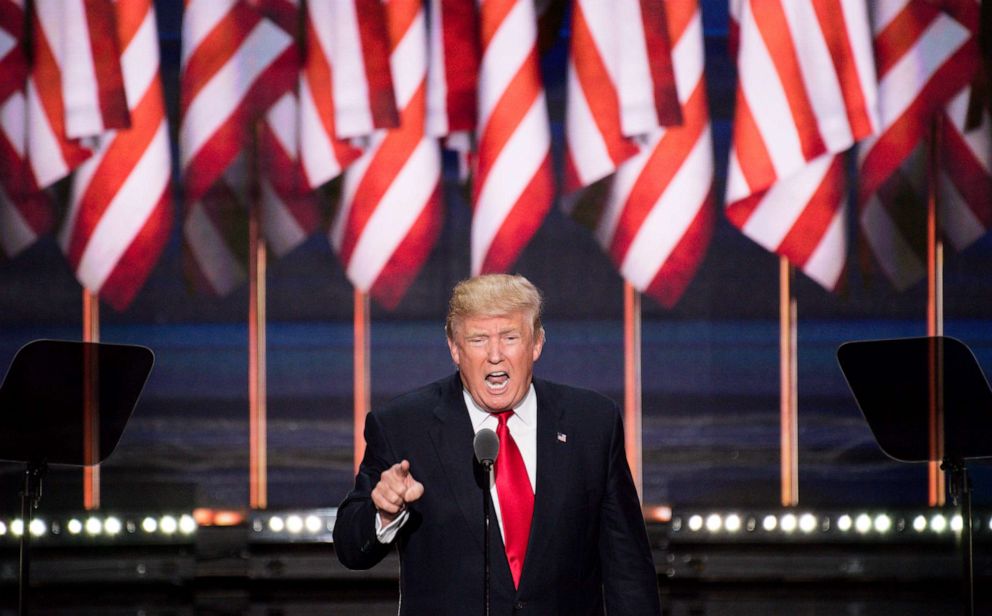
His acceptance speech at the Republican National Convention that year centered on a theme of fear -- reminiscent of his message today.
“The attacks on our police, and the terrorism in our cities, threaten our very way of life,” Trump said then. “Any politician who does not grasp this danger is not fit to lead our country. Americans watching this address tonight have seen the recent images of violence in our streets and the chaos in our communities. Many have witnessed this violence personally; some have even been its victims.”
Long before his rise to the presidency, the president loudly stoked fear in the media.
In 1989, Trump placed four full-page ads in New York newspapers, including the New York Times, calling for the death penalty for a group of five Black and Latino teenage boys known as the "the Central Park Five," later judged wrongly convicted of the brutal rape of a woman attacked while jogging in Central Park.
Fear as a political force
Using fear, particularly tapping into racist fears, as a political weapon is not an idea Trump originated. Politicians have always played to it.
During the riots of 1968, Richard Nixon emphasized the need for "law and order." Ronald Regan in 1976 played into American's racist view of African Americans by coining the phrase "welfare queen," who he said "used eighty names, thirty addresses, fifteen telephone numbers, to collect food stamps, Social Security, veterans' benefits for four non-existent deceased veterans husbands, as well as welfare." In 1988, that same fear of crime and racist attitudes produced George H.W. Bush's infamous "Willie Horton" ad.
Trump followed that playbook closely in his 2016 election, and surveys showed that his supporters were more concerned than most becoming victims of crime.
According to a survey done by the Public Religion Research Institute done that year, three-fourths of Trump supporters feared being victims of crime, versus 63 percent overall.