Could Trump deny back pay to furloughed government employees?
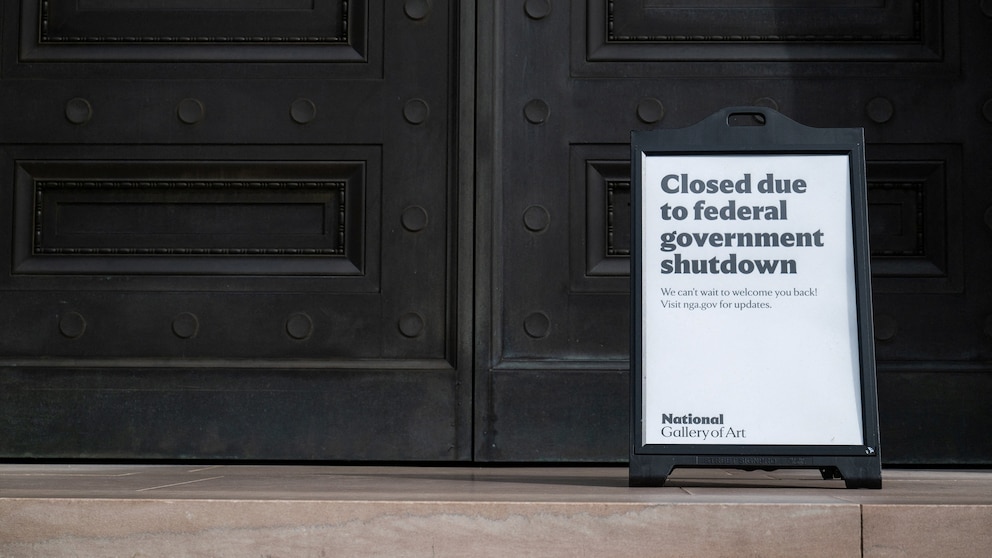
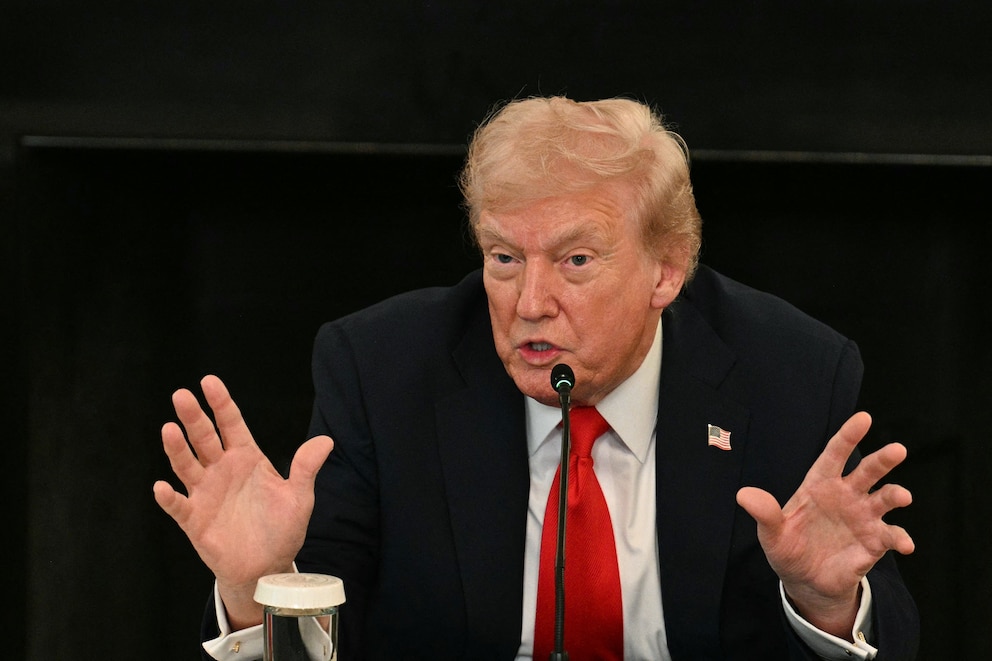
President Donald Trump this week indicated that the federal government may deny back pay to some employees furloughed amid a government shutdown.
When asked on Tuesday if government workers would receive back pay, Trump told reporters, "It depends who we're talking about."
“There are some people that don’t deserve to be taken care of, and we’ll take care of them in a different way,” Trump added.
Within hours, members of Congress from both major parties said they support back pay for furloughed workers.
Trump may attempt to deny back pay to furloughed employees but the move would all but certainly violate existing law, according to some legal experts who spoke with ABC News. Still, they added, a potential legal fight could bring the issue to the Supreme Court, where experts differed about Trump’s likelihood of success before a conservative-majority court.
Here’s what to know about whether the law protects back pay for furloughed government employees, and what could happen next in the fight over their compensation:
Do furloughed workers typically receive back pay after a government shutdown?
Yes, furloughed workers usually receive full back pay when a shutdown ends and the government reopens. Approximately 750,000 federal workers have been furloughed. The Congressional Budget Office last month projected the total cost of compensation for those workers at about $400 million for each day of the shutdown.
For now, the shutdown -- which entered its tenth day on Friday -- appears unlikely to end anytime soon. The Senate has rejected dueling funding proposals from Democrats and Republicans in six separate votes.
Furloughed workers are set to receive a final paycheck on Friday, which covers a pay period that includes the previous two weeks, though it excludes compensation for days following the shutdown on Oct. 1. Some workers deemed essential will be required to work unpaid for the duration of the funding lapse.
The most recent shutdown -- which spanned from late 2018 to early 2019 -- lasted 35 days. Afterward, furloughed federal workers received full back pay.
Is back pay for furloughed workers legally guaranteed?
The legal status of back pay centers on a measure signed into law by Trump in 2019 during the previous government shutdown, experts said.
The Government Employee Fair Treatment Act, or GEFTA, guarantees back pay for employees furloughed or required to work unpaid during any “lapse in appropriations that begins on or after Dec. 22,” which marked the first day of the previous shutdown.
“That law clearly applies to this situation,” Michael LeRoy, a professor at the University of Illinois College of Law, told ABC News. “It was enacted in anticipation of future government shutdowns.”
The measure calls for furloughed employees to receive back pay on the earliest day possible, regardless of their pay schedule.
The law affords little leeway for the federal government to skirt its obligation, Donald Kettl, professor emeritus at the University of Maryland School of Public Policy, told ABC News.
“There really doesn’t seem to be any loophole in it that would allow the administration to duck that,” Kettl said.
In a January 2019 memo, the Trump-led White House affirmed the federal government’s legal obligation to provide back pay for furloughed workers under such circumstances.
“An employee who is furloughed as the result of a lapse in appropriations must be paid for furlough periods that occurred during the lapse,” the U.S. Office of Personnel Management, or OPM, said at the time, noting that the measure applies to “any future lapse.”
Where does the Trump administration stand on back pay for furloughed employees?
In recent days, Trump appeared to cast doubt on the federal government’s obligation to provide back pay for all furloughed government employees, before vowing to abide by relevant law.
When asked on Tuesday about back pay for furloughed workers, Trump said, “It really depends on who you're talking about.”
“But for the most part, we're going to take care of our people,” Trump added. “There are some people that really don't deserve to be taken care of, and we'll take care of them in a different way."
When asked about the fact that back pay for furloughed workers is law, Trump responded, "I follow the law and what the law says is correct."
Meanwhile, a draft memo from the OPM this week put forward an interpretation of GEFTA that weakens the legal guarantee of back pay for furloughed workers.
The new interpretation of the law by the administration is that furloughed workers may not be guaranteed the funds unless Congress appropriates the funds in a post-shutdown appropriations bill, according to the draft memo.
In other words, the memo acknowledges that GEFTA established an obligation to provide back pay for furloughed employees, but only in the event of an appropriations bill that specifically provides funds for their compensation.
OPM sent a memo days before the shutdown with contradictory guidance, stating plainly in an FAQ section that "yes," employees who are furloughed will get back pay.
The American Federation of Government Employees (AFGE), one of the largest unions of federal workers, blasted reports of the memo as "frivolous" and questioned the legal basis for it.
“The frivolous argument that federal employees are not guaranteed back pay under the Government Employee Fair Treatment Act is an obvious misinterpretation of the law," AFGE National President Everett Kelley told ABC News in a statement. "It is also inconsistent with the Trump administration’s own guidance from mere days ago, which clearly and correctly states that furloughed employees will receive retroactive pay for the time they were out of work as quickly as possible once the shutdown is over."
How could a potential legal fight play out?
If Trump moves to deny back pay for some or all furloughed employees, the affected workers could sue, prompting a legal battle that could make its way to the Supreme Court, some legal experts told ABC News.
Under such a scenario, the workers would have a strong case, experts said, but they differed over the likelihood of success before the conservative-majority Supreme Court.
Kettl, of the University of Maryland, noted the high court’s general support for an expansive interpretation of executive power, but nevertheless said the justices would likely rule against Trump due to the clarity of the law in this case.
“It’s hard to imagine there would be a majority on the court that would come down in the president's favor,” Kettl said. “On the other hand, it’s very easy to imagine that coming to that conclusion could take a long time.”
Some other legal experts said they are uncertain of the outcome or believe it could come down in favor of Trump.
“The Supreme Court has been remarkably accommodating to the president,” LeRoy said. “I wouldn’t bet against that happening here. But it would mark an extraordinary disregard for the statute passed in 2019 that was meant for this circumstance.”
Kevin Owen, a partner at Gilbert Employment Law, was noncommittal. “I’ve stopped predicting what the Supreme Court will do,” Owen said, before adding: “These courts would have to completely neutralize the plain text of this statute in order for it to mean what the White House says it means.”
ABC News' Michelle Stoddart contributed to this report.