Trump suggests US will help with Gaza aid as Europeans join effort
After the White House said Monday that President Donald Trump will present a "new aid plan" for Gaza, officials on Tuesday could give no details on how the U.S. might join European and Arab allies in moving aid into the enclave during "tactical pauses" in the fighting there.
In the past few days, Trump has repeatedly said the U.S. has given $60 million to help.
"That's a lot of money for food, a lot of money that can take care of people for a long time," he told reporters on Air Force One on Tuesday as he returned from Scotland. "And we want to make sure it's going to be -- it's being spent properly. And part of the spending is the distribution."
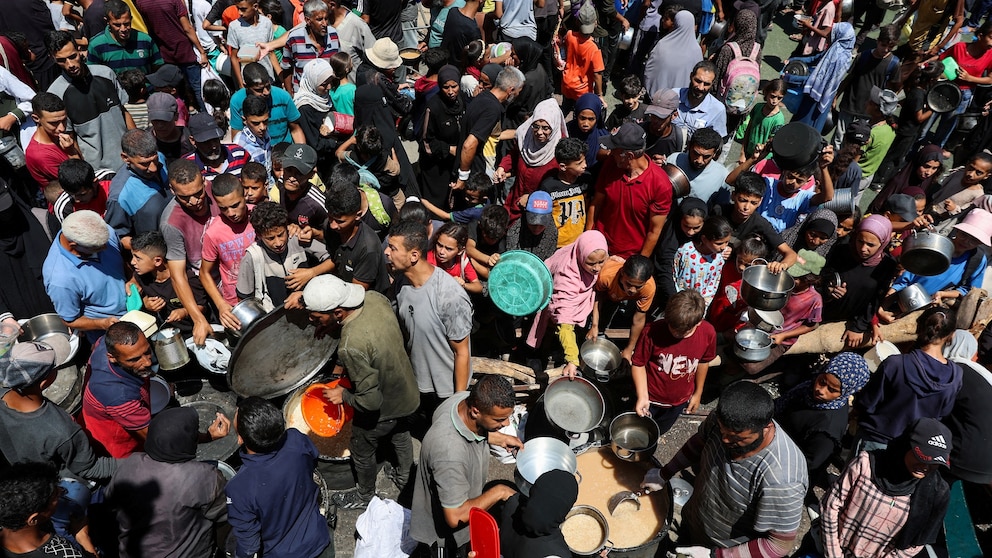
The dire humanitarian situation has seen deaths from malnutrition rise and led to international outcry over limited aid.
"This is not about what has not worked," said State Department spokesperson Tammy Bruce, who said the hunger is the fault of Hamas' "recalcitrance and refusal to lay down its arms, [and its] refusal to release the hostages."
"There's always had to be more. The calls from the president, from Secretary [Marco Rubio], and even [Gaza Humanitarian Foundation] has been [to] have more join us," she said.
Bruce said "more good news" on aid would come when the president returns from his trip to the United Kingdom, where he met with Prime Minister Keir Starmer, but didn't want to get ahead of the president regarding announcements.
Aid distribution in Gaza is run by the Gaza Humanitarian Foundation, a U.S. contractor backed by a $30 million U.S. donation. The U.N., Amnesty International, the International Committee of the Red Cross and other international nonprofits have said GHF is ill-equipped to handle Gaza's massive needs.
Israel and the Trump administration have accused Hamas of stealing aid provided by the U.N. and others to fund its militant activity, claims which Hamas denies.
Trump suggested Monday that he would advocate for "food centers" and has repeatedly claimed that the U.S. gave $60 million in aid to Gaza. Bruce said she was only aware of $30 million announced by the State Department, but cautioned that might not represent the "full picture."
GHF did not respond to ABC News inquiries over the $30 million discrepancy or so-called "food centers" after Trump lamented queues for emergency aid in Gaza -- which are run by GHF -- have left some Gazans dead at the sites.
The United Nations has said more than 1,000 people have died in recent weeks at food aid sites, most of which are run by GHF. Bruce would not respond to a question Tuesday on the U.N. assessment and Israel has said casualty counts at aid sites were inaccurate.
Trump's teasing of a new plan comes as European countries including the United Kingdom and France have joined an airdrop effort by Jordan and the United Arab Emirates. The U.S., which coordinated with Amman on airdrops from Jordanian aircraft in 2024, is absent from the effort.
Trump on Monday said the U.S. was "going to do more" in Gaza, acknowledging starvation that has gripped the enclave. But the U.S. has not made new aid commitments during pauses introduced by Israel.
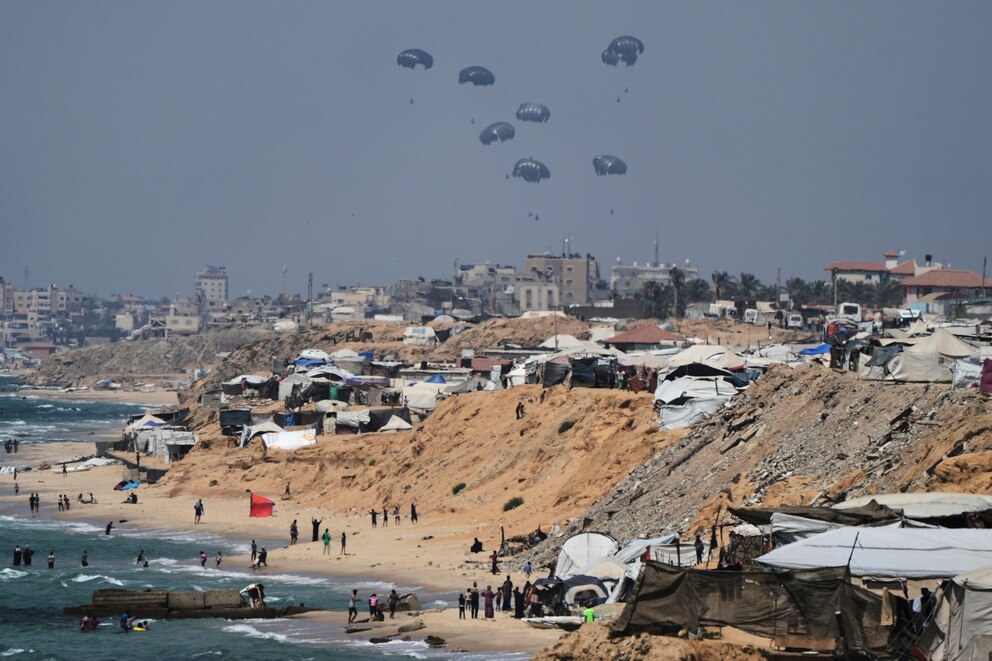
The U.S. did convey support to the U.K. for London's participation in the airdrop effort, a source familiar with the operations told ABC News. Six countries have joined the airdrop campaign to this point, the source said.
The break with Europe took another blow Tuesday when the U.K. announced it would recognize Palestinian statehood in September "unless the Israeli government takes substantive steps to end the appalling situation in Gaza and commits to a long term sustainable peace," following France’s announcement last week of the recognition of statehood before the U.N. general assembly in September
Trump told reporters he didn't discuss the issue of statehood with Starmer. And British Foreign Secretary David Lammy said at the U.N. that the U.K. made the decision unilaterally.
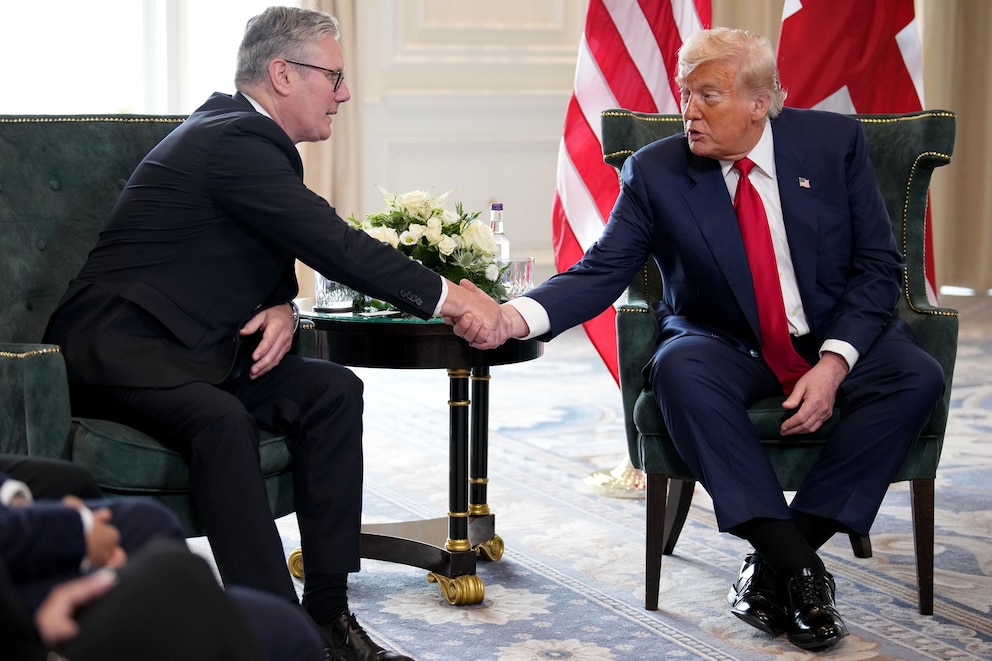
"We have always been clear that no country has a veto on solemn decisions that we make in the United Kingdom," he said.
France, another key U.S. ally, is taking part in a U.N. conference over a two-state solution for Israel and Palestine, which Bruce called "ill-timed and unproductive" and a "stunt."
Meanwhile, aid reaching Gaza continues at a trickle -- even during 10-hour windows that Israeli authorities say will allow more aid to reach Palestinians.
On Tuesday, the Integrated Food Security Phase Classification (IPC) said the worst-case scenario of famine is unfolding in Gaza, warning that starvation-related deaths are rising at dangerous levels.
Aid organizations told ABC News that early movements of aid aren't sufficient since the pauses were announced.
"There is nowhere in the world where you see food being airdropped and bombs being dropped at the same time ... so I don't know how much we can say that there's a tactical pause," said Jasmin Kozowy, the founder of Instant Aid, which hopes to transport food into Gaza as a part of its mission supporting women and girls.
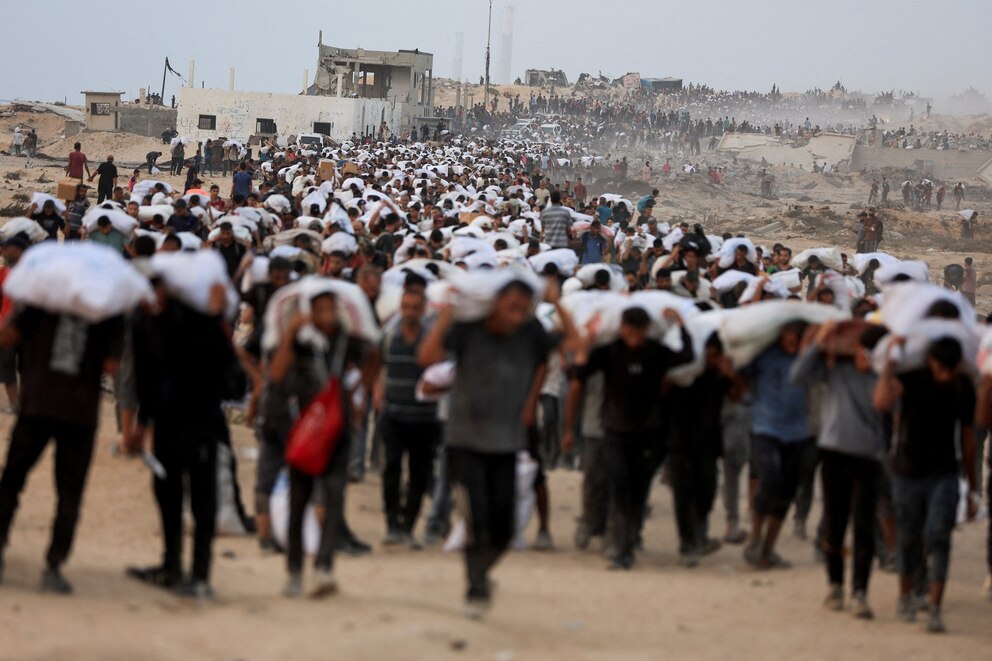
The World Food Programme, which intended to move 80 to 100 trucks into Gaza when the pauses began, has moved only half of that, according to Abeer Etefa, WFP's senior spokesperson for the Middle East.
"Because of the desperation of people, we are not yet able to do proper distributions -- communities are looting the trucks on the way to their final destinations," Etefa said. "And we continue to see casualty incidents as live fire is directed at crowds."
Yet Kozowy said the first days of the new pause policy has represented a "slight opening," citing the resumption of humanitarian aid by the Global Empowerment Mission, a nonprofit that is able to deliver 20 million meals to Gaza.
"But is it enough? No," she said.