Trump unveils sweeping Gaza peace plan he says Netanyahu accepts, challenges Hamas
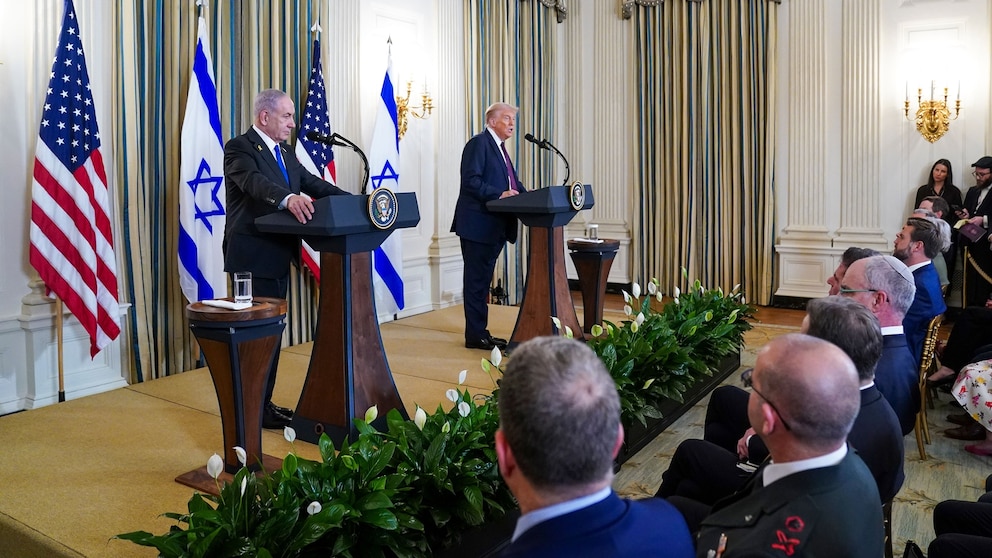
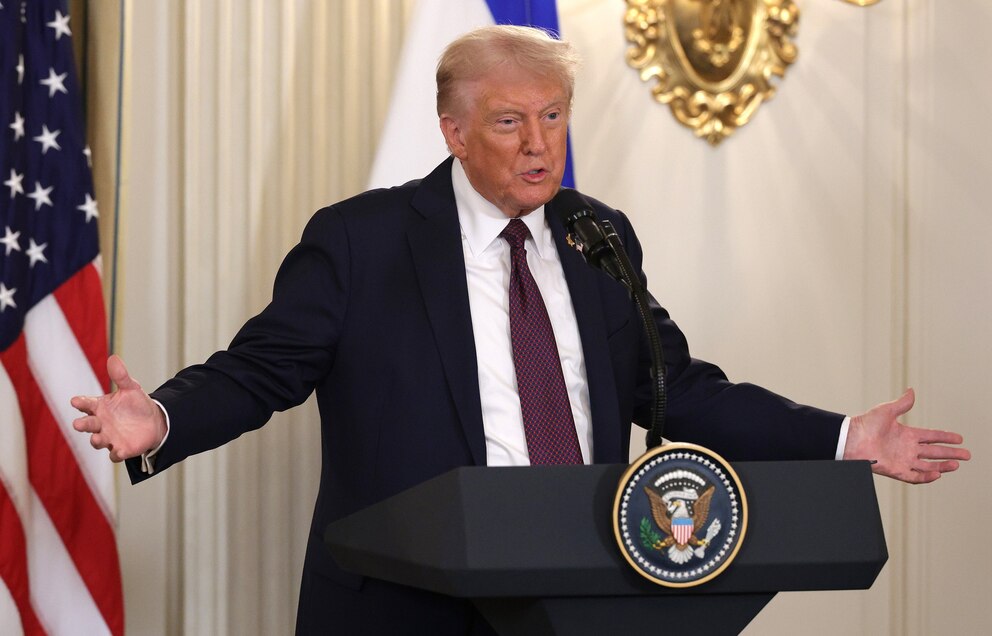
President Donald Trump on Monday fast-tracked his administration's efforts to secure peace in Gaza, rolling out a detailed vision for a U.S.-backed ceasefire that the White House says will bring the war to an immediate end.
He said Israel has accepted the proposal but the success of the plan still hinges on the cooperation of Hamas.
"We're at a minimum, very, very close," Trump said during a news conference alongside Israeli Prime Minister Benjamin Netanyahu at the White House.
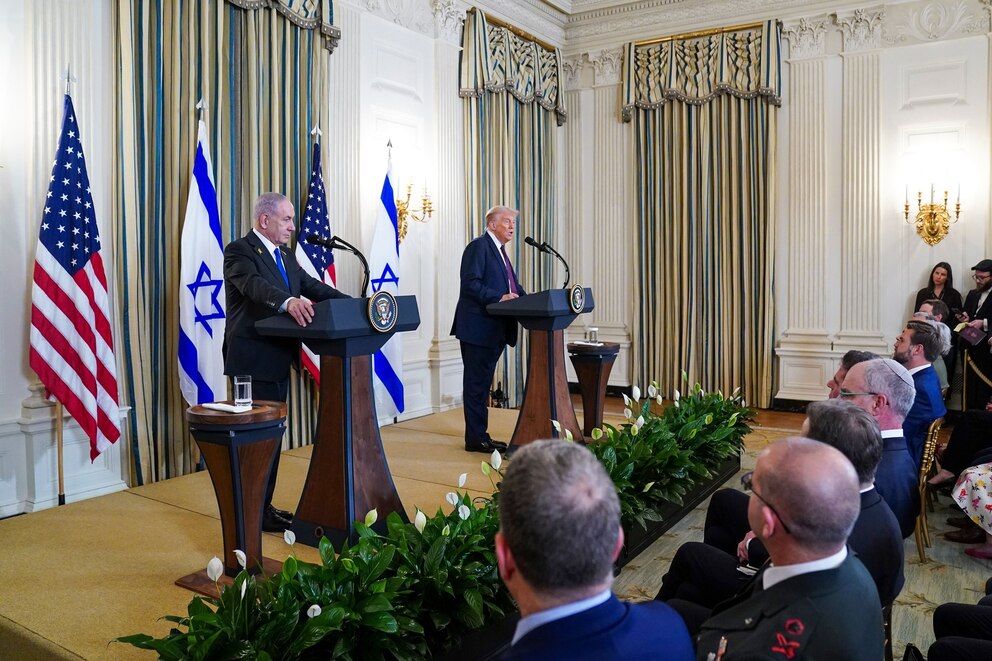
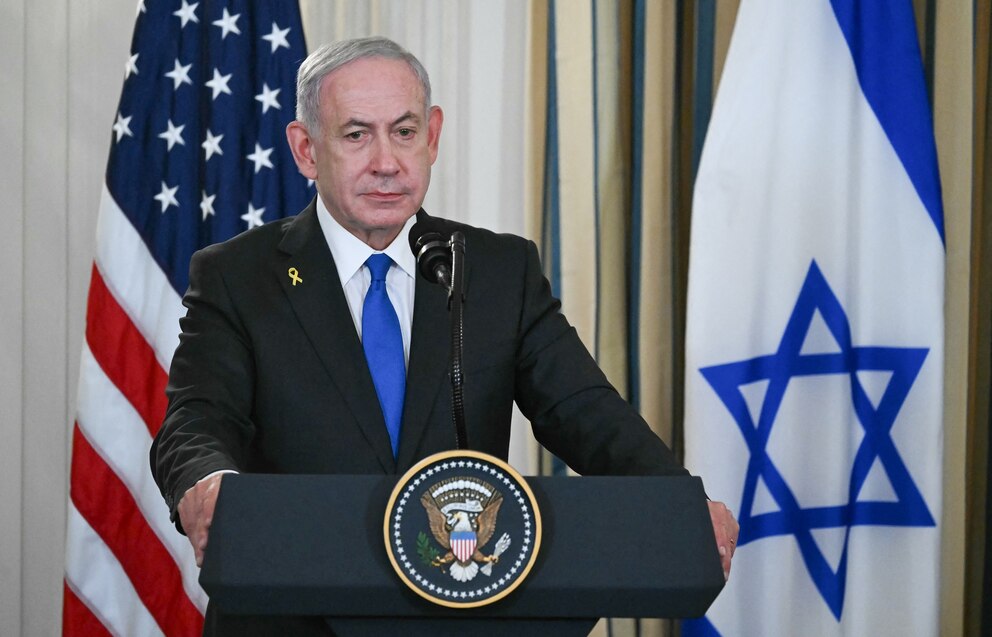
Speaking alongside the president, Netanyahu appeared to sign off on the proposal.
"I believe that today we're taking a critical step towards both ending the war in Gaza and setting the stage for dramatically advancing peace in the Middle East," Netanyahu said.
Hamas did not immediately respond to comments from the president or the prime minister, but an official familiar with the negotiations said mediators had not yet fully briefed the group on the latest peace plan.
Shortly before Trump and Netanyahu addressed reporters, the White House released a 20-point plan, which calls for the release of all Israeli hostages held in Gaza within 72 hours of Israel accepting the agreement.
In exchange, more than 2,000 Palestinian prisoners would be released, all military operations will be suspended, and "battle lines will remain frozen until conditions are met for the complete staged withdrawal," according to the plan.
The release from the White House also promises that, if the deal is enacted, members of Hamas "who commit to peaceful co-existence and to decommission their weapons will be given amnesty."
"Members of Hamas who wish to leave Gaza will be provided safe passage to receiving countries," the proposal reads.
Hamas was not briefed on the plan before it was released, but an official told ABC News later on Monday that Qatar's prime minister and Egypt's intelligence chief had met with Hamas negotiators to share the plan, and the negotiators said they would review it in good faith and provide a response.
Trump's Special Envoy for the Middle East Steve Witkoff also suggested that the administration would play a role in communication the terms of the framework to Hamas.
"We have to set up success," Witkoff told reporters outside of the White House. "This is a complicated deal to hand off from one government to another."
Trump made it clear earlier in the day that if Hamas doesn't accept the terms, Israel would have his "full backing" to "finish the job of destroying the threat of Hamas."
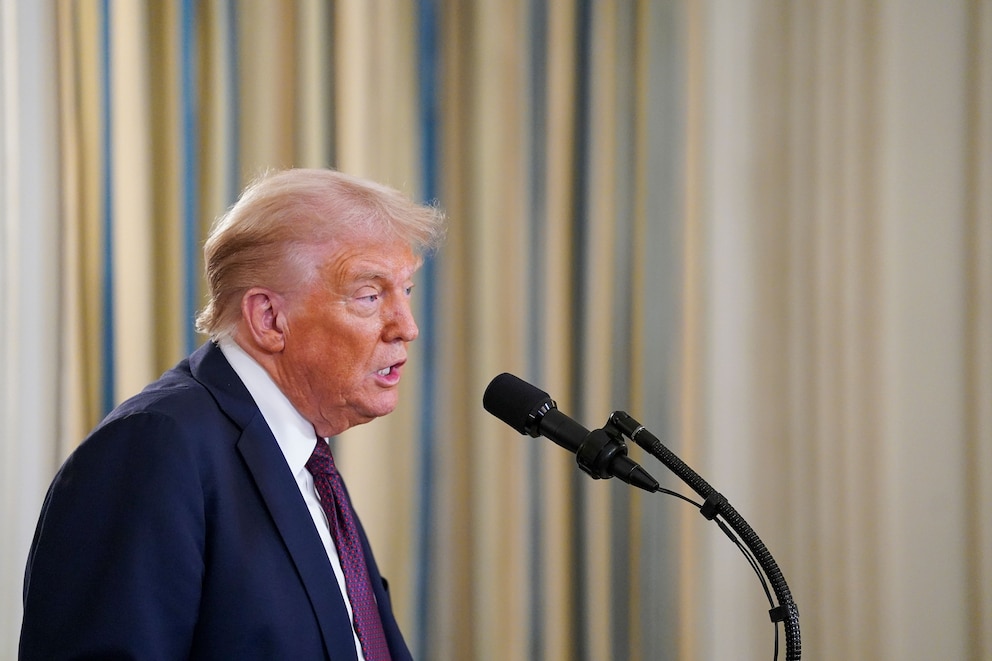
"Bibi, you'd have our full backing to do what you would have to do," the president said, referring to the prime minister by his nickname.
Netanyahu also said Israel would not hesitate to restart its military campaign against Hamas if the militant group refused the deal or reneged on the terms of the agreement.
"This can be done the easy way, or the hard way," Netanyahu said. "But it will be done."
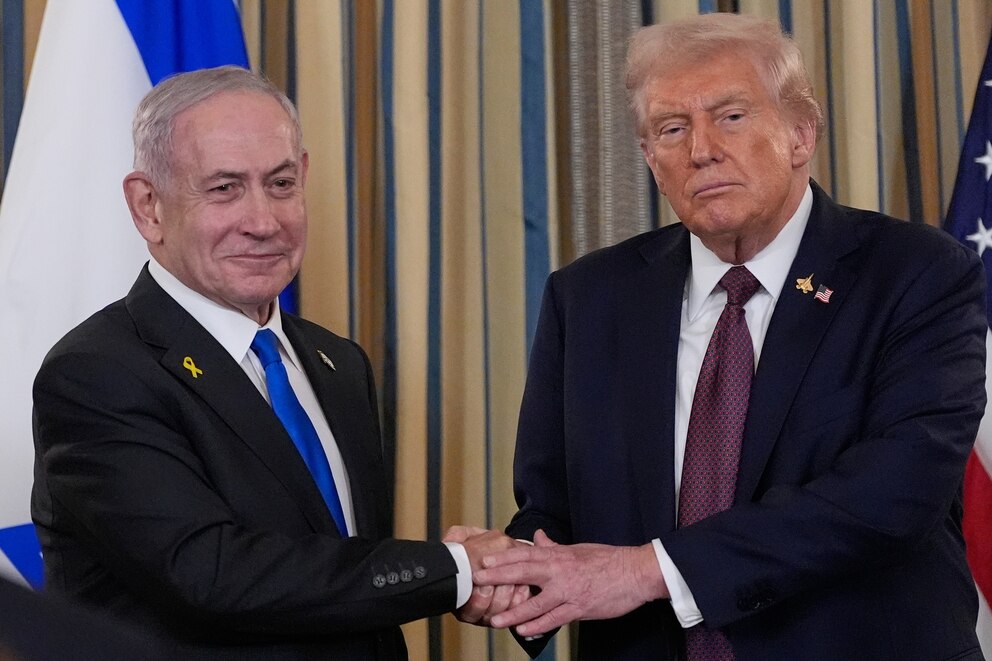
Although the White House called it a news conference, the two men left without taking questions from reporters.
"I think while we wait for these documents to be signed and get everybody in line, I think it maybe is not really appropriate to take questions," Trump said.
After Trump asked the prime minister if he wanted to take a question or two from a "friendly Israeli reporter," Netanyahu also declined, saying, "I would go by your instinct -- we'll have enough time for questions. Let's settle the issue first."
With or without Hamas
Although much of the plan hinges on Hamas' participation, some of the language of the proposal signals that the Trump administration expects certain terms of the plan will be implemented regardless of whether the militant group accepts the proposal, including the creation of a temporary "International Stabilization Force," or ISF, with Arab and other international partners to oversee the security of Gaza.
"The ISF will train and provide support to vetted Palestinian police forces in Gaza and will consult with Jordan and Egypt who have extensive experience in this field. This force will be the long-term internal security solution," the plan states.
It adds that even if Hamas "delays or rejects this proposal" the IDF will still "progressively hand over "terror-free areas" of the Gaza territory it occupies to the SDF, where scaled-up aid operations will commence.
The proposal also states that all hostages held in Gaza should be released within 72 hours of Israel publicly accepting the agreement -- a condition that would likely be impossible to meet but may be an attempt to put Hamas on a clock.
Bringing Hamas on board will likely be an uphill climb for mediators, because even though the plan allows for Hamas fighters to receive amnesty and leave Gaza if they chose, the release of all hostages would leave the group with little leverage to ensure the terms of the deal are upheld.
The framework also requires that "Hamas and other factions agree to not have any role in the governance of Gaza, directly, indirectly, or in any form."
Israel under pressure
The relationship between Trump and Netanyahu appeared as close as ever during the leaders' remarks before members of the press, but there were signs that Israel had come under diplomatic pressure to comply with the Trump White House agenda.
Earlier on Monday, the White House released a statement saying it held a three-way phone call with Trump, Netanyahu and the prime minister of Qatar, and that during the conversation, Netanyahu "expressed his deep regret" than an Israeli missile strike on Doha earlier this month targeting Hamas officials had "unintentionally killed a Qatari serviceman."
Two officials familiar with the call said it was held at the behest of the White House, and that in recent days, Trump had been growing more frustrated with Netanyahu -- increasingly viewing him as an impediment to peace.
Netanyahu had previously publicly insisted that Israel was within its right to strike Hamas targets in the Qatari capital, and the Israeli prime minister's remarks were met with swift criticism from his far-right allies.
But officials say the Trump administration viewed the conversation as necessary not only for smoothing over tensions with Qatar, a key mediator in longstanding efforts to end the war in Gaza, but also as a way to enhance support among Arab partners for the White House's proposal.
On Monday, the foreign ministers of Qatar, Egypt, Jordan, the United Arab Emirates, Indonesia, Türkiye, Saudi Arabia and Egypt issued a joint statement welcoming Trump's proposed ceasefire plan, asserting their "confidence" in "his ability to find a path to peace."
Familiar figures shape a new Gaza
While the proposal stops short of calling for the U.S. to develop Gaza into the "Riviera of the Middle East," as he suggested in February, it does stipulate that his administration will play a substantial role in the area's reconstruction.
The framework calls for the creation of a "temporary transitional governance" comprised of "of qualified Palestinians and international experts" that will overseen by a so-called "Board of Peace" to be "headed and chaired by President Donald J. Trump."
Tony Blair, the former prime minister of the United Kingdom, will also be a member of the board, the plan states, adding that the body "will set the framework and handle the funding for the redevelopment of Gaza" until a reformed Palestinian Authority can take the reins.
"[Trump's] willingness to chair the Board of Peace to oversee the new Gaza is a huge signal of support and confidence in the future of Gaza, of the possibility of Israelis and Palestinians finding a path to peace and of the potential for a broader regional and global alliance to counter the forces of extremism and promote peace and prosperity between nations," Blair said in a statement.
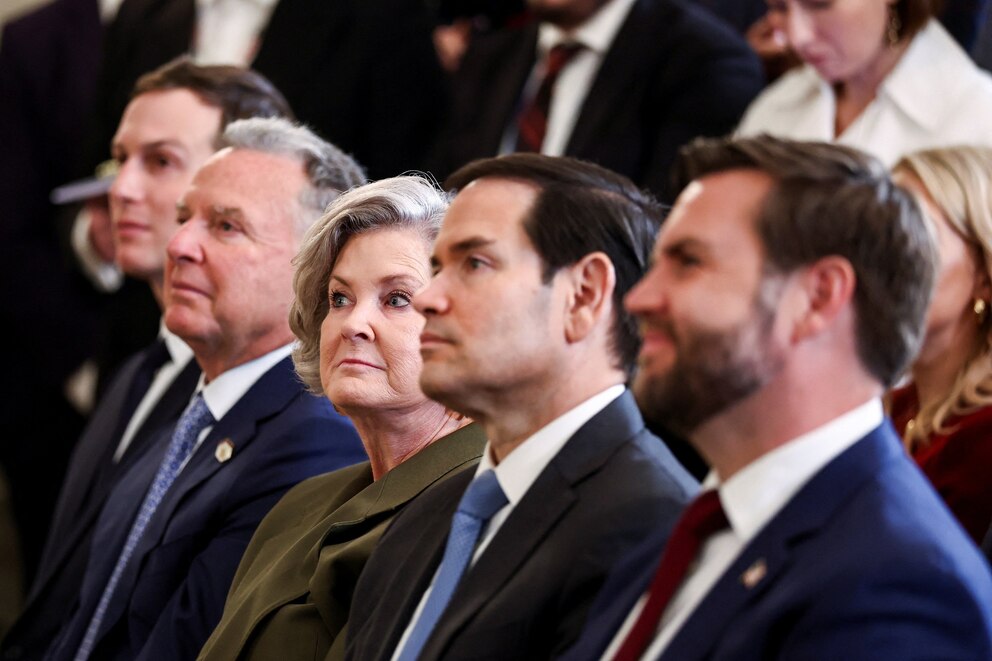
In formulating his plan for Gaza's economic future, Trump also incorporated a key player in Middle East diplomacy from his first term in office: his son-in-law, Jared Kushner, who is credited with helping to broker deals to normalize a set of agreements to normalize ties between Israel and Arab countries known as the Abraham Accords.
Kushner participated in talks with Trump, Netanyahu and Witkoff leading up to the announcement of the peace proposal, a U.S. official said.