Trump isn't the first US president to have disputes with a pope
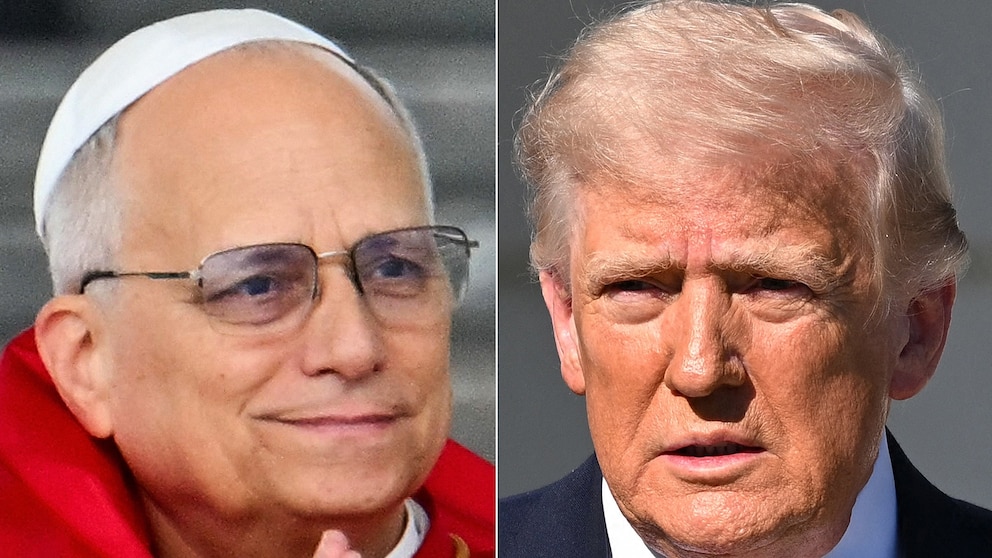
President Donald Trump and Pope Leo XIV's disagreement over the war in Iran is not the first pitting of the leader of the Holy See against the leader of the free world.
While presidents and popes have had disagreements over the years, rarely has a president publicly aired those disputes as vigorously and personally as Trump, who claimed in a social media post on Sunday that Leo was only made pope "because he was American, and they thought that would be the best way to deal with President Donald J. Trump."
The pope on Saturday called for an end to conflict, without explicitly mentioning the U.S.-Israeli war against Iran. "Enough of war," Leo said during a peace vigil in St. Peter's Basilica in Vatican City.
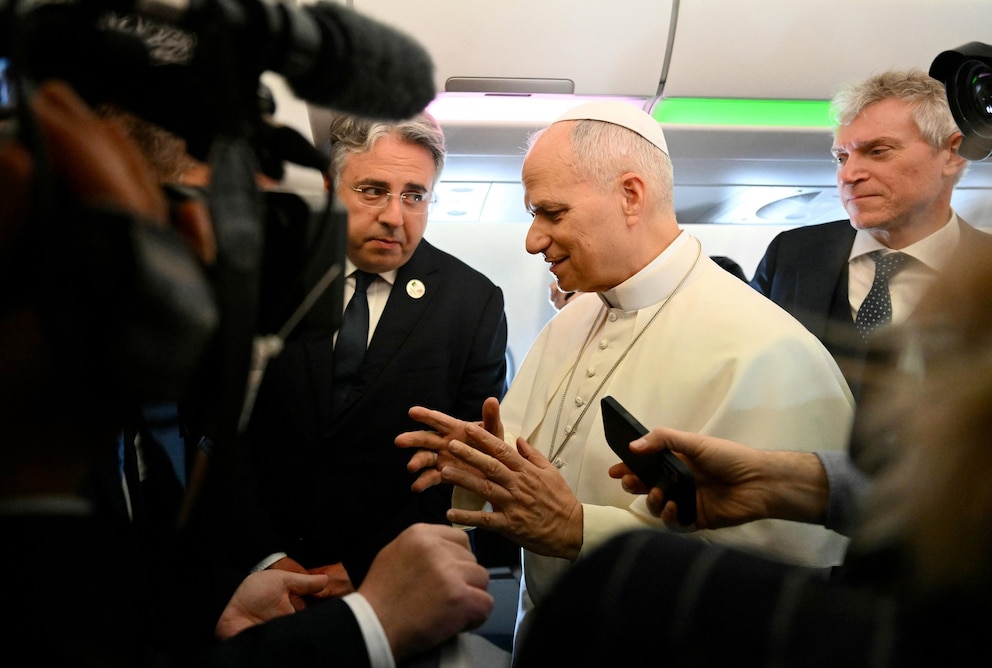
The pope also suggested "delusion of omnipotence" is fueling the U.S.-Israel war in Iran, imploring the country leaders to come to a peace agreement.
On Sunday night, Trump responded with a post on his social media platform, writing, "I don't want a Pope who thinks it's OK for Iran to have a Nuclear Weapon." The president also called the pope "WEAK on Crime and, and terrible for Foreign policy."
Trump later told reporters, "I'm not a fan of Pope Leo."
Trump also said in his post on Sunday that Leo "talks about 'fear' of the Trump Administration," but the pope didn't shy away from their disagreement over Iran, telling reporters traveling with him to Algeria on Monday, "I have no fear of neither the Trump administration or speaking loudly about the message of the Gospel."
While the pope has publicly spoken out against the war, this was a rare mention by a pontiff in general of a U.S. presidential administration by name.
"I will continue to speak out loud against the war, will continue to promote peace, promoting dialogue and multilateral relationships among the states to look for just solutions to problems," Leo went on. "Too many people are suffering in the world today, too many innocent people are being killed and I think someone has to stand up and say, there's a better way to do this."
Leo said on Monday that his comments "are certainly not meant as attacks on anyone and the message of the Gospel is very clear, 'Blessed are the peacemakers.'"
But Trump is not the first American president to be at odds with a pope on the world stage.
Trump and Pope Francis
While campaigning for his first term as president in 2016, Trump found himself in a public disagreement with Leo's predecessor, Pope Francis, over his campaign pledge to build a wall along the U.S.-Mexico border.
"A person who thinks only about building walls -- wherever they may be -- and not building bridges, is not Christian," Francis responded in a statement to reporters in February 2016 while traveling back to the Vatican from a trip to Mexico.
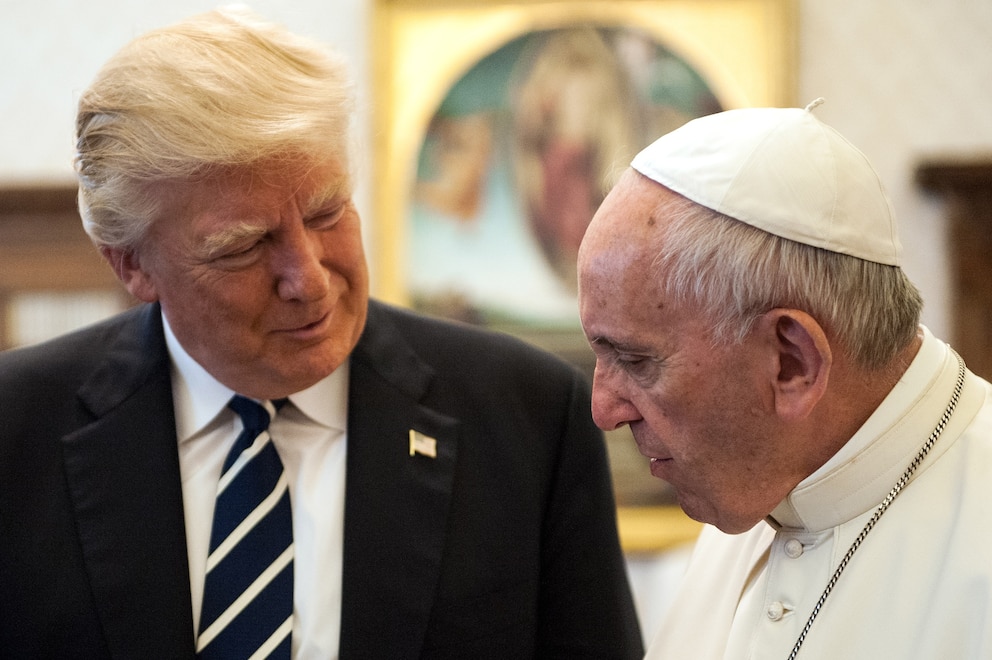
Trump called Francis' comments "unbelievable" and "disgraceful."
In a statement on social media, Trump wrote at the time, "No leader, especially a religious leader, should have the right to question another man's religion or faith. I am proud to be a Christian and as president, I will not allow Christianity to be consistently attacked and weakened."
The public disagreement between Francis and Trump over the subject of immigration continued through Trump's first term and spilled into his second term.
In February 2025, the Vatican released a letter to U.S. Catholic bishops from Pope Francis, blasting Trump's mass deportation efforts.
"The act of deporting people who in many cases have left their own land for reasons of extreme poverty, insecurity, exploitation, persecution or serious deterioration of the environment, damages the dignity of many men and women, and of entire families, and places them in a state of particular vulnerability and defenselessness," Francis said in the letter.
President Bill Clinton and Pope John Paul II
In 1993, then-President Bill Clinton clashed with Pope John Paul II over the subject of abortion.
During his campaign for president in 1992, Clinton said his stance on abortion was to make it "safe, rare, and legal."
In their first face-to-face meeting, Pope John Paul spoke of his "right to life" views. In an address in Denver with Clinton at his side, John Paul said, "If you want equal justice for all and true freedom and lasting peace, then, America, defend life. All the great causes that are yours today will have meaning only to the extent that you guarantee the right to life and protect the human person."
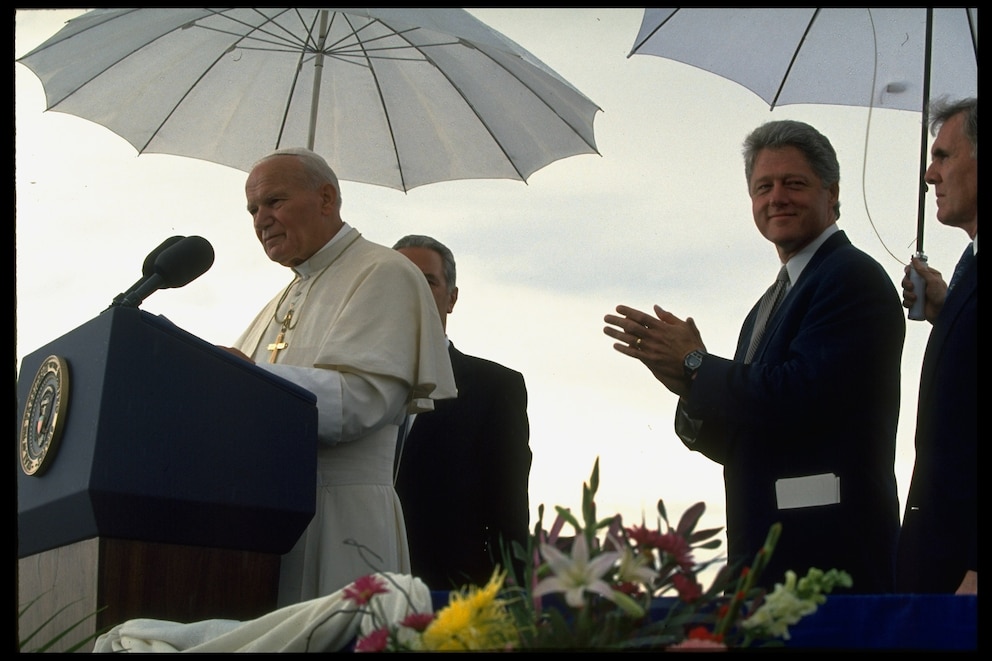
Clinton didn't attempt to debate or condemn the pope in his welcoming remarks in Denver, saying, "All Americans, without regard to their religion, are all grateful to you, your holiness, for your moral leadership. For we know you were the force to light the spark of freedom over communism in your native Poland and throughout Eastern Europe."
President George W. Bush and Pope John Paul II differ on stem-cell research
In July 2001, Pope John Paul, in his first meeting with President George W. Bush, urged the president to "reject" human embryonic stem-cell research.
"A free and virtuous society, which America aspires to be, must reject practices that devalue and violate human life at any stage, from conception to natural death," Pope John Paul told Bush, during a visit to the pontiff's summer residence.
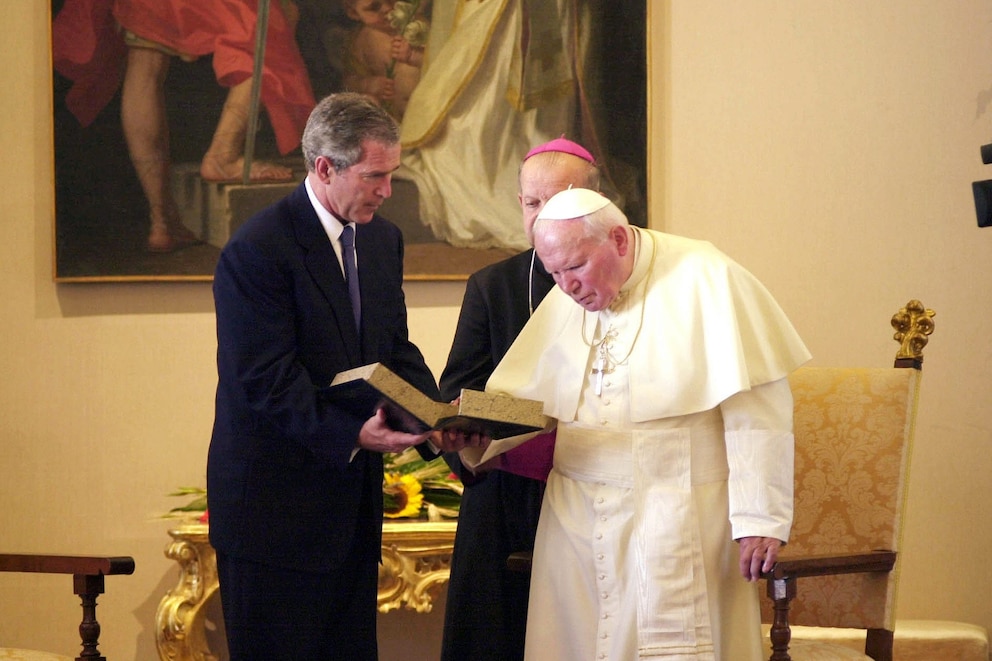
However, a month after the visit with Pope John Paul, Bush announced in a nationally televised speech to the nation that he was approving federal funding of stem cell research, using existing stem cell lines.
Bush noted in a speech in August 2001 that "the issue is debated within the church, with people of different faiths." He said he approved the funding because privately funded research had shown "great promise" at improving the lives of those who suffer from such illnesses as juvenile diabetes, Alzheimer's, Parkinson's and spinal cord injuries.
"At its core, this issue forces us to confront fundamental questions about the beginnings of life and the ends of science," Bush said in his speech. "It lies at a difficult moral intersection, juxtaposing the need to protect life in all its phases with the prospect of serving and improving life in all its stages."