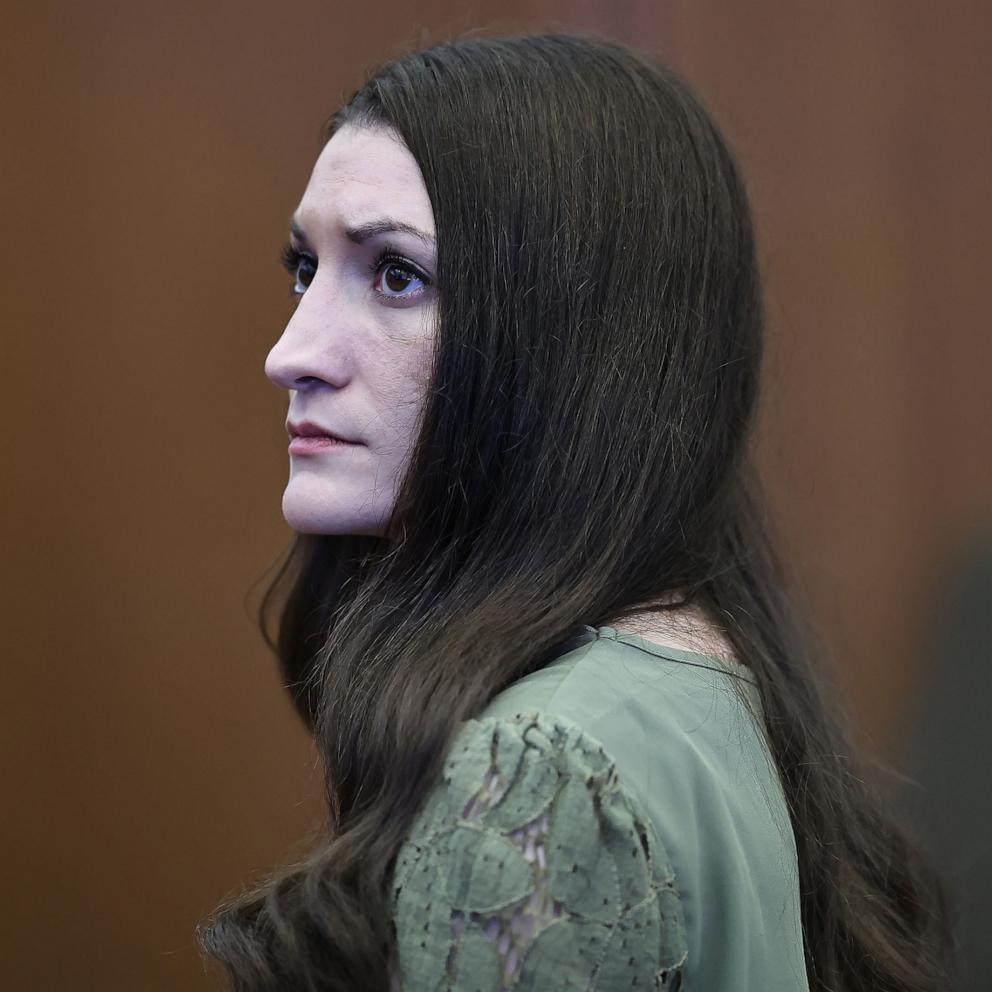
Trump's move to fire Lisa Cook threatens Fed independence, risks inflation: Experts

President Donald Trump moved to fire Federal Reserve Governor Lisa Cook late Monday, becoming the first president to attempt such a removal in the 112-year history of the central bank.
In both of his terms as president, Trump has urged the Fed to slash interest rates in an effort to boost the economy. If Trump replaces Cook, his appointees would make up a majority of the Fed board, granting him significant influence over the agency tasked with setting interest rates.
Analysts who spoke to ABC News voiced concern about the potential threat to the Federal Reserve's independence, saying the move risks high inflation and economic instability over the long term as low interest rates struggle to rein in price increases.
The attempted firing arrives at a delicate moment for the U.S. economy. In recent months, hiring slowed sharply while a measure of underlying inflation ticked up.
"The U.S. economy has been generally prosperous and stable for the past century in part due to an understanding of central bank independence that prevents presidents from meddling with the Fed for their own political purposes. That's what's at stake here," Jeremy Kress, a professor of economics at the University of Michigan and a former attorney in the banking regulation and policy group at the Federal Reserve Board of Governors, told ABC News.
In a letter posted on social media on Monday, the president moved to fire Cook over allegations lodged by a Trump administration official, who claimed she had committed mortgage fraud.
"The American people must be able to have full confidence in the honesty of the members entrusted with setting policy and overseeing the Federal Reserve," Trump wrote in the letter.
Within hours, Cook vowed to fight Trump's action. In a statement to ABC News, Cook said Trump "has no authority" to fire her. Cook said she would not resign, instead saying she planned to "continue to carry out my duties to help the American economy."
Abbe David Lowell, an attorney for Cook, said on Tuesday he would challenge the firing in court.
The attempted firing follows a months-long pressure campaign undertaken by Trump alongside his call for lower interest rates, including a highly unusual in-person visit to the Fed last month. Federal law allows the president to remove a member of the Fed board for "cause," though no precedent exists for such an ouster.
Two Fed governors appointed by Trump -- Michelle Bowman and Christopher Waller -- already sit on the 7-member board. A third appointee -- Stephen Miran, chair of the White House Council of Economic Advisors -- has been nominated as a replacement for Adriana Kugler, who retired this month. If Trump were to replace Cook, his appointees would make up a majority of the Fed board.
The Federal Open Market Committee (FOMC), a 12-member body responsible for setting interest rates, is made up of the seven members of the Fed board as well as a rotating set of five Federal Reserve bank presidents.
In February, the members of the Fed board will oversee the appointment of presidents of the Federal Reserve banks, meaning a Trump-appointed majority on the board could aim to install allies atop the banks.
"If successful, it would allow Trump to potentially control the FOMC," Kress told ABC News.
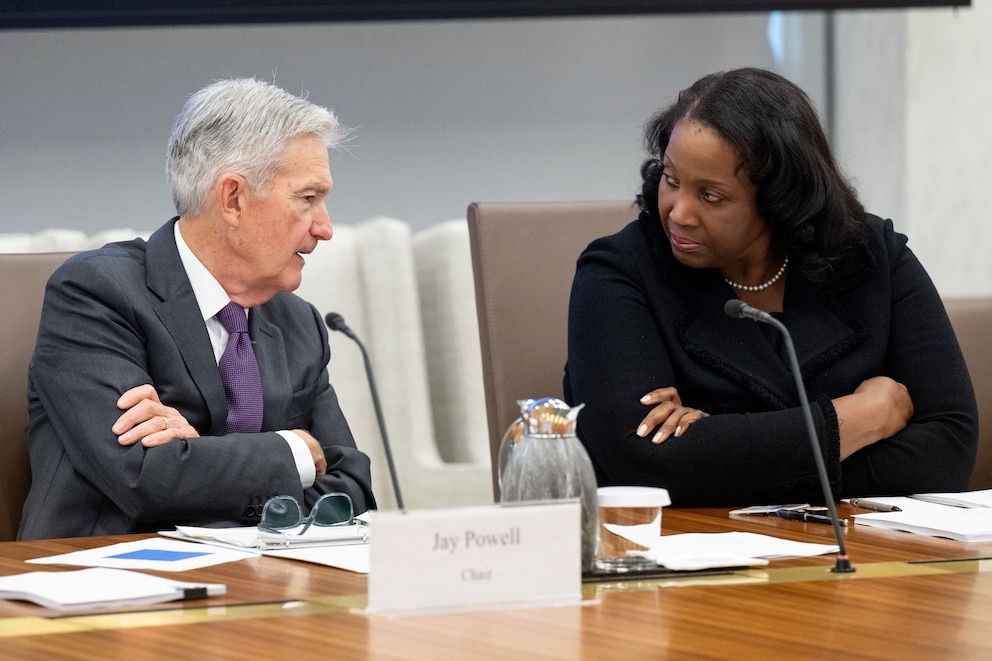
Central bankers beholden to political leaders tend to favor lower interest rates as a means of boosting short-term economic activity, slashing unemployment and generating public support, analysts said. But, they added, that posture poses a major risk in the possibility of years-long inflation fueled by a rise in consumer demand, untethered by interest rates.
"Many presidents and politicians over the decades have complained about the Fed's interest rate policy and made clear what they wanted instead," Alan Blinder, a professor of economics at Princeton University and former vice chairman of the Federal Reserve, told ABC News.
A burst of high inflation in the 1970s and 1980s offers a cautionary tale, some analysts said.
Before the inflation took hold, President Richard Nixon had urged then-Fed Chair Arthur Burns to cut rates in the run-up to the 1972 presidential election. Nixon's advocacy is widely viewed as contributing to lower-than-necessary interest rates that allowed inflation to get out of control.
Nearly a decade later, in 1981, the Fed raised interest rates as high as 20% in order to bring inflation under control. While the move succeeded in cooling off price hikes, it plunged the U.S. into a recession and sent the unemployment rate to 10%.
"This certainly hasn't ended well with presidents in the past," Mark Spindel, chief investment officer at Potomac River Capital and co-author of "The Myth of Independence: How Congress Governs the Federal Reserve," told ABC News.
Last week, Federal Reserve Chair Jerome Powell said the central bank faces a "challenging situation" as a hiring slowdown coincides with tariff-driven price increases, putting pressure on both sides of the Fed's dual mission to maximize employment and control inflation.
Powell said the Fed would "proceed carefully" but he hinted at the possibility of an interest rate cut, appearing to indicate greater concern for flagging employment growth than rising prices.
The policy shift may align the Fed with Trump's desire for lower interest rates, though the central bank is expected to opt for a modest quarter-point reduction rather than the larger cut Trump has sought.
The implications of the firing of Cook extend well beyond current rate policy, Blinder said, pointing to the long-term risk of instability brought about by increased White House control of the Fed.
"This is much bigger than Lisa Cook," Blinder added.