What's next for Trump's tariffs? Experts explain
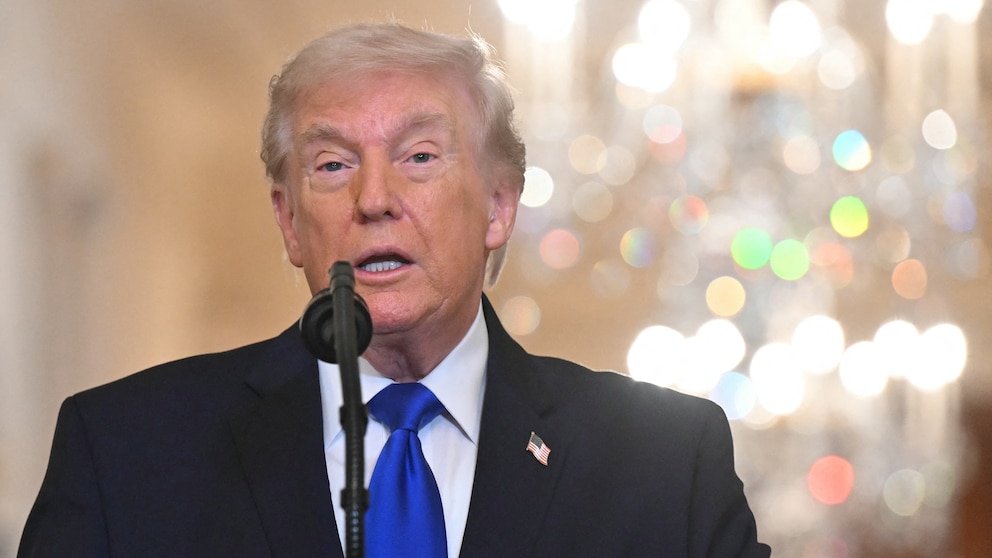
President Donald Trump slapped a 15% tariff on nearly all imports and promised a flurry of additional measures in response to the recent Supreme Court ruling that struck down his steepest levies.
What legal authority remains for Trump to levy tariffs, however, places limits on the scope and duration of those duties, casting uncertainty over the path forward for the high-stakes policy tool, some analysts told ABC News.
A Monday selloff hammered stocks as investors grappled with the unrest. The Dow Jones Industrial Average shed nearly 700 points, or 1.4%, while the S&P 500 dropped 1%. The tech-heavy Nasdaq fell 1.1%.
“There’s still a lot of uncertainty,” Jim Reid, a research strategist at Deutsche Bank, declared in a memo to clients on Monday.
In a social media post on Monday, Trump affirmed what he said was his authority to issue tariffs, saying he does not need to consult Congress before erecting new trade levies. Trump also reiterated his commitment to his policy approach, warning other countries that they may face a “much higher Tariff, and worse.”
The president's remarks came a day after U.S. Trade Representative Jamieson Greer vowed to revive trade barriers in an interview with ABC News’ “This Week.”
“The president has been campaigning on tariffs and protecting American industry for many years,” Greer told ABC News on Sunday. “The policy hasn’t changed.”
The White House announced plans to “reconstruct” an aggressive set of country-specific levies that were invalidated by the Supreme Court, Greer added.
The high court ruled in their February 20 decision that the International Emergency Economic Powers Act (IEPPA) does not authorize Trump to impose levies, nullifying a major swathe of tariffs issued by the president on April 2 of last year, which he dubbed "Liberation Day," and a host of other measures.
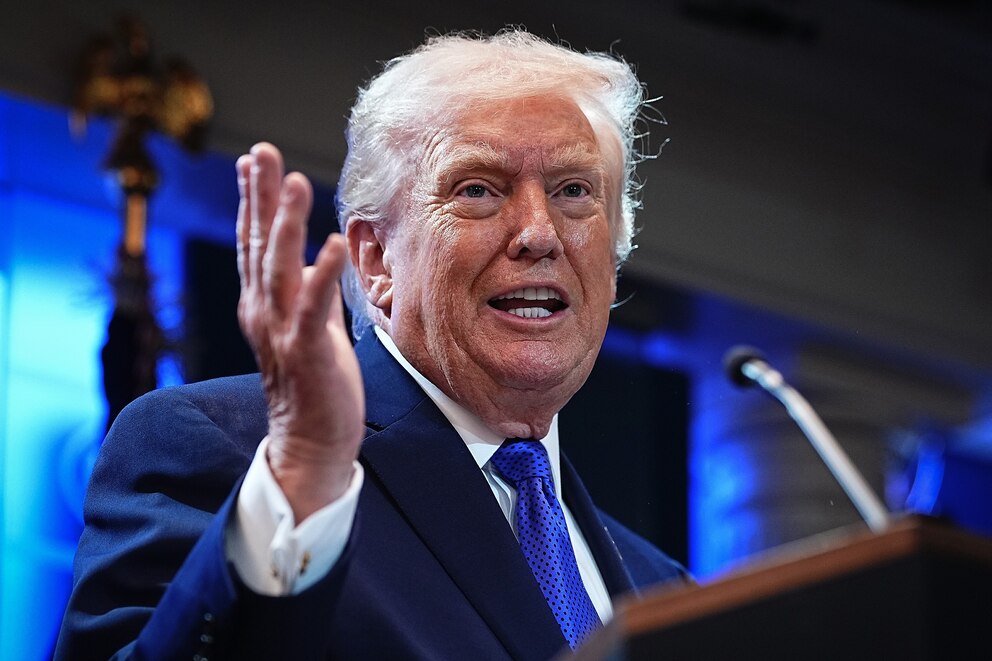
Trump retains the power to levy additional sector- or country-specific tariffs. He can also impose a 15% tariff on nearly all imports for up to 150 days under Section 122 of the Trade Act of 1974.
The law allows the White House to address "large and serious" balance-of-payments deficits, or disparities between a country's total payments in transactions with other nations and its total earnings. Under the measure, the president can also impose levies to "prevent an imminent and significant depreciation of the dollar."
Hours after the Supreme Court ruling on Friday, Trump said he would sign an executive order enacting a new 10% "global tariff," invoking authority under Section 122. On Saturday, Trump escalated the tariff to 15%.
If the Supreme Court had opted to uphold tariffs issued under IEPPA, the nation's effective tariff rate would have remained at 16%, the Yale Budget Lab said on Saturday. Taking into account the Section 122 tariffs, the effective tariff rate now stands at 13.7%, the group said.
The Section 122 tariffs will result in price increases amounting to $800 in additional costs for an average U.S. household over the next 150 days, the Yale Budget Lab projected. In order to extend the across-the-board 15% tariff beyond that time window, Trump would need to secure Congressional approval.
Senate Minority Leader Chuck Schumer, D-N.Y., said Monday that Democrats would oppose an extension of Section 122 tariffs, which could deny Trump the 60 votes necessary to overcome a potential Senate filibuster.
The White House plans to invoke additional tariff authorities, Greer said in a statement on Friday, citing Section 301 of the Trade Act of 1974. That statute allows Trump to issue tariffs against nations after an investigation by the Office of the United States Trade Representative finds they have engaged in “unjustifiable, unreasonable, discriminatory, and burdensome acts,” Greer said.
The Trump administration plans to scrutinize foreign policies tied to forced labor, pharmaceutical pricing practices, alleged discrimination against U.S. technology firms, and trade in certain goods like seafood and rice, Greer added, noting the levies could apply to “most trading partners.”
The scope and duration of Section 301 tariffs are fairly open-ended, though the White House must reauthorize the levies every four years, according to a 2024 analysis by the right-leaning Cato Institute.
“Section 301 contains some minor substantive and procedural checks, but it does grant the president wide discretion to address foreign economic policies by imposing tariffs or other trade restrictions on a very wide set of products imported from a targeted country or countries,” the Cato Institute report said.
The Trump administration also plans to maintain sector-specific tariffs imposed under Section 232 of the Trade Expansion Act of 1962 and conclude pending investigations that could authorize additional levies, Greer said. That statute permits the White House to levy tariffs on products of importance to national security. Under the law, the White House must await the result of an investigation undertaken by the Commerce Department before imposing a tariff.
Trump has imposed a 50% tariff on steel and aluminum under Section 232, as well as levies on copper, automobiles and trucks. Commerce Department investigations under Section 232 remain ongoing for an array of goods, including pharmaceutical drugs, aircraft, wind turbines, movies, and some semiconductors.
Speaking at the White House on Friday, Trump vowed to initiate further investigations as a means of imposing additional tariffs.
"It's a little longer process," Trump said. "I tried to make things simple but they wouldn’t let us do that.”