As Tulsa commemorates 100th anniversary of race massacre, officials work to identify remains in mass grave
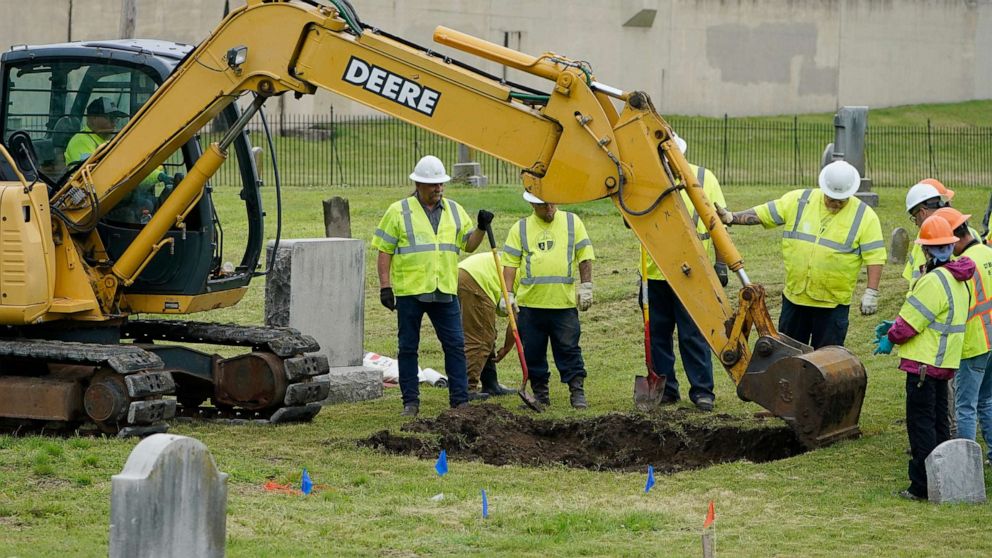
As Tulsa, Oklahoma, commemorates the 100th anniversary of the Tulsa Race Massacre, work is underway to identify remains found in a mass grave that may be connected to the massacre in an all-Black neighborhood in the city known as "Black Wall Street."
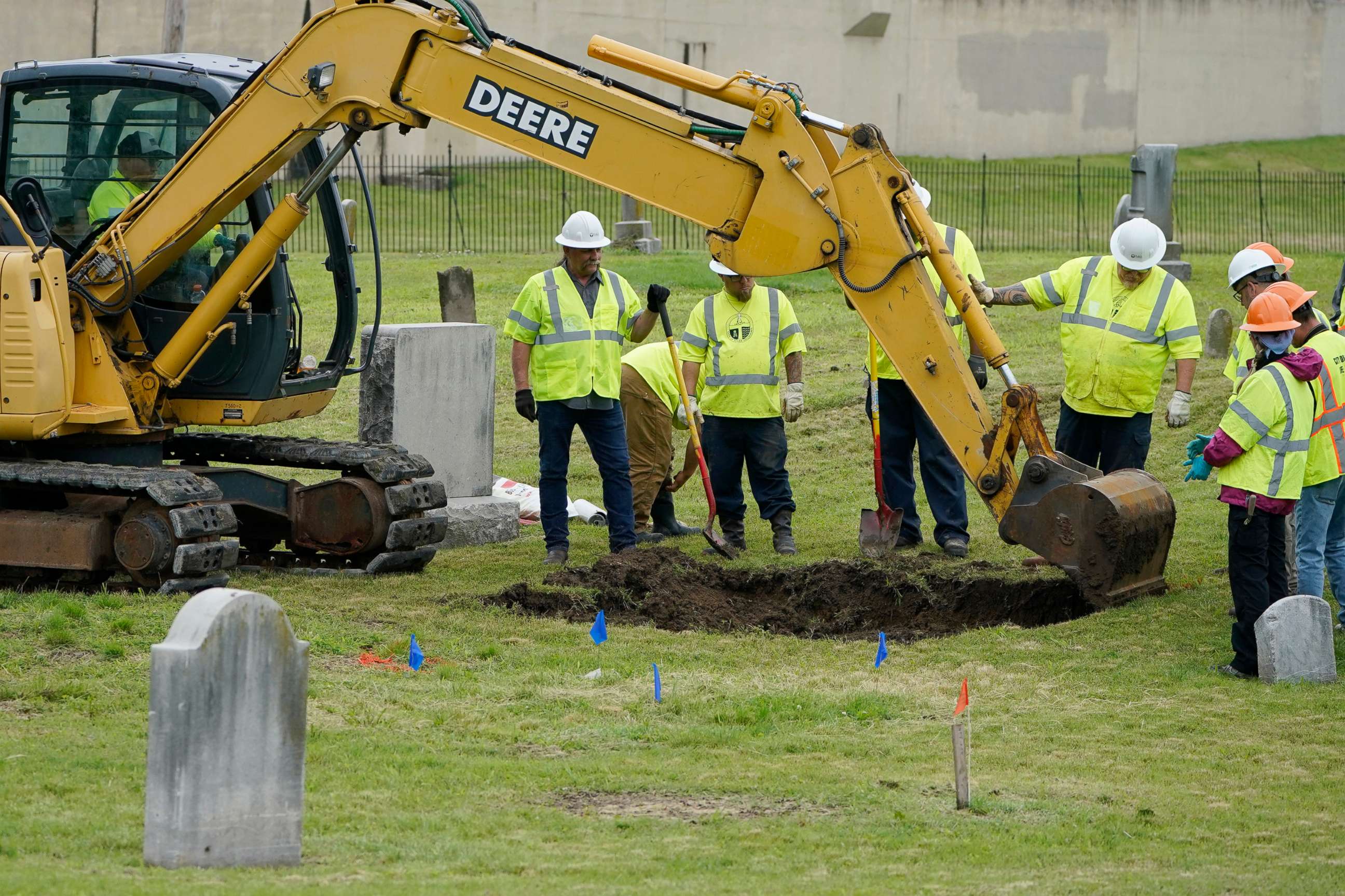
A group of archaeologists, anthropologists and historians began exhuming 12 unmarked coffins on Tuesday that they discovered in an unmarked grave in October 2020. The grave was uncovered at the Oaklawn Cemetery in an area known as the "Original 18" site. Funeral home records show at least 18 massacre victims were buried in the area.
Historian and Tulsa native Scott Ellsworth said the victims of the 1921 massacre should be remembered in a memorial, “akin to the Tomb of the Unknown Soldier at Arlington National Cemetery.”
“These people, these remains, this shrine will become a shrine, not just to victims of the Tulsa race massacre, but to the victims of racist violence in America,” Ellsworth, who was in attendance as they resumed the exhumation Tuesday, told ABC News.
City officials created an advisory public oversight committee to ensure transparency and community participation during the grave search investigation. During the committee’s May meeting, chairman Kavin Ross said the excavation coinciding with the 100th anniversary of the massacre is bringing renewed attention and interest to their efforts.
“I’m glad we’re at a point in Oklahoma history, in Tulsa history, and especially in American history, that the whole world is watching us,” Ross said.
Due to the size of the grave shaft and the fragile conditions of the remains, the excavation is expected to take weeks or even months, officials said.
“We start this process today, as we have every stage of this investigation, thinking of the victims of the event and their families,” Oklahoma archaeologist Kary Stackelbeck said at the cemetery press conference on Tuesday. “The most ideal outcome is that we can recover DNA from remains ... we can finally bring some closure for these families.”
The mass grave is located near the headstones of the only two known massacre victims buried in the Black section of the Potters Field at Oaklawn. The site is one of several around Tulsa that the group plans to search as part of a city-backed effort to investigate stories of mass graves connected to the massacre.
Once the excavation is complete, forensic anthropologists will work to determine the causes of death and try to collect DNA from the remains. Matching that DNA to potential relatives could also be a challenge, Tulsa Mayor G.T. Bynum said.
“Contrary to what you see on TV, there is not some magical DNA database that everyone is in,” Bynum said at a press conference Tuesday. “Finding the descendants of these victims who are all around the world and trying to match up that DNA is something that can take years.”
One hundred years ago, Greenwood was an affluent area of Tulsa known as "Black Wall Street" and was home to 1,200 black residents and hundreds of black-owned businesses. What began as a confrontation between groups of white and Black residents following the arrest of a young Black man named Dick Rowland ended with 35 city blocks being burned to the ground.
Historians believe that as many as 300 people were killed as white mobs destroyed homes, businesses, churches, schools, hospitals and other buildings from May 31 to June 1, 1921. One hundred years later, many of the massacre victims' bodies have never been found.
“While no municipal elected official in Tulsa today was alive in 1921, we are the stewards of the same government and an apology for those failures is ours to deliver,” Bynum said in a written statement. “As the Mayor of Tulsa, I apologize for the city government’s failure to protect our community in 1921 and to do right by the victims of the Race Massacre in its aftermath. The victims - men, women, young children - deserved better from their city, and I am so sorry they didn’t receive it.”