U.S. Military to Make Condolence Payments for Deadly Airstrike
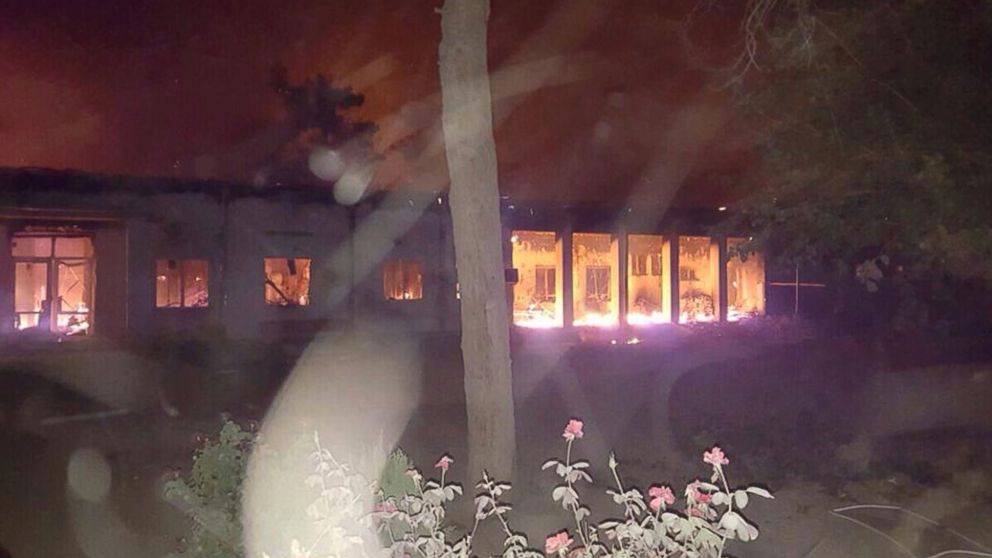
— -- The Pentagon has authorized condolence payments to the families of the dozens of civilians killed and injured by an airstrike on a hospital in Afghanistan.
"The Department of Defense believes it is important to address the consequences of the tragic incident at the Doctors Without Borders hospital in Kunduz, Afghanistan," said Peter Cook, the Pentagon press secretary in a statement issued Saturday.
There were 22 medical staff and patients killed and 39 injured by an airstrike last Saturday that was called in by U.S. special operations troops to support Afghan troops that were taking fire from Taliban fighters. Doctors Without Borders said this week that an additional 33 people are unaccounted for after the strike.
Earlier this week President Obama phoned the head of Doctors Without Borders to apologize for the airstrike on the hospital, which the U.S. military has said was struck by mistake.
"One step the Department can take is to make condolence payments to civilian non-combatants injured and the families of civilian non-combatants killed as a result of U.S. military operations," Cook said.
He added that U.S. Forces Afghanistan has the authority "to make condolence payments and payments toward repair of the hospital."
"USFOR-A will work with those affected to determine appropriate payments," he said.
The payments will come from the Commanders' Emergency Response Program (CERP) which is a fund that military commanders can use for a variety of things. During the wars in Afghanistan and Iraq senior U.S. military commanders have used the fund to make condolence payments to the families of those inadvertently killed or injured by U.S. military action. The amounts to be paid are left to the discretion of the commander.
"If necessary and appropriate, the administration will seek additional authority from the Congress," Cook said.
There are three investigations currently under way into the airstrike, but Doctors Without Borders has demanded an independent investigation into the deadly incident. Gen. John Campbell, the top U.S. commander in Afghanistan, told Congress last week that preliminary conclusions from the U.S. military investigation will be available within 30 days.