What might a US Navy escort for tankers in the Strait of Hormuz look like?
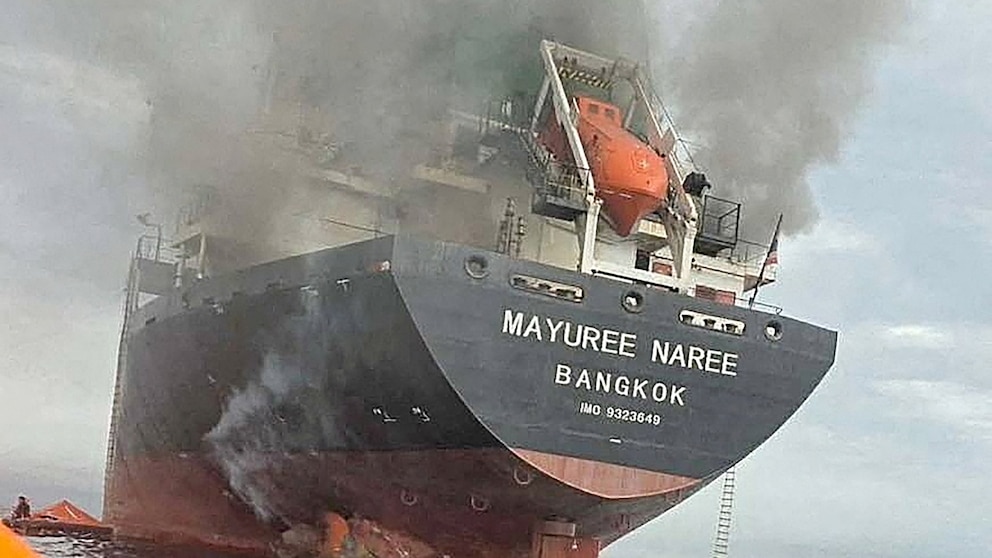
President Donald Trump has said he might order the U.S. Navy to escort commercial oil tankers through the Strait of Hormuz, if needed, to help deal with the escalating world oil supply crisis.
Iran said it has closed the strait and has attacked ships there and in the Persian Gulf.
What might that potentially risk operation look like?
Geography
The Strait of Hormuz is a narrow checkpoint through which 20%-25% of the world's oil supply flows.
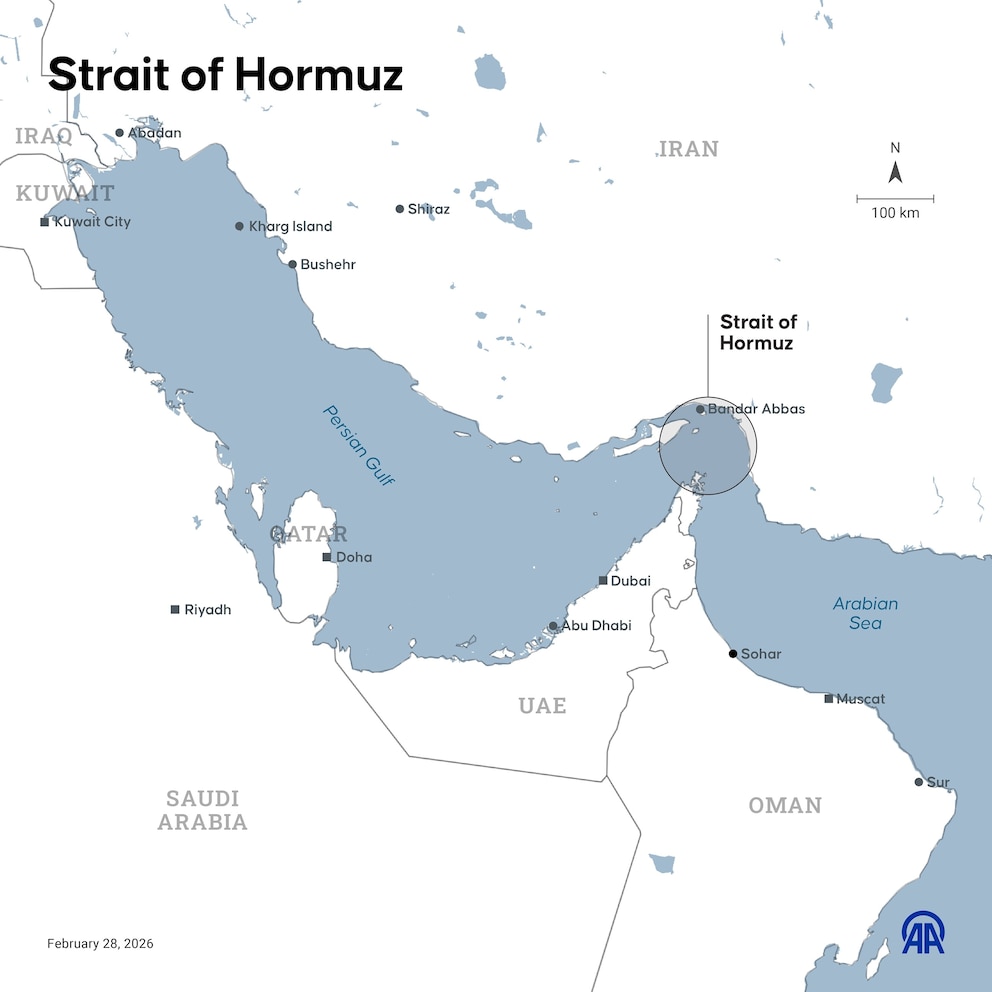
What is the Strait of Hormuz? It's the narrow body of water separating the peninsula that is the United Arab Emirates from Iran with the Persian Gulf to the west and the Gulf of Oman to the east. The northernmost tip of that peninsula actually belongs to Oman.
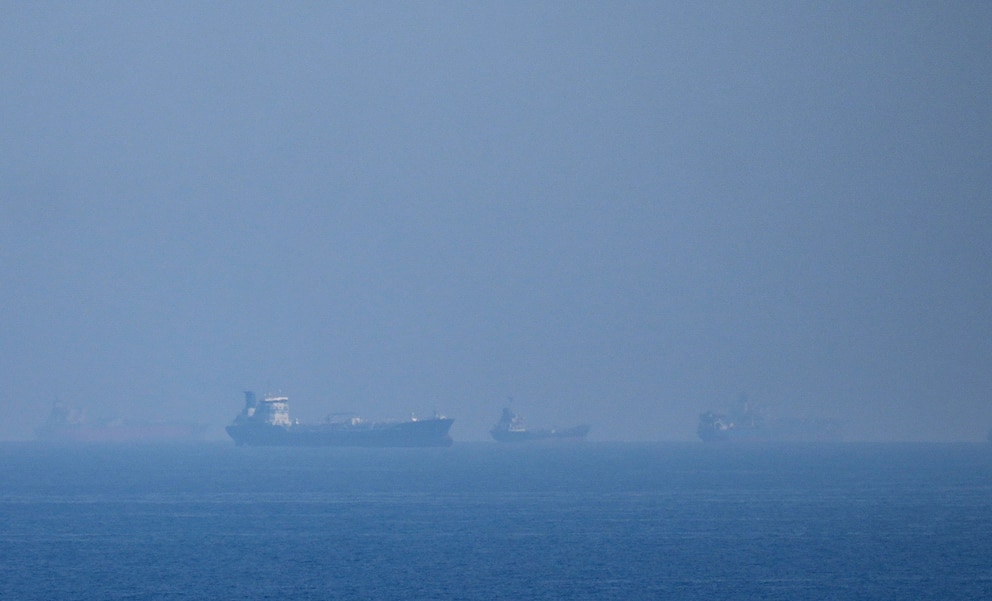
The strait is between only about 30 miles wide and just 21 miles at its narrowest point. But the transitway for vessels is even narrower because ships have to sail through two-mile-wide designated lanes for commercial ships as they sail inbound or outbound.
The route is not considered to be international waters because Iranian and United Arab Emirates territorial water limits stretch 12 miles from each coastline. But under United Nations Convention on the Law of the Sea Part III, it is subject to "transit passage," allowing free navigation and overflight, which cannot be suspended.
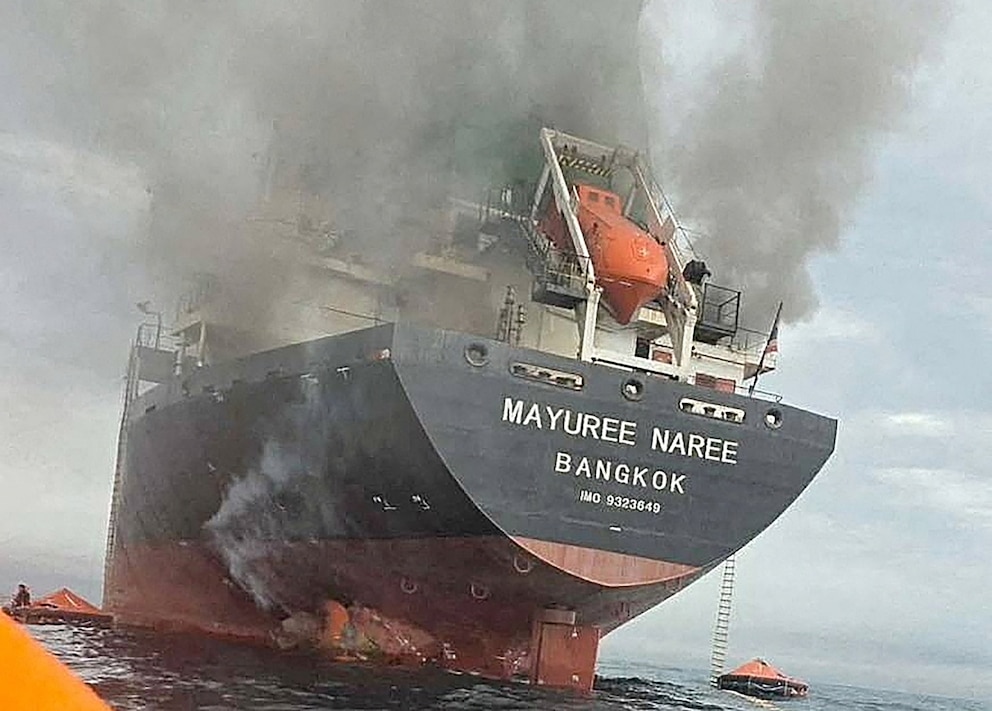
What is an escort?
A naval escort is when warships provide security for a vessel or a convoy of vessels moving through a dangerous waterway. Typically, the U.S. Navy ships most suited for this are Arleigh Burke-class destroyers that can provide air defenses to counter drones and anti-ship missiles fired from shore.
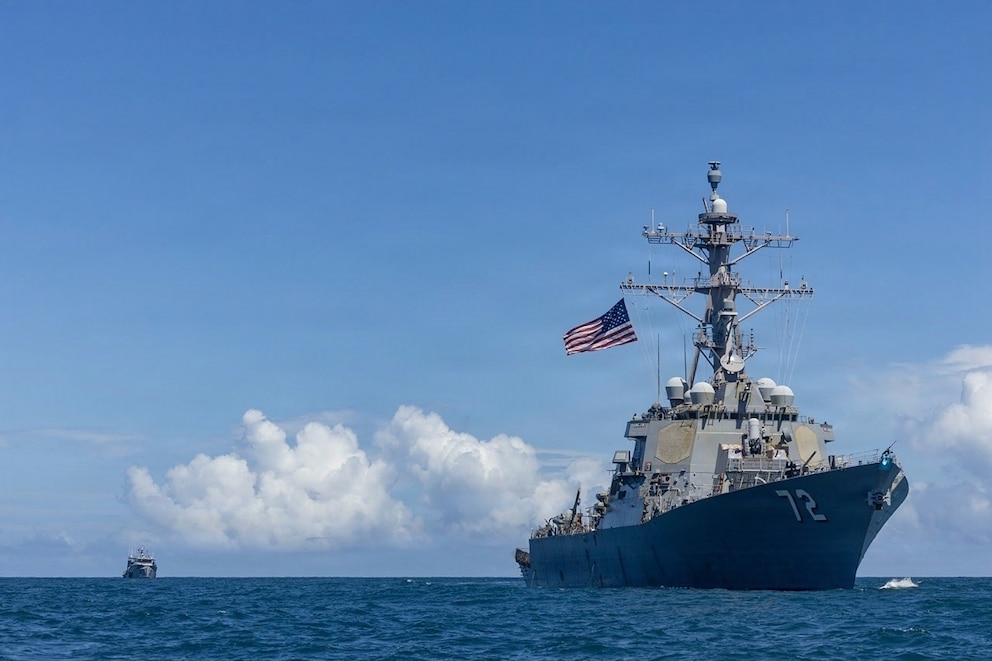
That's what the U.S. Navy and partner nations, including the U.K. and France, did from December 2023 to mid-2025 in the Red Sea and the Gulf of Aden. That operation was to protect commercial ships from Houthi drone and missile attacks.
Just like on the north side of the Arabian Peninsula, there is another narrow waterway, the Bab el Mandab, that separates the southwestern tip of the peninsula from Africa, specifically Djibouti.
It's also likely that the U.S. Navy might employ its Littoral Combat Ships (LCS's) to escort ships or clear a path through waters laced with Iranian mines. LCS's are not minesweepers, but they can be equipped with a mine-sweeping package that can be towed behind the ship or mine-countermeasure weapons aboard the ship.
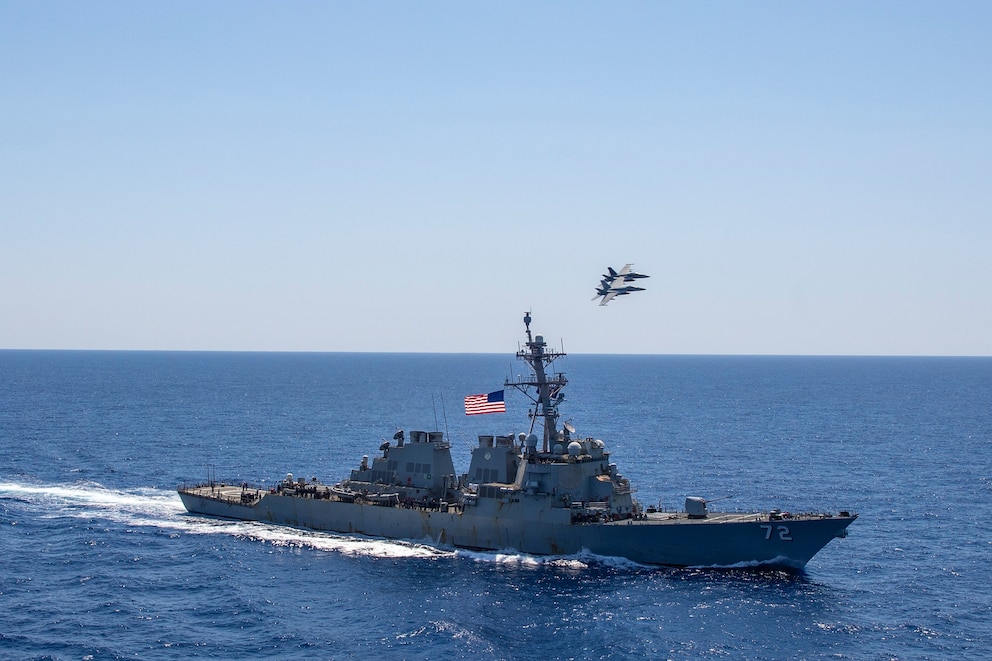
There are currently three LCS's in the Persian Gulf area and at least two of them are equipped with this package.
Are there destroyers near the Strait of Hormuz?
Yes, there are eight destroyers in that part of the world. Most of them are accompanying the aircraft carrier USS Abraham Lincoln which is located of the eastern coast of Oman.
They are the USS Michael Murphy, Destroyer USS Mitscher, USS Pinckney, USS Delbert D Black, USS McFaul, USS Spruance, USS Frank E Petersen and USS John Finn.
If needed they could be moved closer to either side of the Strait of Hormuz to escort commercial ships in and out of the Persian Gulf.
There are an additional four destroyers currently in the Red Sea accompanying the aircraft carrier USS Gerald R. Ford. They are the USS Mahan, USS Winston Churchill, USS Bainbridge, and USS Thomas Hudner.
Why destroyers?
Because they are equipped with the AEGIS combat system that is able to track incoming missile and drone threats and use air defense missiles to intercept them. Destroyers also carry between four to eight Harpoon anti-ship missiles that can travel a far as 65 nautical miles to strike at any adversarial warships.
What would an escort look like?
The best cues would come from the recent U.S. Navy and allied escorts that took place during the Houthi attacks, an operation known as Operation Prosperity Guardian.
During those escorts, one or several U.S. Navy ships would be placed at each end of a convoy of merchant ships. An escort could involve strategically placing destroyers at key locations near the transit points so they could track and shoot down any incoming fire with their air defense systems.
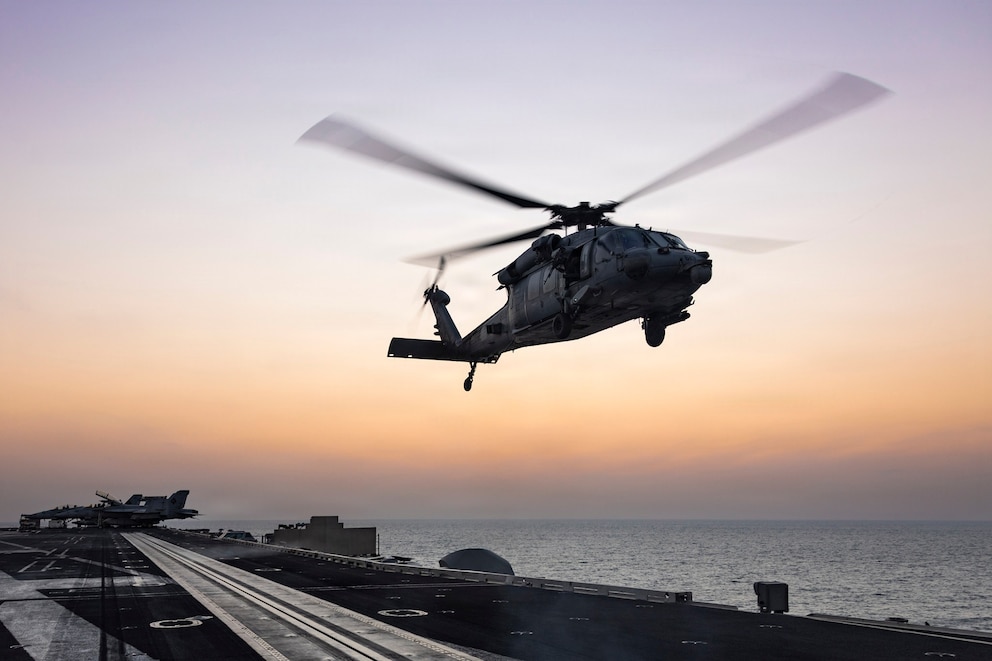
Each destroyer also carries two MH-60 Seahawk helicopters that can be used for aerial reconnaissance and can also carry a pod used for minesweeping. Mines are first identified by the AN/AQS-20A sonar system or other mine countermeasure assets, after identification a mine is neutralized with an armor-piercing warhead.
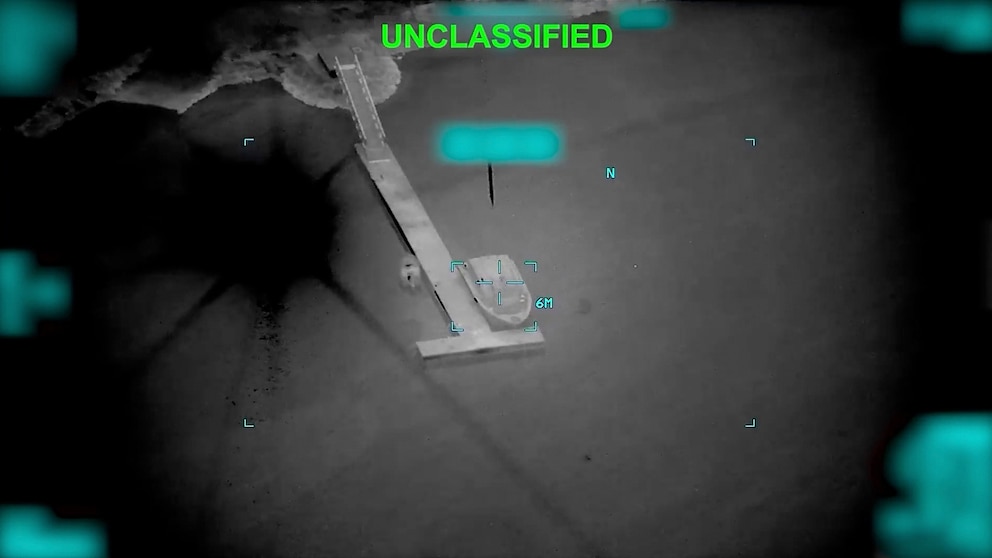
The US Navy has done this before in the Strait of Hormuz
The last time the U.S. Navy did escorts in the Strait of Hormuz was in 1987-1988 during the "Tanker War" which was an outgrowth of the decade-long Iran-Iraq War.
U.S. Navy destroyers provided escorts to Kuwaiti-flagged ships transiting through the Strait. Operation Earnest Will, as it was called, included two major incidents: one was the mistaken shootdown of an Iranian passenger jet by the destroyer USS Vincennes that had just completed an escort and thought the plane was an Iranian fighter jet; the second was extensive damage to the frigate USS Samuel Roberts after it struck an Iranian mine.
The damage to the Samuel Roberts prompted the Reagan administration to launch retaliatory strikes against Iranian targets that included warships.
What about mines?
As mentioned above, Iran reportedly has several thousand mines that could be placed in the Strait. Typically, these are magnetic mines that can attach to a ship's hull triggering an explosion that could at most sink it.
"The most immediate concerns are mines," Bill Hamblet, a retired Navy captain, now with the U.S. Naval Institute, said during an interview with ABC News. "The threat of mines, missile attacks and small craft vessel attacks, is what is keeping commerce from moving through the strait right now."
"If there are mines, the Navy has to find them, localize them, disable them, and disarm them. And so, it's a huge challenge, and it's a problem when you don't know where they are," he said.
Hamblet, a former Navy intelligence officer, said mine detection and clearance in the Strait are crucial to re-opening it, and emphasized the need for local air superiority and mine countermeasure packages to be in place before the U.S. Navy can begin escorting other ships.
Last year, the U.S. Navy retired the last of its minesweeping vessels that had operated for decade in the Persian Gulf. These Avenger-class minesweepers had wooden hulls covered in fiberglass that helped prevent Iranian magnetic mines attaching to their hulls.
With their retirement the U.S. Navy would rely on the minesweeping packages used by Littoral Combat Ships (LCS).
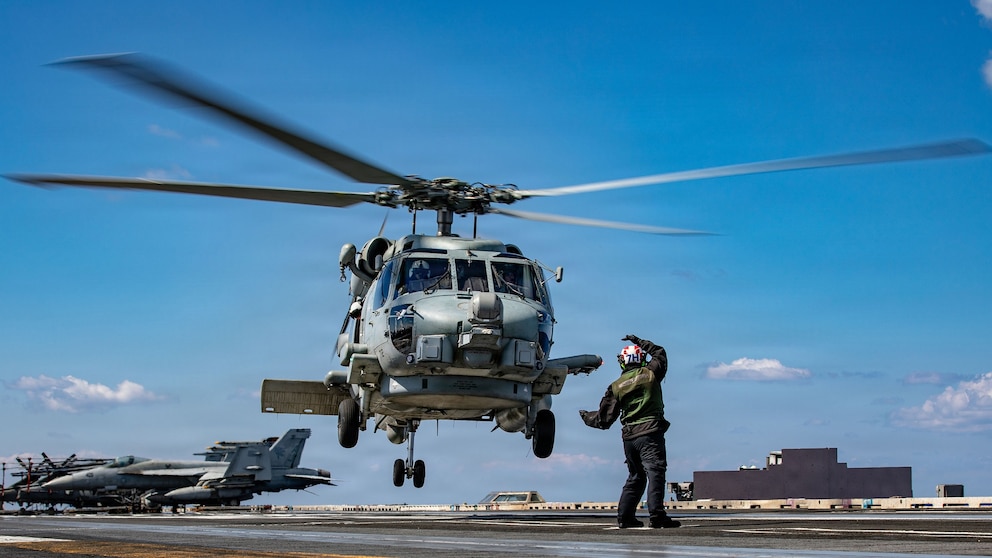
The Navy's MH-60 helicopters are now its main minesweeping platform.
Each destroyer carries two MH-60 Seahawk helicopters that can be used for aerial reconnaissance and can also carry a pod used for minesweeping.
Mines are first identified by the AN/AQS-20A sonar system or other mine countermeasure assets, after identification a mine is neutralized with an armor-piercing warhead.
Hamblet said the littoral combat ships with mine-countermeasure packages would need to be deployed to the region to begin mine-sweeping and clearing the waterways.
"For that to happen, there has to be local air superiority over the Strait so that we know that those ships can operate," Hamblet said, adding that the ships move at a snail's pace and require air protection.
"They're not sweeping mines at 50 knots. They're sweeping mines slowly, carefully, methodically, and it takes time. And so, to do that, you've got to have an umbrella of coverage and protection for them," he said.