US ramps up sanctions over Uighur abuses with penalties on powerful Chinese paramilitary group
The U.S. has sanctioned a powerful Chinese paramilitary organization in the country's western province, accusing it of playing a key role in the detention and repression of Muslim ethnic minorities.
The sanctions could have far-reaching consequences, depending on their level of enforcement, given the deep economic and political control of the group, the Xinjiang Production and Construction Corps, in the Xinjiang region.
This round of penalties is also the second in just three weeks after President Donald Trump said earlier this month that he had withheld them for over a year to protect trade talks with China. In recent weeks, his administration has bolted toward an increasingly tough stance against Beijing as the Phase 1 trade deal all but fell apart and the 2020 presidential election approaches.
On July 9, the U.S. Treasury sanctioned regional officials and a security agency for the repressive campaign against Uighurs and other ethnic minorities that includes detaining over 1 million in "re-education" and forced labor camps, cracking down on practicing Islam and enforcing widespread sterilization practices. China at first denied such camps existed, then defended them as a counterterror operation; its foreign ministry has denied mass sterilization.
"The Chinese Communist Party's human rights abuses in Xinjiang, China against Uighurs and other Muslim minorities rank as the stain of the century," U.S. Secretary of State Mike Pompeo said in a statement Friday.
In addition to the XPCC, the Treasury Department is sanctioning the organization's commander Peng Jiarui and a former senior official Sun Jinlong.
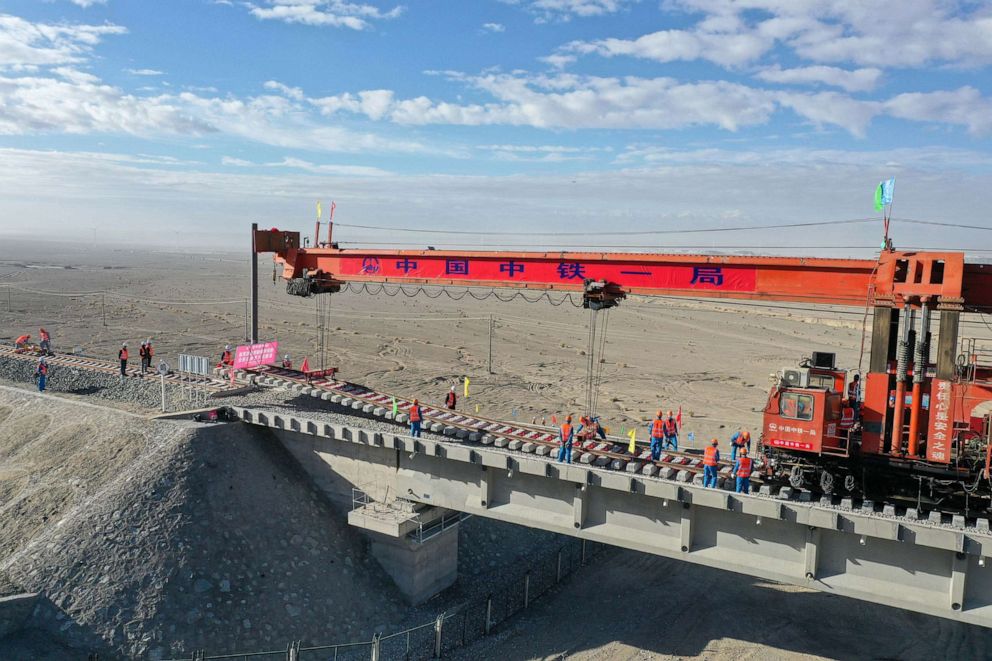
The latest actions mark a profound escalation in U.S. pressure. Described as a "paramilitary organization" or a "farming militia," the XPCC is a tool of the Chinese Communist Party first deployed in the 1950s to send soldiers as pioneers or colonizers to Xinjiang, a largely undeveloped region nearly 2,000 miles west of Beijing.
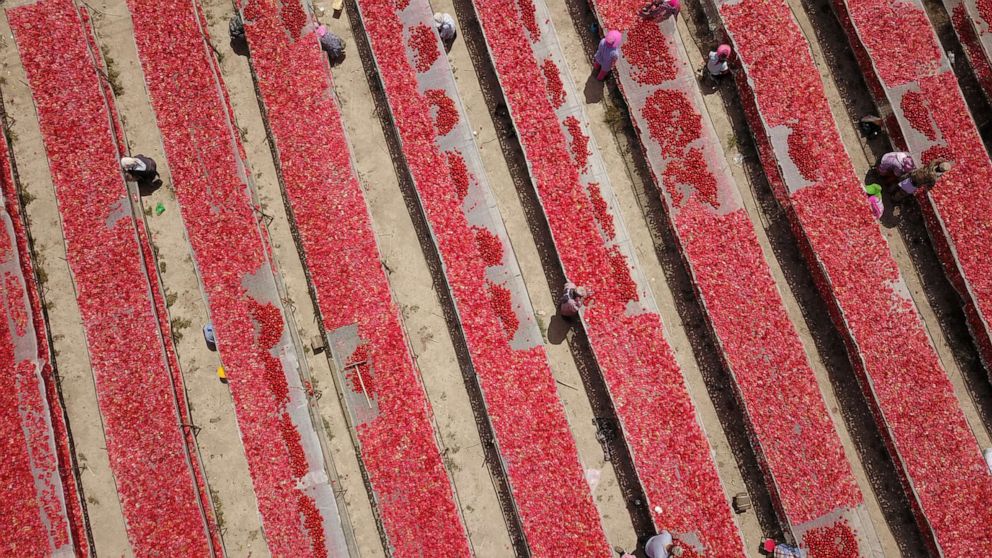
After years of developing farmland, mining, and other industries, the XPCC now controls huge portions of the region's economy, as well as critical security functions. Analysts have reported that the XPCC alone employs approximately 12% of the region's population and accounts for 20% of the region's total economy, with even larger shares of agriculture.
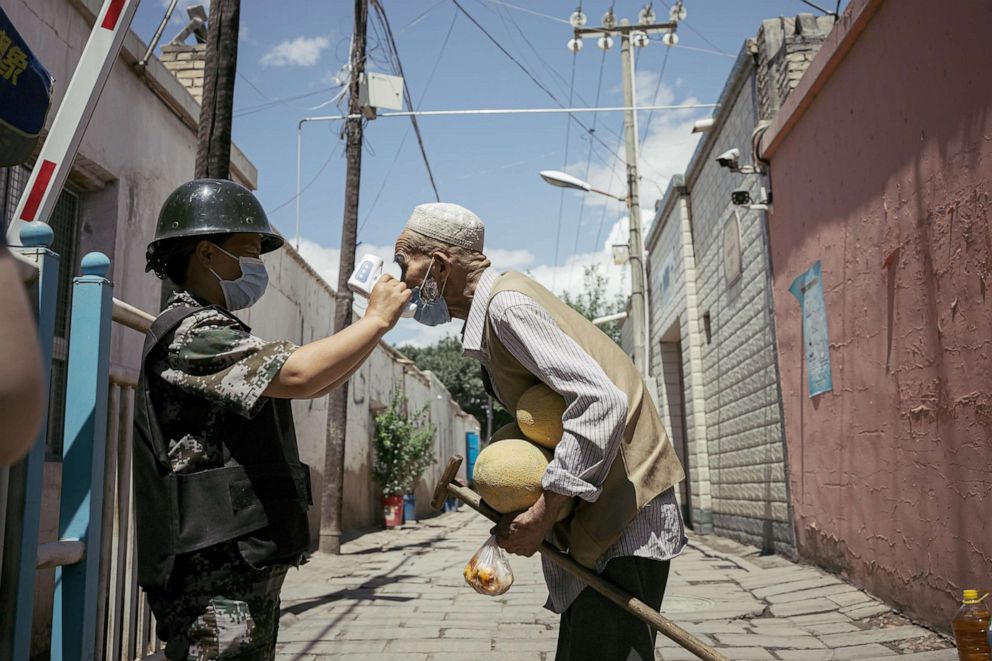
Pompeo accused the XPCC of being "directly involved in implementing" what he called "a comprehensive surveillance, detention, and indoctrination program" against Uighurs and other minorities.
It's unclear if the XPCC has any assets in U.S. jurisdiction. But this now puts any company, including American ones, at risk of U.S. sanctions if they work in the region or have a supply chain with ties to it, according to the U.S. Treasury, although teasing out those ties can be difficult given how murky business in China can be.
"All US companies (and foreign companies that do business in the US) should be getting out of Xinjiang now (if they haven't already)," tweeted Julian Ku, a professor at Hofstra University Law School.
Major U.S. companies like Apple and Ralph Lauren are already struggling with their commercial ties to Xinjiang after the U.S. Commerce Department added to its list of blocked entities based in the region and several agencies issued a joint warning of "legal risks" if companies' supply chains include the forced labor used in these internment camps.
On Capitol Hill Thursday, Pompeo said the administration hopes to use these economic levers to change the Chinese government's behavior.
"I'm really happy with the work we're making to convince businesses -- not just American business because it's an international place of business -- that they should really look hard at their supply chains -- not just their direct employees, but their supply chains -- and what's taking place there. I think if we get that right, we have the opportunity to change what's taking place there," he told the Senate Foreign Relations Committee.
Unleashing economic pressure on China for the treatment of Uighurs is one of several moves by the Trump administration to escalate its fight with Beijing, including a declaration against its claims in the South China Sea, a new round of arms sales to Taiwan, ending Hong Kong's special economic status because of the crackdown on democracy and a crippling campaign against Huawei, the telecommunications giant.
China is likely to retaliate after Friday's sanctions, although its ability to do so may be more limited. After the first round of sanctions this month, it announced visa bans on U.S. ambassador-at-large for religious freedom Sam Brownback, Sens. Marco Rubio, R-Fla., and Ted Cruz, R-Texas, and Rep. Chris Smith, R-N.J. -- four Republicans who have been outspoken on the Uighur detention camps.