Utah wildlife officials warn of outbreak of highly contagious rabbit hemorrhagic disease

A highly contagious disease found in rabbits is currently spreading through multiple parts of Utah, wildlife officials have warned.
Rabbit hemorrhagic disease has recently been confirmed in both southern and northeastern Utah, according to the Utah Division of Wildlife.
The disease is caused by a calicivirus that affects rabbits, including wild and domesticated European rabbits, from which rabbit populations in the U.S. are descended from, according to the House Rabbit Society, a nonprofit rabbit rescue organization.
However, it does not affect human health, according to the U.S. Department of Agriculture.
It was first seen in China in 1984 but is thought to have originated in Europe. There have since been confirmed cases in Europe, the Mediterranean, Africa, Asia, Australia and New Zealand.
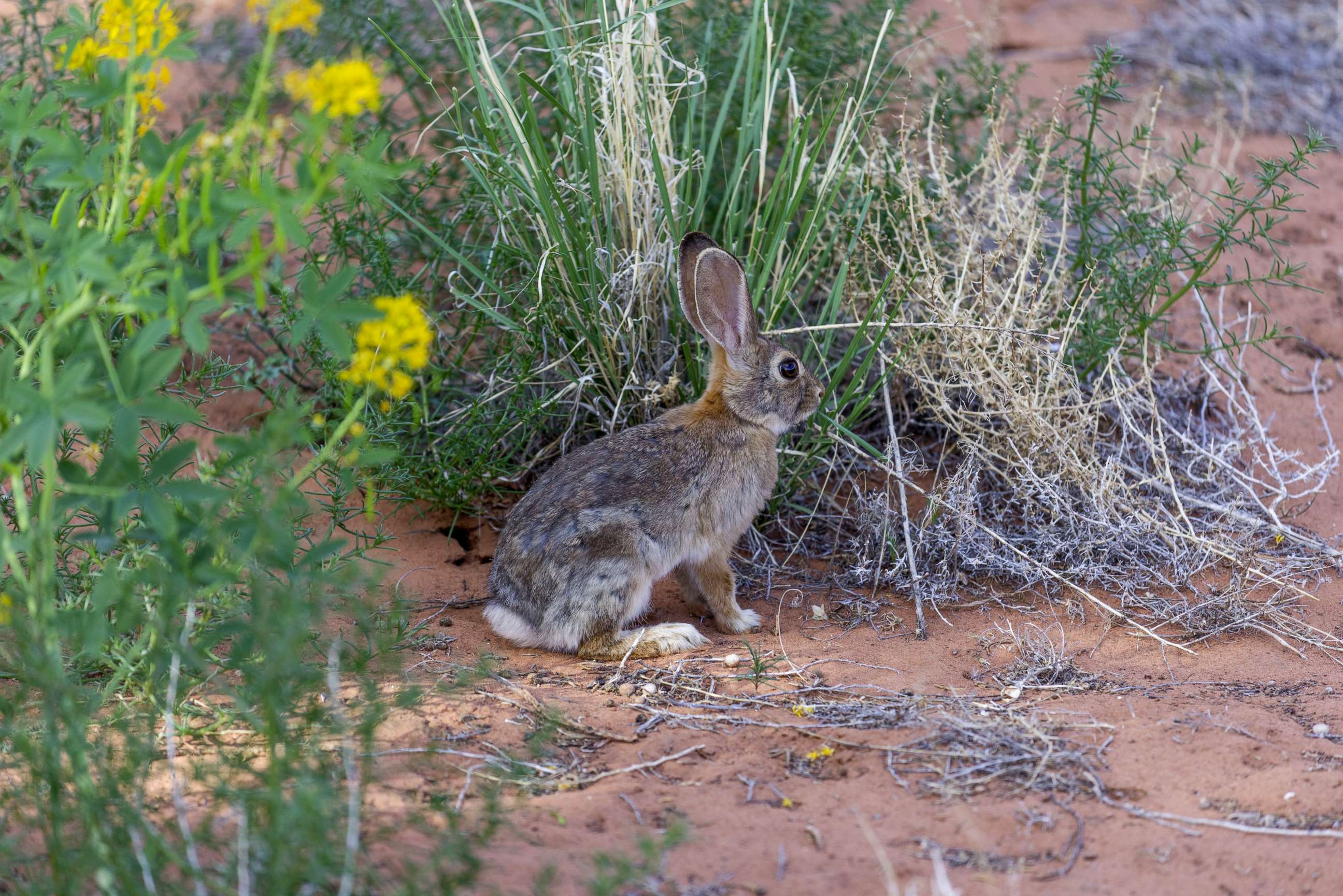
Before 2020, the virus had not been known to affect rabbits or hares native to North America, such as cottontails, snowshoe hares and jackrabbits, and is now causing death in those species, according to the House Rabbit Society.
A new virus, RHDV2, quickly spread over Europe and the Mediterranean after it emerged in France in 2010.
It is a often a "very swift and sudden killer," and rabbits may die without showing any symptoms after they are infected. The rabbits died from internal hemorrhaging, the mortality rate is about 40% to 100%, and there is no known cure, according to the House Rabbit Society.
The disease is spread through direct contact with an infected rabbit or indirect contact with humans, inanimate objects, rabbit products, food and water or mechanical vectors and predators, including insects, rodents, birds, predators, or pets such as cats and dogs.
The virus can survive for months in the environment and can also spread through the urine or feces of sick rabbits or from predators who have eaten infected rabbits, Utah wildlife officials said.
There are also currently outbreaks in New York, the Southwest and the Pacific Northwest.
Earlier this year, Nevada, Colorado, Texas, Arizona, New Mexico and several areas in Mexico experienced outbreaks as well.
Officials advised residents to look out for rabbits that appear to be bleeding from the mouth and to wash and disinfect hands or any equipment if it is suspected that they handled an infected animal.