New warning says you may need to change your tires sooner than you think
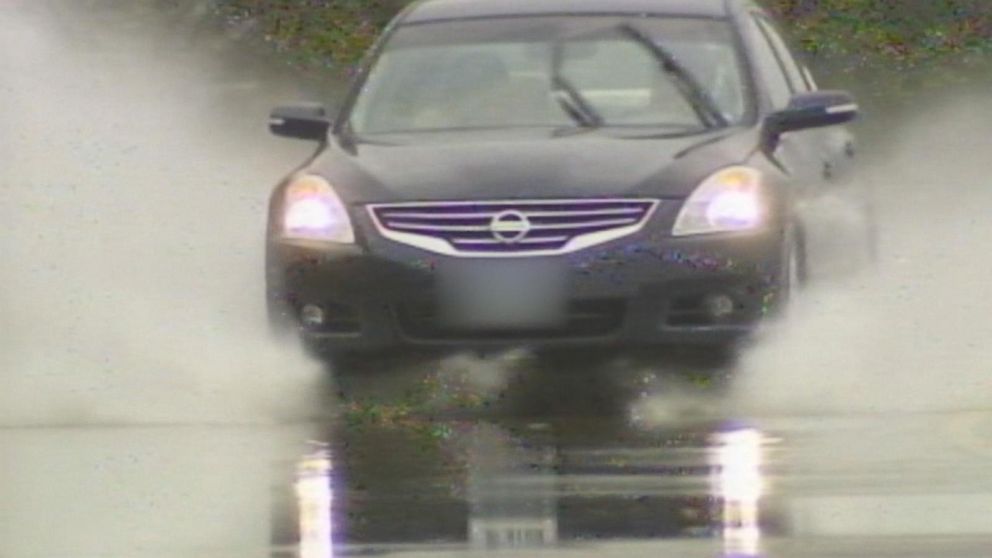
As summer storm season rolls in, new research offers fresh guidelines to ensure drivers roll safely to a stop.
The American Automobile Association released a study on Thursday showing that worn tires traveling at speeds of about 60 mph in wet conditions can extend average stopping distances by 43 percent, or an additional 87 feet or more, when compared to new tires. The difference is more than the length of a semi-trailer.
"The tread of the tire - it's only purpose in life is to get water away so the tire can remain in contact with the road," Greg Brannon, AAA's director of Automotive Engineering and Industry Relations told ABC. "So you have to maintain that tread depth."
With their findings, AAA is updating the old test of placing a penny in the tread of your tire -- and now suggesting that drivers use a quarter.
The lower the tread depth, the more likely a car will hydroplane.
Experts suggest slipping an upside-down quarter between your tire grooves, looking at the side bearing Washington’s head. If you can see all of it, it’s time to start shopping for new tires.
Most industry guidelines and state laws recommend that drivers wait until the tread depth reaches 2/32” to replace tires - but AAA says stopping distances have already begun to deteriorate once the tread depth reaches 4/32”.
In addition to regularly checking the tread of your tires, safety experts recommend avoiding cruise control in wet conditions. Drivers need to be able to react as quickly as possible if the vehicle loses traction.
Increasing the space between you and the car in front will also allow ample room to respond - so keep your distance.
If you do find yourself hydroplaning, AAA recommends gently easing off the accelerator and steer in the direction the vehicle should go until traction is regained. Braking forcefully can cause the vehicle to skid.