Washington state senator 'frustrated' residents can't get tested for new coronavirus
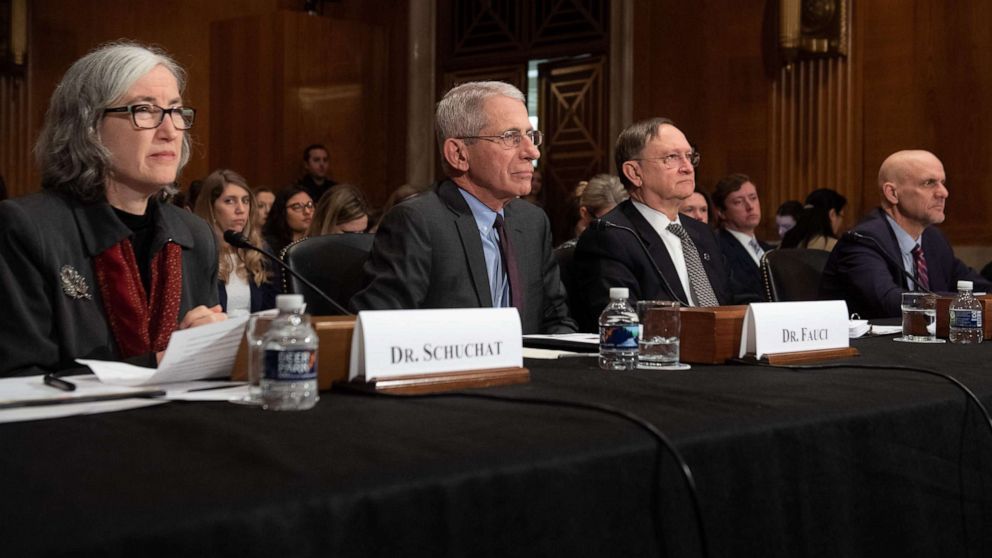
At a congressional hearing Tuesday reviewing the U.S. response to the COVID-19 crisis, Washington Sen. Patty Murray expressed strong frustration to federal health officials over what she said was a lack of testing in her home state where at least six people have died.
“I’m hearing from people that are sick and want to get tested they do not know where to go,” Murray said in her opening statement, speaking to officials from the Centers for Disease Control, the National Institutes of Health and the Food and Drug Administration.
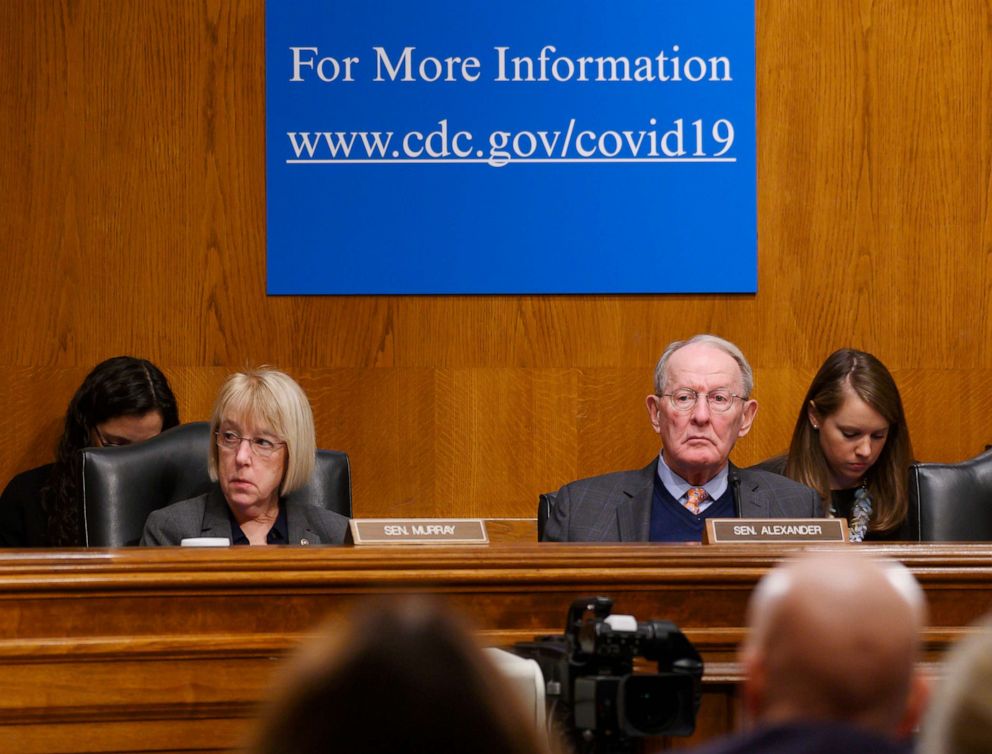
She said the problem is the same across the country.
“It’s unacceptable that people in my state and nationwide can’t even get an answer to whether or not they are infected,” Murray, D-Wash., said.
The Centers for Disease Control has been criticized by other health professionals for initially coming up with a faulty test for the new coronavirus and then for conducting testing too slowly and on too few people.
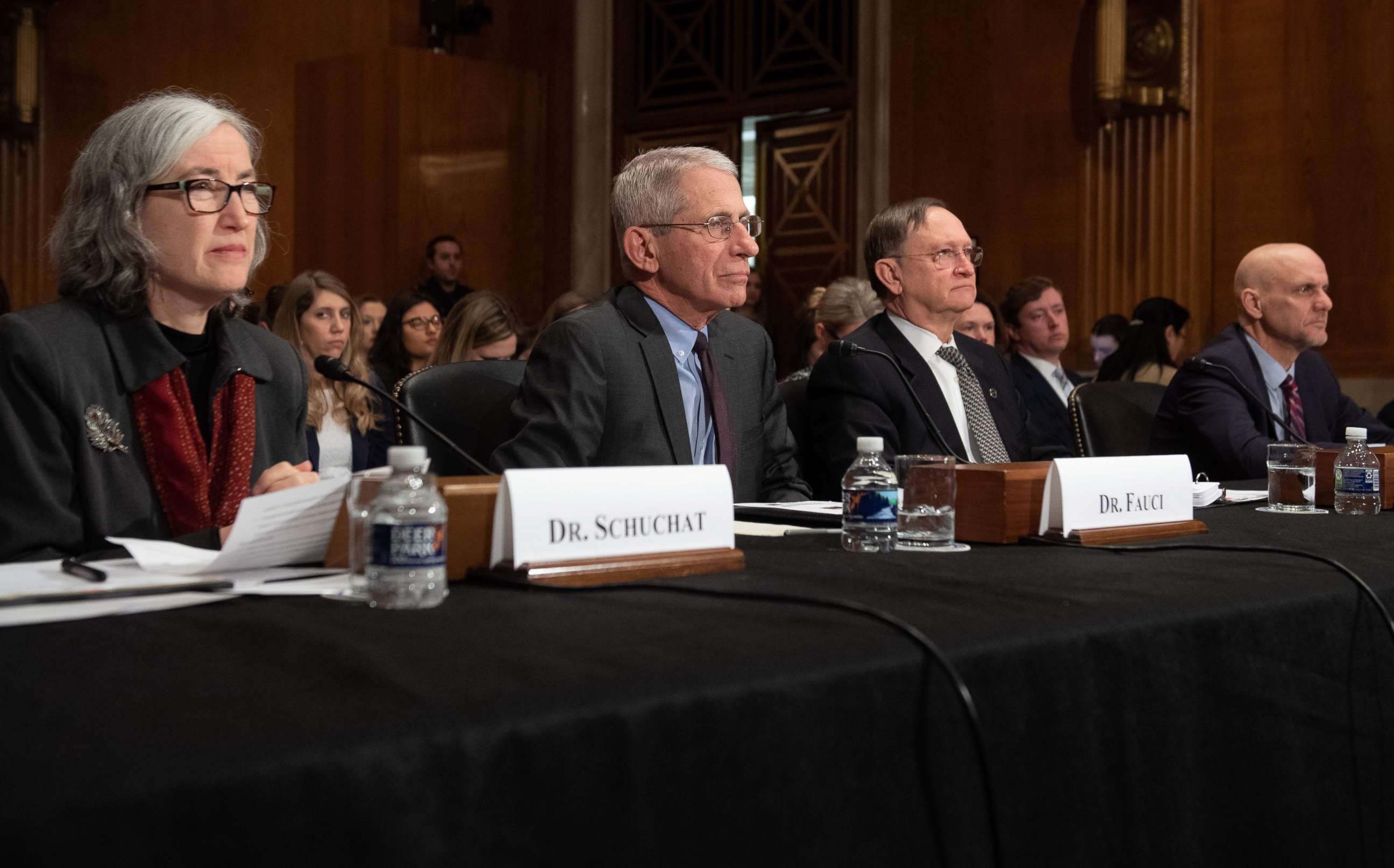
Dr. Anne Shucat, the Principal Deputy Director of the Centers for Disease Control and Dr. Anthony Fauci of the National Institute on Allergy and Infectious Diseases at the National Institutes of Health were being grilled, as well as Food and Drug Administration Commissioner Dr. Stephen Hahn.
Fauci also said he wanted to clarify and confusion over the timeline for possible treatment options and vaccines -- a matter that came up during President Donald Trump's meeting with his COVID-19 task force and pharmaceutical company executives Monday at the White House.
“It’s important to point out that the timelines for each of these are fundamentally different,” he said in his opening statement.
Fauci said the data from China shows that 80% of individuals recover with no intervention, but that 15-20% need some kind of intervention.
“We want desperately to have a therapy for these individuals,” he said, adding that multiple options are currently being tested in randomized trials.
After the hearing, they were scheduled to brief all senators about the situation.
As CDC and FDA officials faced repeated questions about the rate of testing and availability of tests, FDA Commissioner Hahn said labs should have the ability to conduct up to a million tests by the end of the week.
“Our expectation in talking to the company that’s scaling this up is that we should have capacity by the end of the week to have kits available to the laboratories to perform about a million tests,” he said in response to Sen. Doug Jones, an Alabama Democrat.
Put another way, Hahn said that 2,500 test kits should be distributed to labs by the end of the week. Each kit has the ability to conduct 500 tests.
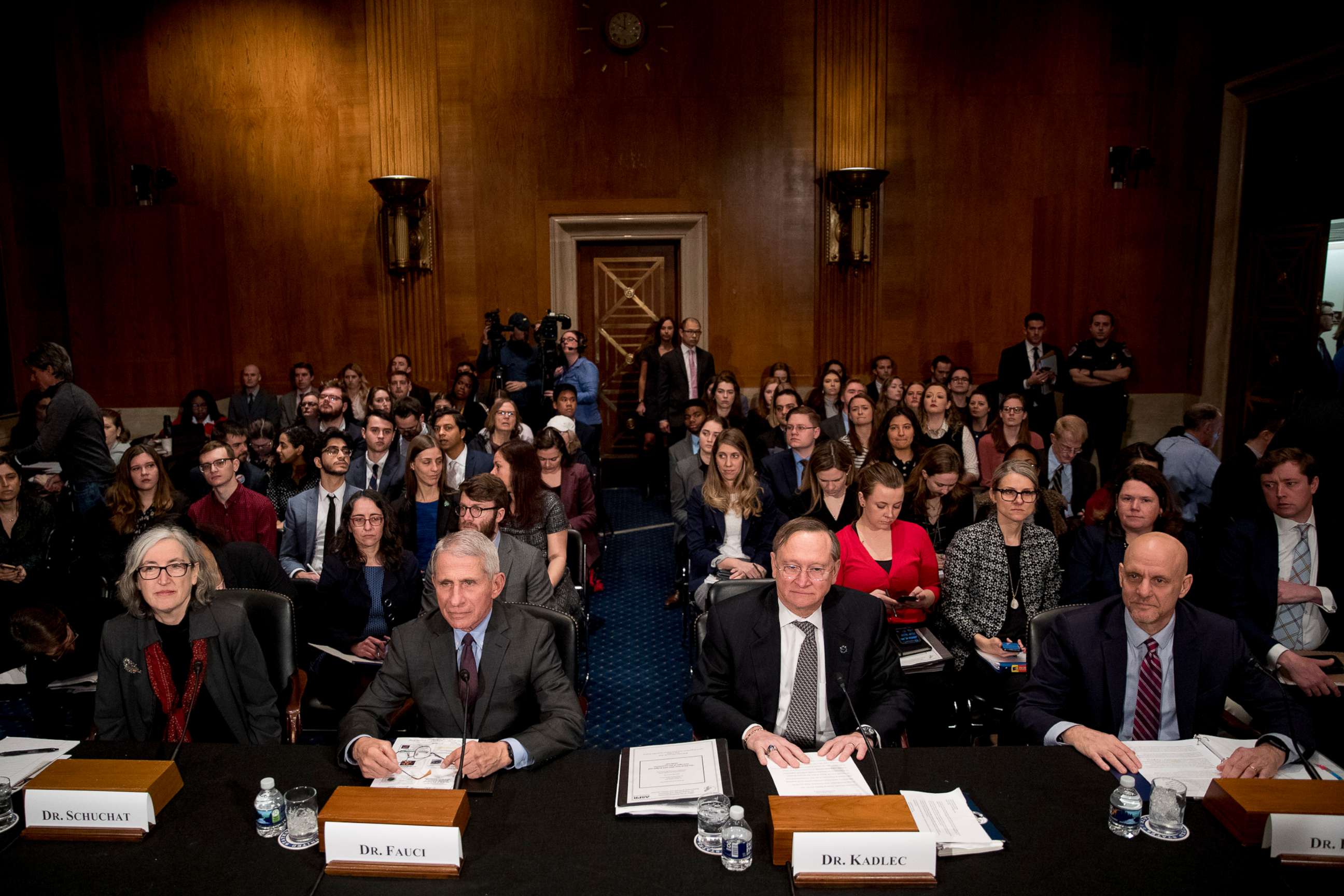
Schuchat also said the CDC is rapidly supplying public health labs with tests, but emphasized that public health labs only represent a small portion of all the tests run of respiratory samples during flu season and that the majority of people with respiratory symptoms don’t get tested.
“By the end of this week really all the state labs the public health labs should be able to do testing,” she said.
Fauci also gave some information and recommendations on what to do if you have symptoms and don’t know if it could be the new coronavirus or the flu.
“The definitive test would be to get a test for the flu or a test for the coronavirus,” Fauci said, adding later that a flu test would not come up positive for COVID-19.
“Coronavirus starts off with a fever and a lower respiratory infection, as opposed to an upper respiratory infection that could become lower which is the fluWhen you have lung involvement you can get that with flu but usually it’s upper respiratory.”
“if you’re in the middle of a flu season right now if you have a fever and a cough, obviously if you have a cough it could be a pneumonia you should see a physician. Certainly if you’re a person in a risk group, elderly or underlying condition, during a flu season you should see a physician because we do have antivirals for flu and you could be helped by doing that.”
He added that preventative steps are the same for both so “what you can do to protect yourself from the new coronavirus are the same things you can do to protect yourself from the flu.”