• Video
  • Shop
  • Culture
  • Family
  • Wellness
  • Food
  • Living
  • Style
  • Travel
  • News
  • Book Club
  • Newsletter
  • Privacy Policy
  • Your US State Privacy Rights
  • Children's Online Privacy Policy
  • Interest-Based Ads
  • Terms of Use
  • Do Not Sell My Info
  • Contact Us
  • © 2026 ABC News
  • News

Water vapor and temperatures that could support life found on exoplanet, NASA says
0:26
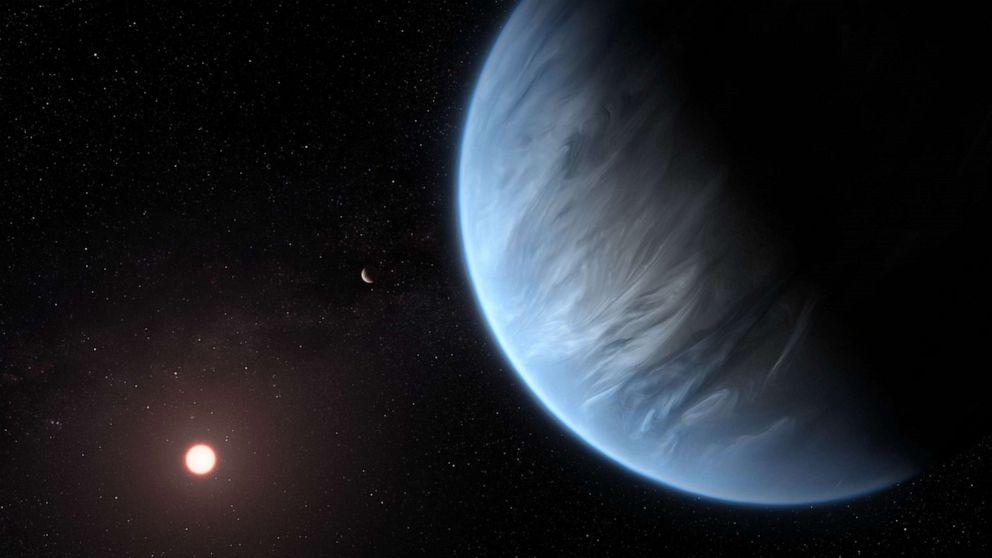
Scientists hint at earth-like planet 110 lightyears away
M. Kornmesser/ESA/Hubble
ByJulia Jacobo
September 12, 2019, 4:40 PM

Astronomers have located the first planet outside our solar system containing water vapor and temperatures that could support life, according to NASA.

Data from NASA's Hubble Space Telescope allowed astronomers from the Center for Space Exochemistry Data at the University College London to determine that the molecular signature of water vapor exists in the atmosphere of an extrasolar planet about 110 light years away in the constellation of Leo, called K2-18b.

Related Articles

(MORE: Water found on Mars: Everything you wanted to know but were afraid to ask)

The results from the data also suggest the presence of hydrogen and helium, and scientists believe that other molecules, including methane and nitrogen, may be present but are currently undetectable from the existing observations.
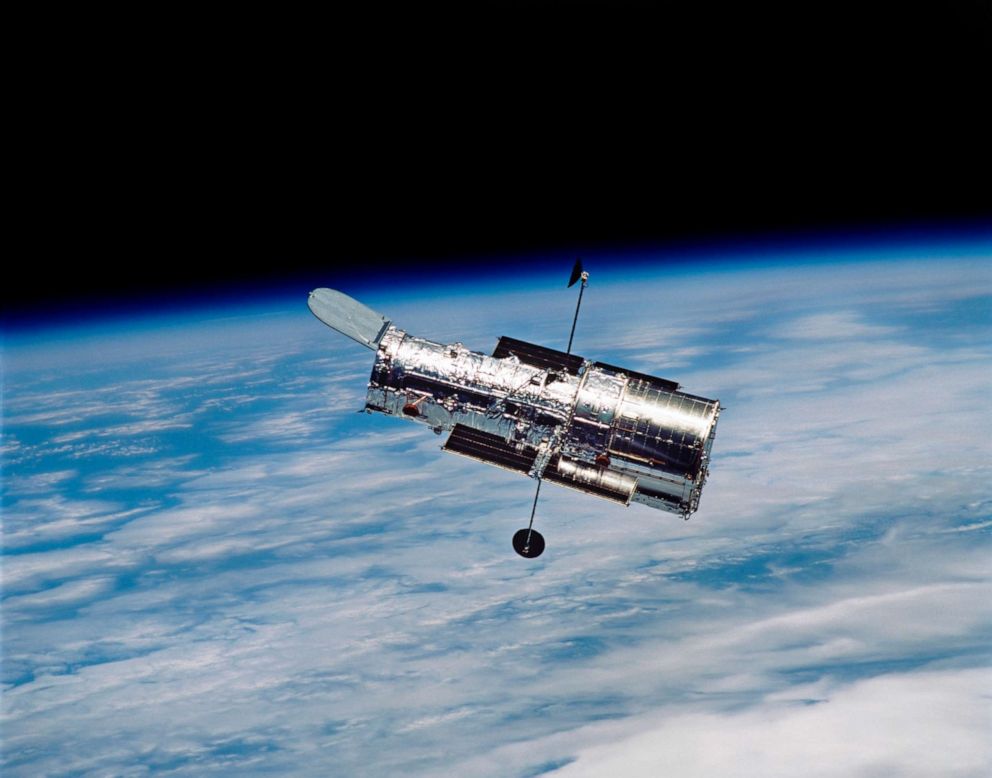
The Hubble Space Telescope in orbit around Earth.
STOCK PHOTO/Getty Images

The findings were published in two independent studies, one published in Nature Astronomy and another submitted to the the Astronomical Journal.

K2-18b, which is located around a small red dwarf star, is the only known exoplanet to have both water and temperatures that could support liquid water on a rocky surface, according to NASA.

Related Articles

(MORE: 50 years after the moon landing: How close is space travel, really?)

However, the exoplanet may be more hostile to life than Earth due to the high level of activity to the nearby red dwarf star, which exposes it to more high-energy radiation.

The Hubble Space Telescope has found water vapor and temperatures suitable to support life on an exoplanet called K2-18b, according to NASA.
M. Kornmesser/ESA/Hubble

K2-18b was discovered by NASA's Kepler Space Telescope in 2015. It is one of hundreds of "super-Earths," or exoplanets with masses between those of Earth and Neptune, found by the Kepler telescope.

Related Articles

(MORE: Out of this world: How life in space changed an astronaut’s outlook on life on Earth)

It has a mass is eight times greater than Earth's, meaning its surface gravity would be significantly higher as well.

The next generation of space telescopes will be able to characterize the atmospheres of exoplanets in more detail, according to NASA.


Up Next in News—

Gas station clerk speaks out after foiling alleged kidnapping

April 15, 2026

Oklahoma high school principal takes down would-be shooter, hailed as hero

April 15, 2026

Family seeks answers after influencer Ashlee Jenae is found dead on vacation in Tanzania

April 15, 2026

Couple shares warning after nearly losing down payment in mortgage fraud

April 10, 2026

Shop GMA Favorites

ABC will receive a commission for purchases made through these links.

Sponsored Content by Taboola

The latest lifestyle and entertainment news and inspiration for how to live your best life - all from Good Morning America.
  • Contests
  • Terms of Use
  • Privacy Policy
  • Do Not Sell My Info
  • Children’s Online Privacy Policy
  • Advertise with us
  • Your US State Privacy Rights
  • Interest-Based Ads
  • About Nielsen Measurement
  • Press
  • Feedback
  • Shop FAQs
  • ABC News
  • ABC
  • All Videos
  • All Topics
  • Sitemap

© 2026 ABC News
  • Privacy Policy— 
  • Your US State Privacy Rights— 
  • Children's Online Privacy Policy— 
  • Interest-Based Ads— 
  • Terms of Use— 
  • Do Not Sell My Info— 
  • Contact Us— 

© 2026 ABC News