The WH says Trump is considering suspending habeas corpus. What would that mean?

White House deputy chief of staff Stephen Miller said Friday that the Trump administration is "actively looking at" suspending habeas corpus, the right of a person to challenge their detention in court.
If carried out by President Donald Trump, the suspension of habeas corpus would be a dramatic escalation of his administration's immigration policy by significantly curtailing a right enshrined in the Constitution.
"First, you know, President Trump has talked about potentially suspending habeas corpus to take care of the illegal immigration problem. When could we see that happen in the future?" a reporter asked Miller as he spoke outside the White House.
"The Constitution is clear, and that, of course, is the supreme law of the land, that the privilege of the writ of habeas corpus can be suspended in time of invasion," Miller answered.
"So, it's an option we're actively looking at," he continued.
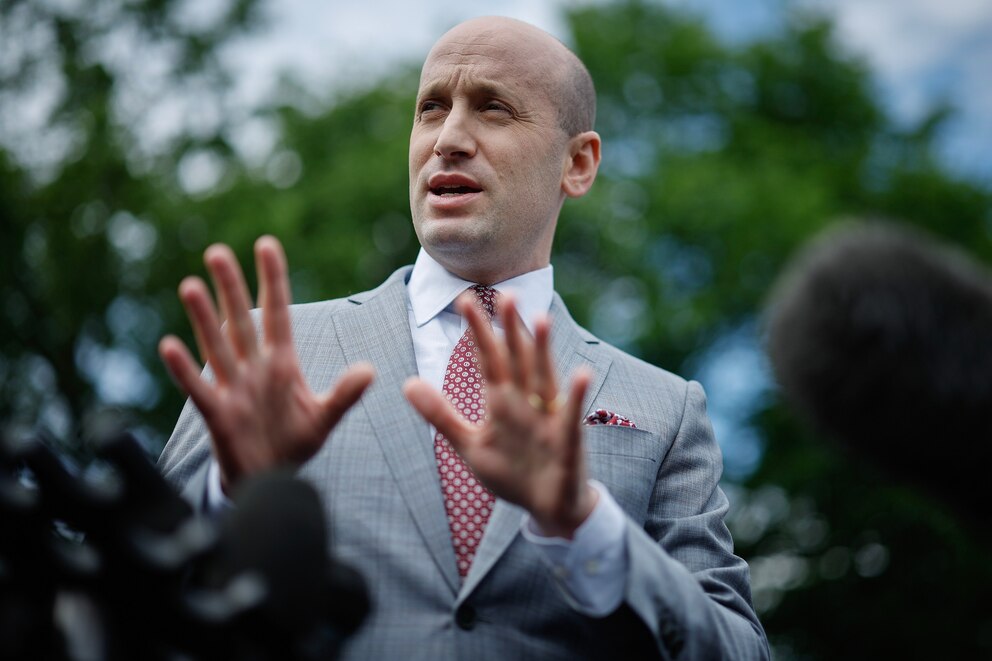
The Constitution allows for the suspension of habeas corpus in extraordinary circumstances, Article I saying writs of habeas corpus "shall not be suspended, unless when in cases of rebellion or invasion the public safety may require it."
According to the National Constitution Center, the United States has suspended habeas corpus four times in the past -- during the Civil War, during Reconstruction in South Carolina, in the Philippines during a 1905 insurrection, and in Hawaii in 1941 after Pearl Harbor was bombed by Japan during World War II.
Miller justified the potential suspension of habeas corpus by arguing the United States is currently facing a national security threat by undocumented migrants "invading" the United States.
A similar rationale was used by Trump in March to invoke the Alien Enemies Act -- a law that would allow the speedy deportation of noncitizens with little to no due process -- to remove alleged members of the Venezuelan gang Tren de Aragua.
But two separate federal judges, including one appointed by Trump, said the use of the Alien Enemies act was unlawful because the Trump administration did not prove United States is being invaded by Tren de Aragua.
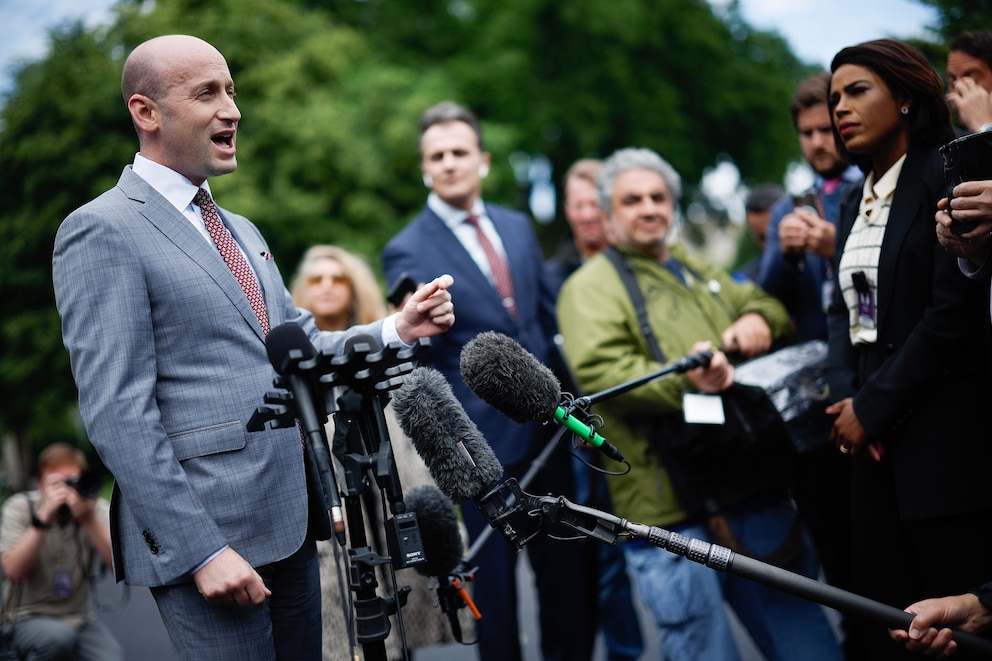
Miller said that the administration's decision would come down to whether the "courts do the right thing or not."
But legal experts say the issue is not as cut and dried as Miller suggests, and that a president cannot suspend habeas corpus without authorization from Congress.
"Miller also doesn't deign to mention that the near-universal consensus is that only Congress can suspend habeas corpus -- and that unilateral suspensions by the President are per se unconstitutional," Georgetown University Law Center professor Steve Vladeck writes in his Substack blog.
"He's suggesting that the administration would (unlawfully) suspend habeas corpus if (but apparently only if) it disagrees with how courts rule in these cases. In other words, it's not the judicial review itself that's imperiling national security; it's the possibility that the government might lose. That's not, and has never been, a viable argument for suspending habeas corpus," he writes.
President Abraham Lincoln famously suspended the writ of habeas corpus at the outbreak of the Civil War.
But then-Chief Justice Roger Taney deemed the move unlawful, noting the operative clause is found in Article I of the Constitution, which itemizes Congress' powers, not the president's.
Lincoln ultimately sought congressional approval for the suspension as the war dragged on.