Winter 2025 forecast: What to expect based on where you live in the US
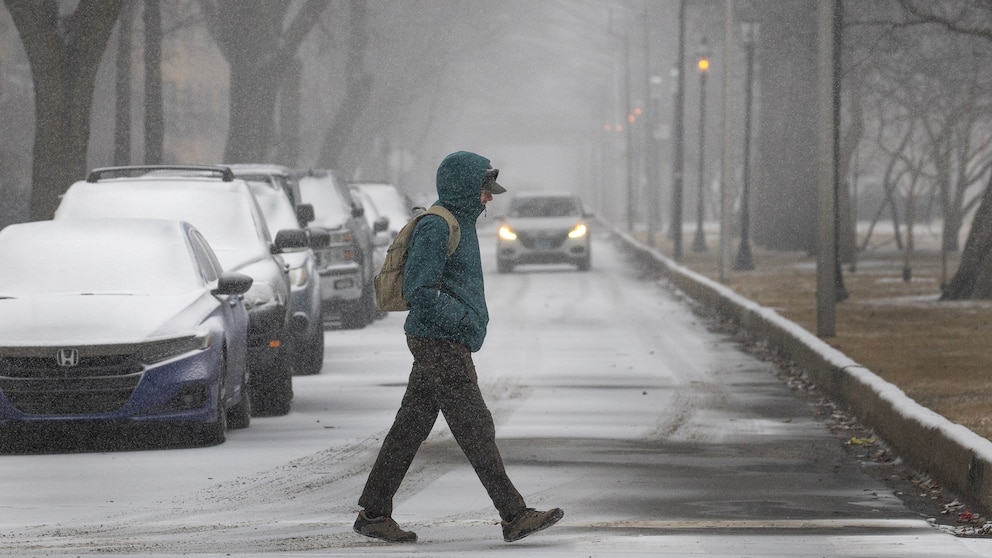
Some parts of the country are expected to face a colder and snowier season this year, but exact conditions will depend on which region you live in, according to the National Oceanic and Atmospheric Administration's winter season outlook.
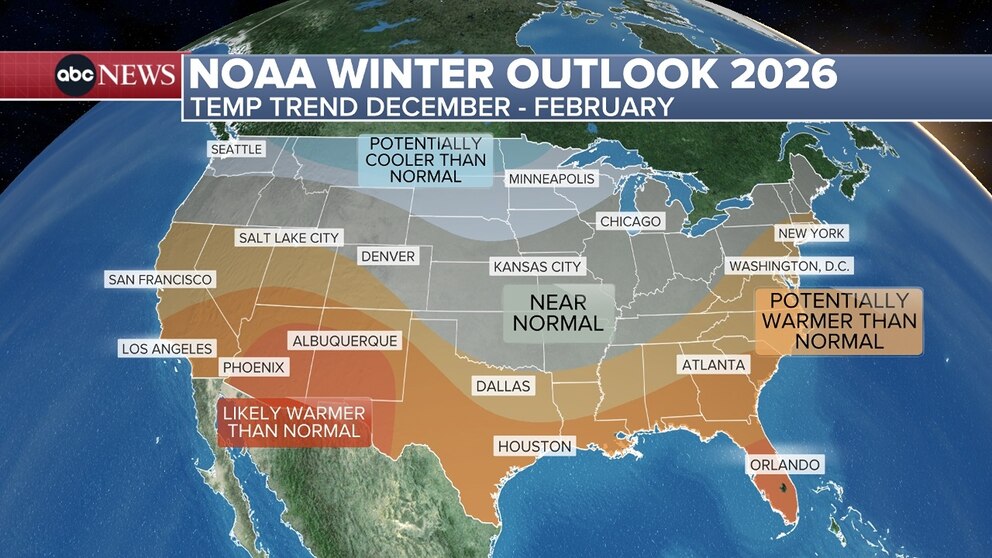
The seasonal outlook from NOAA’s Climate Prediction Center, released Friday, predicts that the Upper Midwest and Pacific Northwest will experience possible cooler-than-average temperatures, while much of the southern and eastern United States will face potentially milder temperatures than what is usually expected during the winter season.
NOAA's winter outlook predicts whether parts of the country will be above, below or near average when it comes to temperatures and precipitation -- from December through February.
The outlook does not forecast weather variations that happen over days, weeks or over one month, but rather what the overall average would likely look like.
December, in a particular region, could feature typical winter conditions. However, January and February could still end up being warmer than normal, swaying the three-month average to "above normal" for the entire season.
On the opposite spectrum, prolonged cold spells could happen anytime during the winter and tip the three-month average to "below normal" for the entire season. What the outlook means for a specific local area depends on the typical climate around it.
What does winter look like in terms of snow?
While NOAA’s winter outlook does not predict snowfall for the season, it offers clues for what this winter could look like in terms of snowfall.
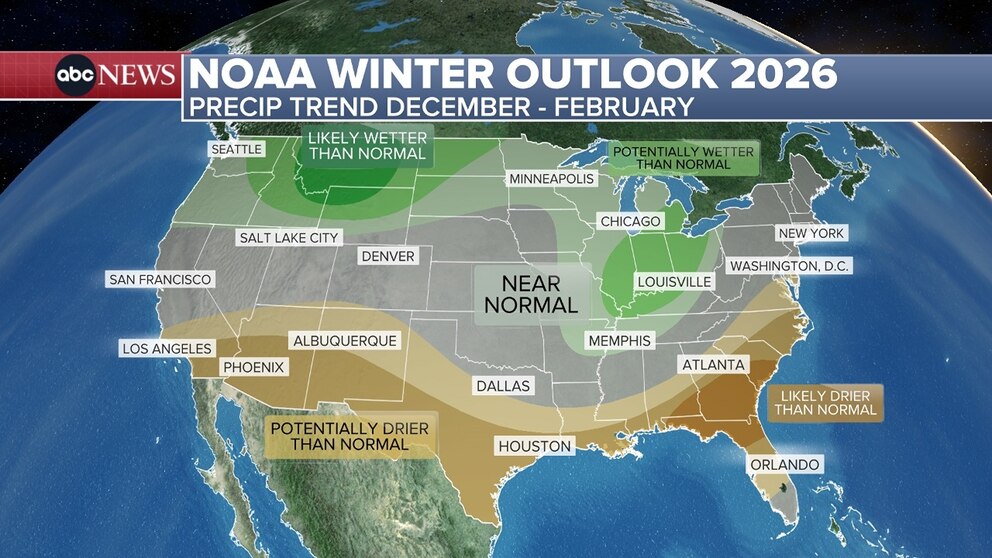
The outlook forecasts above-average precipitation possible for the Pacific Northwest, the northern Rockies, the Great Plains and the Great Lakes from December to February, which could come in the form of snow if cold enough conditions line up perfectly.
With the season’s snowfall dependent on storms that happen on a day-by-day basis, some of these areas could see these wetter conditions in the form of winter precipitation.
The southern half of the country -- from Southern California through much of Texas, the exterior Southeast and the coastal Mid-Atlantic -- will possibly see drier conditions than what is average for winter.
What previous winters have taught us
According to the Environmental Protection Agency and NOAA, the contiguous United States has been getting warmer every season since the early 1900s.
The EPA and NOAA also found that winters specifically in the contiguous United States have increased by about 3 degrees Fahrenheit -- the most of all four seasons.
NOAA reported that winter 2023-24 was the warmest winter on average for the country in 130 years, with more than half of all U.S. states seeing their top-10 warmest winters on record.
The last few winters have featured several snow outliers across the country, including record-breaking snow in the south in late January 2025 that turned deadly and a snow drought in the northeast that lasted more than 700 days and ended for some in 2024.
A Climate Central analysis found that for more than 2,000 locations across the country, nearly two-thirds of them are seeing less snow than they did in the early 1970s.
What's shaping this winter outlook?
A big part of what forecasters look for when predicting the seasonal trends are climate patterns, specifically in the Pacific Ocean.
The most influential one is the El Niño-Southern Oscillation (ENSO). The ENSO is a natural variation of warmer, neutral and cooler waters along the equatorial waters of the eastern Pacific. This natural variation is one of the most significant driving forces of large-scale weather patterns over the Pacific Ocean, and eventually over North America.
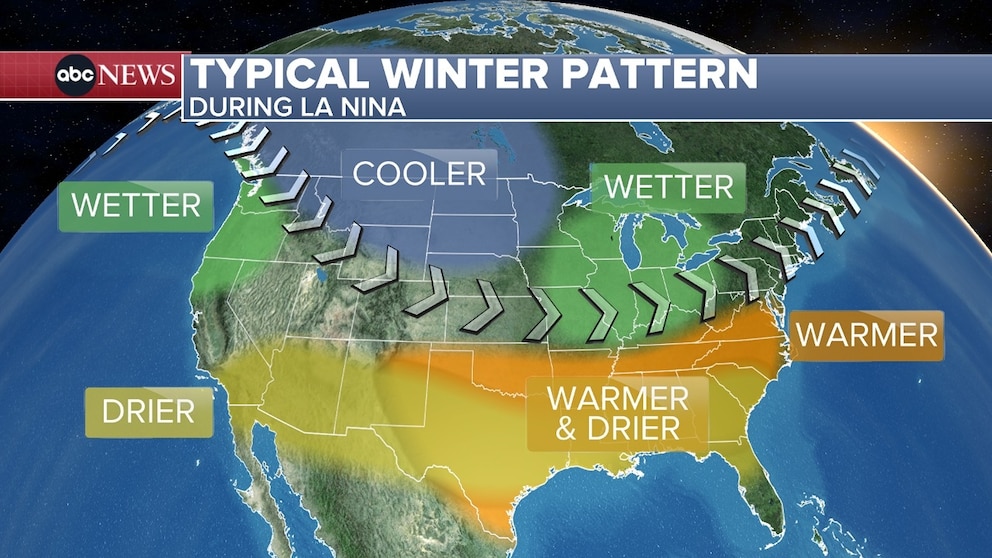
Forecasters at the Climate Prediction Center say the ENSO has been in the cooler pattern, or La Niña, since September and expect it to continue for much of the winter before transitioning into a neutral pattern as spring begins.
This would likely put the U.S. in a dominant weather pattern for much of the winter that keeps the southern half of the country warmer and drier, while the Pacific Northwest out to the Great Lakes will likely be cooler and wetter than average.
This would likely put the U.S. in a dominant weather pattern for much of the winter that keeps the southern half of the country warmer and drier, while the Pacific Northwest out to the Great Lakes will likely be cooler and wetter than average.