• Video
  • Shop
  • Culture
  • Family
  • Wellness
  • Food
  • Living
  • Style
  • Travel
  • News
  • Book Club
  • Newsletter
  • Privacy Policy
  • Your US State Privacy Rights
  • Children's Online Privacy Policy
  • Interest-Based Ads
  • Terms of Use
  • Do Not Sell My Info
  • Contact Us
  • © 2026 ABC News
  • News

World population reaches 8 billion, India to overtake China to become most populated country

1:06
World population expected to reach 8 billion
VCG via Getty Images, FILE
ByTeddy Grant and Youri Benadjaoud
November 15, 2022, 12:00 PM

The world's population reached 8 billion people on Tuesday, according to a report by the United Nations’ population division.

“This year’s World Population Day falls during a milestone year, when we anticipate the birth of the Earth’s eight billionth inhabitant. This is an occasion to celebrate our diversity, recognize our common humanity, and marvel at advancements in health that have extended lifespans and dramatically reduced maternal and child mortality rates,” U.N. Secretary-General António Guterres said in a news release. “At the same time, it is a reminder of our shared responsibility to care for our planet and a moment to reflect on where we still fall short of our commitments to one another.”

According to the United Nations Department of Economic and Social Affairs, Population Division, India will surpass China as the world’s most populous country next year.

Related Articles

MORE: Census data release sets off nationwide redistricting battles

The global population has been growing at its slowest rate since the 1950s, falling under 1% in 2020.

The latest projections by the U.N. show the global population may reach 8.5 billion in 2030 and 9.7 billion in 2050. It is projected to peak at around 10.4 billion during the 2080s and remain at that level until 2100.
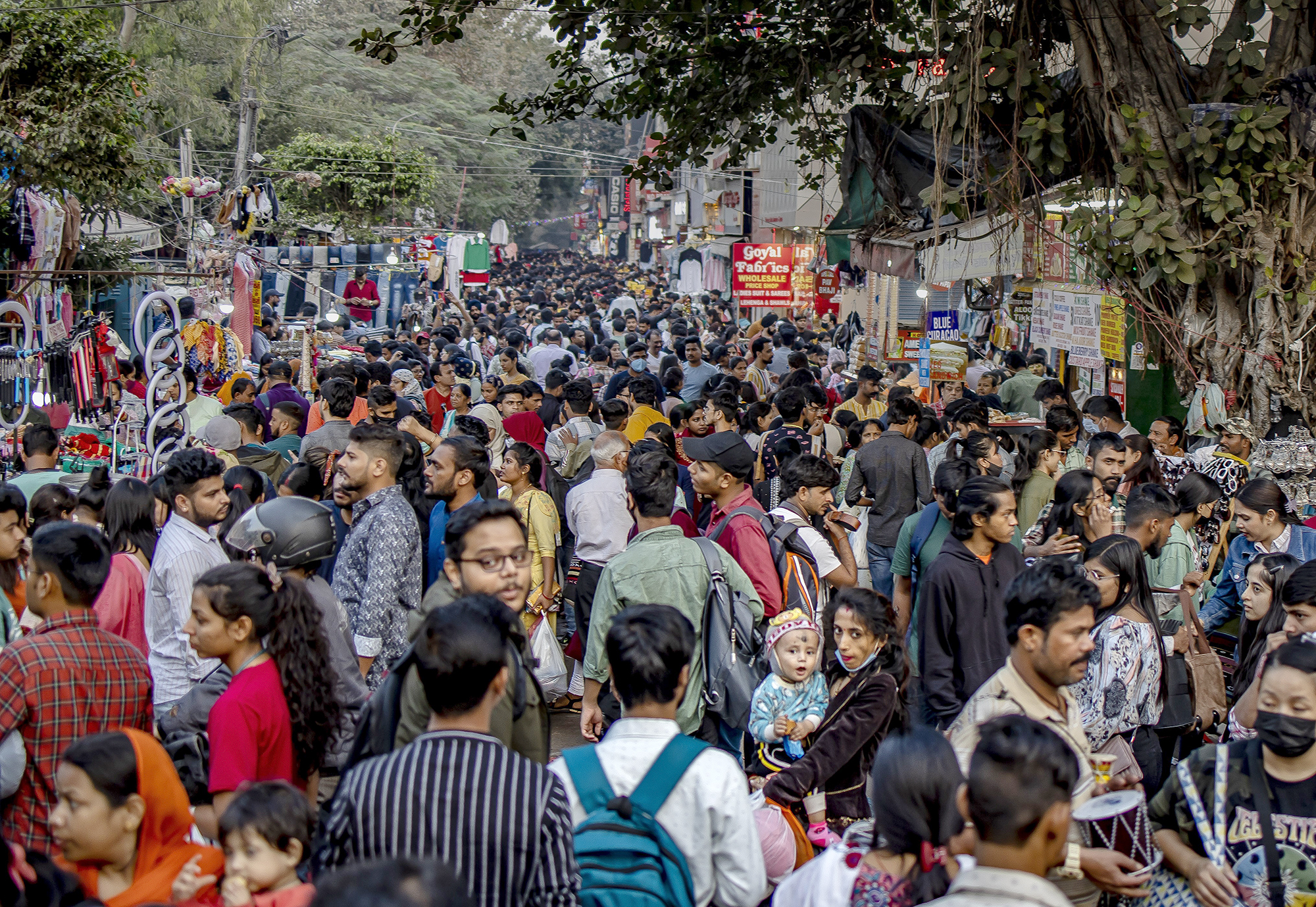
Shoppers crowd in huge numbers at a market area in New Delhi, India, Nov. 12, 2022.
Anindito Mukherjee/Getty Images, FILE

According to the U.N., it took 12 years for the global population to go from 7 billion to 8 billion.

Related Articles

MORE: Human-induced climate change may affect 85% of the global population, researchers say

In recent decades, fertility has dipped in many countries. Around two-thirds of the world’s population lives in a country or area where lifetime fertility is under 2.1 births per woman, which is the level needed for no growth in the long term for a population with low mortality, according to the U.N.

Over half of the projected global population growth up to 2050 will happen in eight countries: the Democratic Republic of the Congo, Egypt, Ethiopia, India, Nigeria, Pakistan, the Philippines and the United Republic of Tanzania.


Up Next in News—

Mother charged after teen son allegedly hits and injures 81-year-old veteran while riding e-motorcycle

April 23, 2026

UK bill banning smoking products for those born after 2008 is one step away from becoming law

April 22, 2026

Pilot killed in Florida plane crash hailed as hero

April 21, 2026

Athlete drowns during Ironman Texas triathlon

April 20, 2026

Shop GMA Favorites

ABC will receive a commission for purchases made through these links.

Sponsored Content by Taboola

The latest lifestyle and entertainment news and inspiration for how to live your best life - all from Good Morning America.
  • Contests
  • Terms of Use
  • Privacy Policy
  • Do Not Sell My Info
  • Children’s Online Privacy Policy
  • Advertise with us
  • Your US State Privacy Rights
  • Interest-Based Ads
  • About Nielsen Measurement
  • Press
  • Feedback
  • Shop FAQs
  • ABC News
  • ABC
  • All Videos
  • All Topics
  • Sitemap

© 2026 ABC News
  • Privacy Policy— 
  • Your US State Privacy Rights— 
  • Children's Online Privacy Policy— 
  • Interest-Based Ads— 
  • Terms of Use— 
  • Do Not Sell My Info— 
  • Contact Us— 

© 2026 ABC News