Is the world safer from AI risk after the Trump-Xi summit?
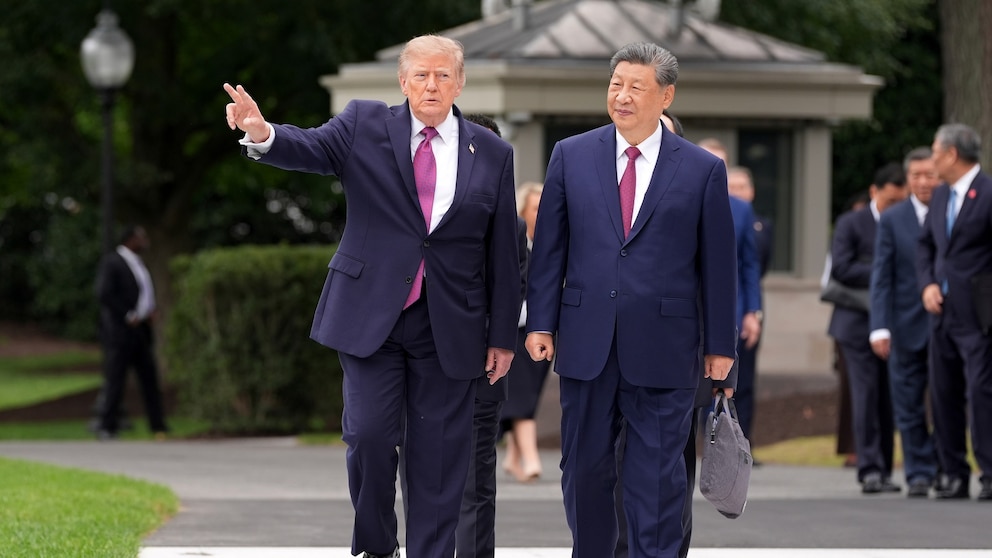
Public concern over the possible catastrophic risk of AI had been growing even before President Donald Trump and Chinese President Xi Jinping discussed the tech at a summit in Washington.
An AI researcher at Anthropic resigned in protest earlier this month over what he considered reckless safety risks, while a top safety researcher at the company warned in a post on X that there is a 10% chance AI could "kill all humans" over the next decade.
The danger of out-of-control AI, in theory, presents a shared threat for both global powers, some analysts told ABC News, though they disagree about the likelihood of such a catastrophe.
An extinction event of the type feared by some AI critics would devastate China and the U.S., alongside all of humanity; and other risks like AI-fueled terrorist attacks could endanger both countries, analysts said.
Still, they added, the two countries view AI as a key site for economic and military competition, making substantial cooperation unlikely anytime soon. Modest steps toward common ground could emerge, however, setting a course toward deeper diplomatic ties as the technology gains wider adoption.
"Both sides have an interest in avoiding a catastrophe, but they have both professed the value of AI for global competition," Sarah Kreps, the director of the Tech Policy Institute at Cornell University, told ABC News. "That makes it very difficult to take aggressive action together."
Even as some of the nation's most powerful artificial intelligence executives warned lately about a potential catastrophe wrought by AI, they acknowledged substantial pressure to develop the technology anyway.
A key reason for this urgency, they say: Competition with AI firms in China.
When Anthropic CEO Dario Amodei earlier this month announced a precautionary slowdown of AI development, he pointed out the danger that Chinese companies may eventually pull ahead, "creating significant national security risk."
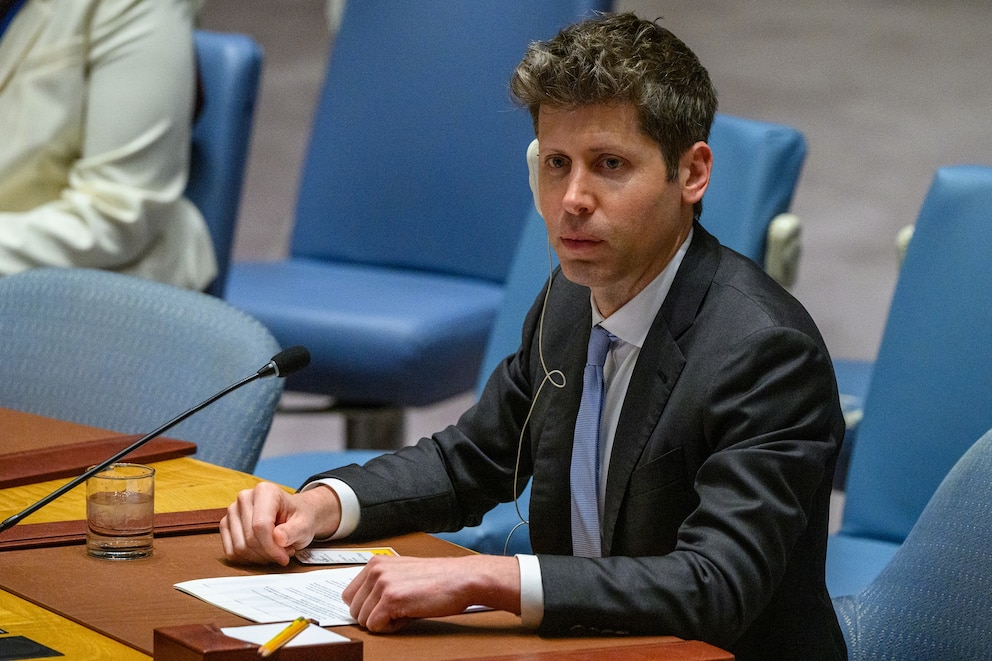
OpenAI CEO Sam Altman also dialed back his company's AI development this month, saying in a post on X, "No amount of American competitive pressure should justify recklessness."
Last week, OpenAI issued a statement calling for "critical infrastructure operators and governments worldwide to establish secure channels of communication to share national security concerns, emerging vulnerabilities and threats."
The remarks helped set the stage for the Trump-Xi summit last week. Top AI executives attended a state dinner at the White House on Thursday, including Altman, Meta CEO Mark Zuckerberg, Nvidia CEO Jensen Huang and Elon Musk, the CEO of xAI-parent company SpaceX.
Xi struck a conciliatory posture in his opening remarks at the summit. "We have both the capability and responsibility to develop and manage AI for good, and ensure that the development of AI is always under human control and serves the well-being of the people," Xi said on Thursday.
The White House, meanwhile, touted some AI-related agreements at the conclusion of the summit the next day. The two countries established a dialogue channel focused on the risks and benefits presented by AI, setting a follow-up exchange in November, the White House said on Friday.
The two sides also agreed to refer to artificial intelligence by Trump's preferred label of "super intelligence," the White House said.
Still, Trump has frequently emphasized the importance of outpacing China in the development of the technology. "Whoever wins with AI wins," Trump told reporters in Ireland earlier this month, downplaying the need to slow the advancement of AI.
Vasant Dhar, a professor of data science at New York University, said Trump appears to view substantial U.S.-China cooperation as an obstacle for AI development.
"The current administration isn’t in the mood to consider anything that smells remotely of putting the shackles on 'winning the AI race,'" Dhar said.
A possible accord may pose challenges for China, some analysts said. Chinese firms face difficulty verifying commitments to slow AI advancement issued by U.S.-based AI firms in recent weeks, Chenghao Sun, head of the U.S.-Europe Center for International Security and Strategy at Beijing-based Tsinghua University, said in a Substack post on Monday.
"Before restraint can become reciprocal, it has to become observable," Sun said.
A potential U.S.-China agreement on AI development could also deny Chinese firms an "opportunity to narrow the technological gap," Sun added. "Pacing can look like a way to preserve the existing hierarchy."
Despite points of tension between the two countries, incremental diplomatic progress could yield a future breakthrough if AI fallout intensifies, some analysts said.
"It’d be good to set the relationship on a somewhat more trusting path," Gary Marcus, a professor emeritus at New York University who studies AI, told ABC News. "One needs to balance competitive interests against the real risks to global stability."