Yellowstone's rare acidic geyser is active again after years of dormancy, USGS says
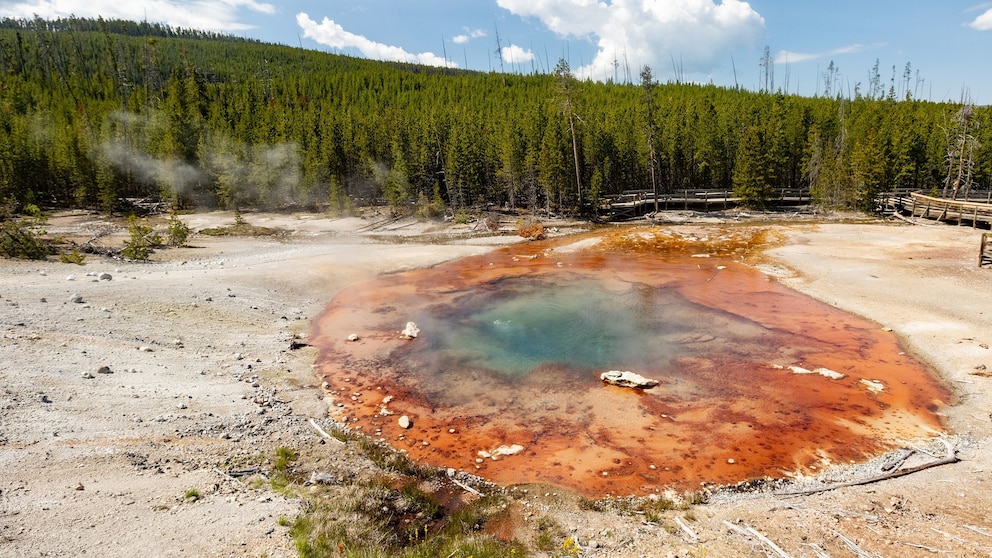
The largest acidic geyser in the world is erupting again at Yellowstone National Park after several years of dormancy, according to the U.S. Geological Survey.
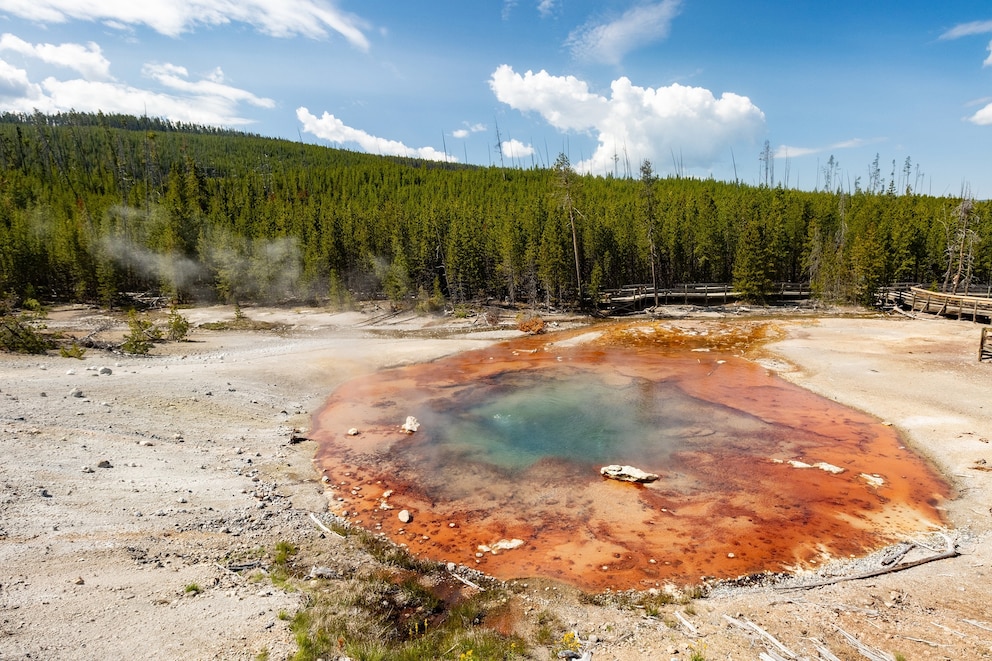
Echinus Geyser, a 66-foot geyser pool located in the hottest and most dynamic part of Yellowstone's thermal areas, has been largely dormant since 2020.
Repeated surges at the geyser began in early February, and the first eruption since 2020 occurred on Feb. 7, according to the USGS. More eruptions occurred on Feb. 9, Feb. 12 and Feb. 15.
On Feb. 16, eruptions began to occur every two to five hours, the USGS said.
Most of the eruptions lasted several minutes, with some reaching heights up to 30 feet.
The boardwalk surrounding Echinus contains several benches and platforms for viewing, which has confused visitors in the past because the geyser erupts so infrequently, according to the USGS.
But Echinus had been a consistent performer during the latter half of the 20th century and became a "perennial crowd-pleaser," according to the National Park Service.
It was mostly dormant with only occasional eruptions prior to 1948, but by the 1970s, it was erupting at 40-to-50-minute intervals.
In the 1980s and 1990s, some eruptions could last up to 90 minutes.
Eruptions were recorded shooting water up to 75 feet in the air, according to the USGS.
Eruptions began to wane by the early 2000s, and activity became less common. The major eruptions were believed to have been caused by a secondary water source that has "mysteriously" vanished, according to the NPS.
A temperature monitoring system was established in the outflow channel of Echinus in 2010, in which the USGS recorded 15 sporadic eruptions between October 2010 and January 2011.
Activity at the geyser was then largely quiet until September 2017, when it "came alive," according to the USGS.
"True" eruptions began in October 2017, in which they occurred every two to three hours for nearly a month. Activity then "suddenly stopped" in November 2017.
One eruption occurred in January 2018, one in January 2019 and two in December 2020.
The geyser has an acidic chemistry, but the acid is not concentrated, according to the USGS, which compared its water to having a similar acidity to orange juice or vinegar. The acidity at Echinus has been measured at a pH ranging from 3.3 to 3.6, according to the NPS.
Acidic geysers are rare because acidic water can break down the rock within the geyser's plumbing system. The majority of the acidic geysers on the planet are located at Yellowstone.
At Echinus, the water is created due to mixing of acidic gases and neutral waters, and the mixture is not acidic enough to eat away at the rock, according to the USGS.
The unique water chemistry at Echinus creates "interesting" formations and compositions near Echinus Geyser, such as the red color that rims the geyser pool -- from the iron, aluminum and arsenic -- and the silica-covered spiny rocks that give the geyser its name, the USGS said.
The geyser was named after mineralogist Albert Charles Peale visited the geyser in 1878 and thought the rocks surrounding it resembled sea urchins, a group of animals that also contain starfish, brittle stars and sand dollars.
It is located in Yellowstone's Norris Geyser Basin, which also includes Steamboat Geyser, the tallest active geyser in the world.
The eruptions likely won't continue long enough for the summer surge of visitors, the USGS said.