Anatomy of a Shark Bite: The Teeth Aren't the Only Thing That's Deadly
— -- Amy Tatsch was boogie boarding off the coast of Florida less than three months ago when she felt something bump her right leg. Hard.
Just as it registered that there was a shark in the waist-deep water with her, she felt razor-sharp teeth rip away half of her calf.
“I really didn’t think I was going to make it back out with the amount of blood I saw,” the 38-year-old mother of six told ABC News. “I thought I would end up passing out, or I thought the shark was going to come back and attack me and my brother.”
'Shark Week' to 'Sharknado': Why We're Obsessed With Sharks
Shark Versus Cow: Which Is Deadlier?
Swimmer Bitten by Great White Shark Off California Coast
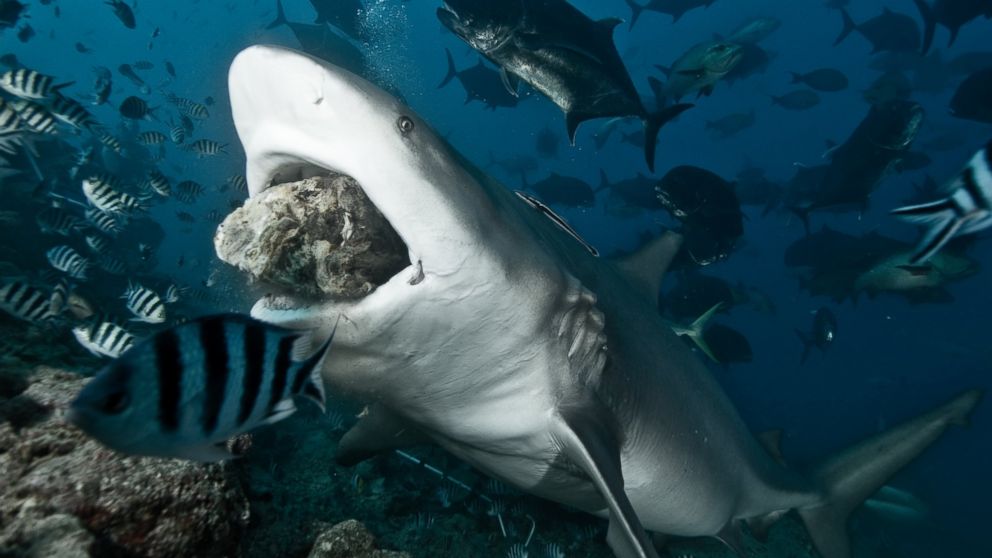
Tatsch, whose 2-year-old twins were with her family on the beach, never saw the shark that bit her, but the rare encounter left her lower right leg almost unrecognizable. The bite had gone down to the bone. A shark expert later determined from the wound that it was a 6-foot bull shark that had attacked her.
Somehow, she caught a wave into shore and shouted for help. She remembers being rushed to the hospital, but the next 13 days were a blur, she said. As she soon find out, the trauma from the razor-sharp teeth is just the beginning of why shark bites can be deadly.

Dr. Daniel Segina, a traumatologist at Health First’s Holmes Regional Medical Center in Melbourne, Florida, said he’s treated about a dozen shark bites over the last 15 years he’s been practicing, but Tatsch’s was the worst.
Most of his patients had shark bites to their legs, though a few were bitten on their hands, he said.
“The lower leg is probably the most common one we see,” Segina told ABC News. “If you can imagine surfers sitting on surf boards, paddling in the water as they’re waiting for a wave to come. That’s usually when they get bitten.”
Dr. Nicholas Namias, who famously treated shark attack victim Krishna Thompson in 2001, said trauma surgeons generally follow standard trauma guidelines when they get shark bite patients. Namias, medical director of Ryder Trauma Center at UM/Jackson Memorial Medical Center, has treated two shark attack victims in his career.
“You make sure there’s no ongoing bleeding and you repair what you can,” Namias said.
Then, an anesthesiologist puts the patient to sleep so he can clean the wound, Segina said. Since a shark bite has been exposed to the bacteria-filled “marine environment,” doctors worry about contamination and infection, he said.
But Segina doesn’t use chemicals or antibiotics to do the cleaning, he said.
“Just sterile water,” he said. “For the most part, it’s been shown to be the most effective.”
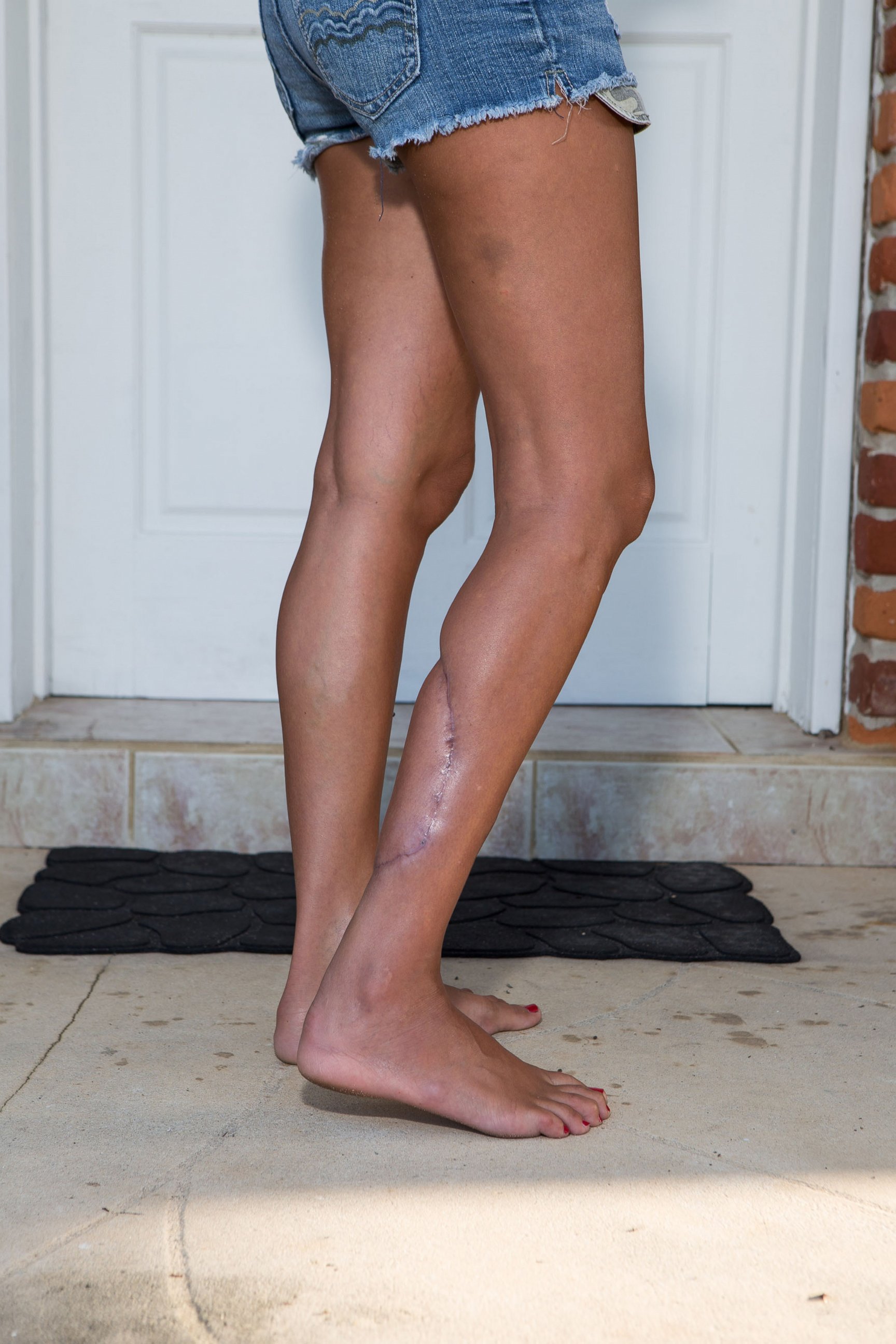
Tatsch said she felt no pain after the initial bite, but when she woke up from her the surgery, her leg hurt. She would later learn that she’d lost a chunk of her muscle, that her Achilles tendon had been torn on both ends, and that she needed a plasma transfusion.
Despite Segina’s prompt surgery, Tatsch’s wound became infected.
It would take five surgeries, at more than 150 stitches and countless hours of physical therapy to get Tatsch walking again.
She said she started walking for the first time without crutches only two weeks ago, but she has a limp and can’t go for too long without pain and swelling. Teeth marks and a deep indentation are visible on her calf, but she says she’s not interested in plastic surgery.
As she spoke to ABC News, she was walking along the beach and collecting shells.
“I have not been back on the boogie board,” she said. “But I have gone back in the water.”