Children Living With Progeria: Inside Their World
July 29, 2011— -- When we first met Lindsay Ratcliffe, she was just like any other first grader, who loved ponies, Legos and running the bases at the T-Ball game in her hometown of Flat Rock, Mich.
But at 20 pounds and 36 inches, she was not an ordinary six-year-old. Lindsay has a rare and fatal disease called progeria -- derived from the Greek word for "prematurely old" -- which makes her body age eight to 10 times faster than normal children.
Only 80 children in the world currently have the condition, including 18 in the United States, according to the Progeria Research Foundation. Children are born seemingly healthy, but start aging dramatically by the age of 2. On average, they die at 13.
"You see this vibrant 5-year-old and then you put her X-Rays up and it looks like someone of a senior age," said Dr. Heidi Labo, who is Lindsay's chiropractor and aunt.
At birth, Lindsay showed no signs of progeria. "The first thing I did, I counted her fingers. I counted her toes. I'm like, 'Ten fingers, ten toes, we're good,'" recalled her father, Joe Ratcliffe, who had just returned from serving in Iraq as a U.S. army cook.
After four months, Lindsay had gained little weight and her parents knew something was seriously wrong. Specialists ran tests for weeks for nearly every disease and syndrome before reaching the terrifying diagnosis of progeria. It was a disease the family had never heard of.
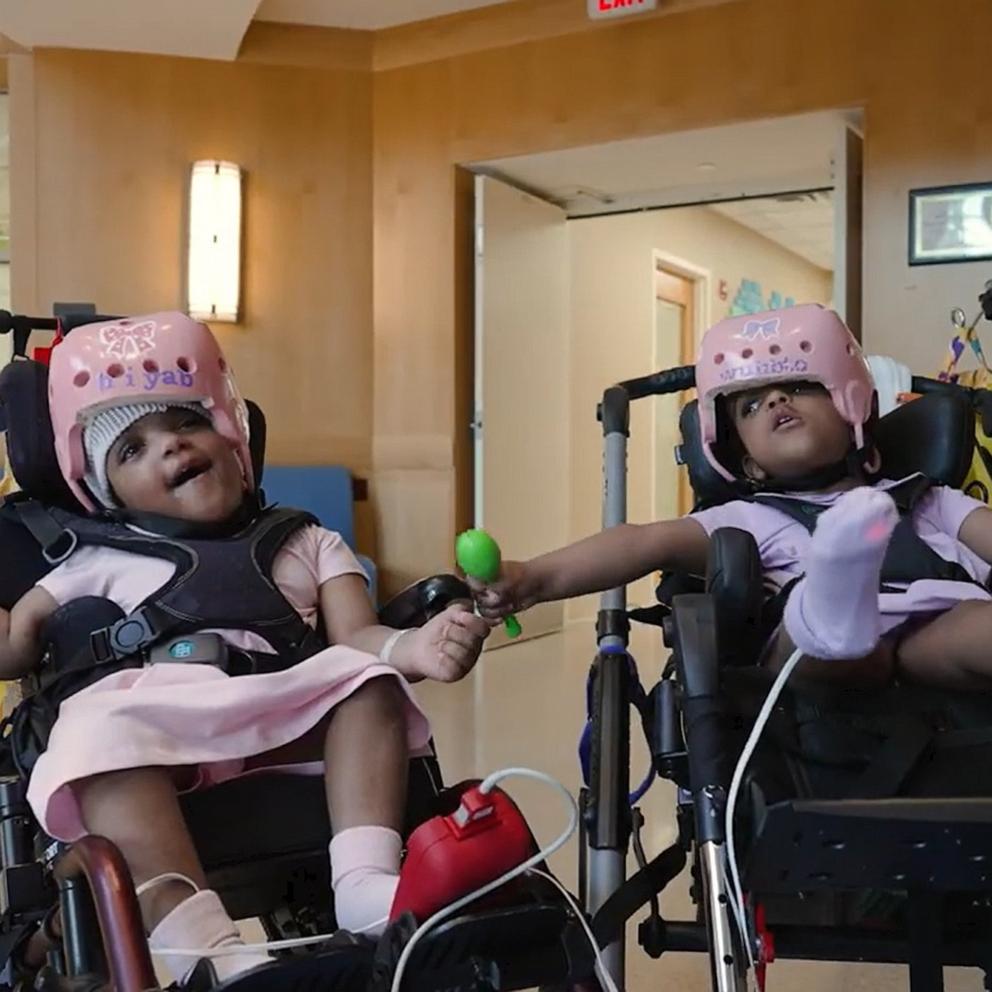
PHOTOS: Vibrant girls living with progeria.
"What scared me the most was they told us, 'We don't know [much about progeria],'" said Joe Ratcliffe. "'You can go to a website and that is best source of information. You're going to have to teach the doctors what to do.'"
The Ratcliffes soon learned that progeria was the rarest of rare diseases, affecting only one in every 4-to-8 million births. It is caused by a mutation in a gene called LMNA, but is not hereditary.
"Kids with progeria occur out of blue. There's no family history, no warning, no reason to think that this might be getting ready to happen," said Dr. Francis Collins, the scientist who first discovered the gene and is now the director of the National Institutes of Health.
At the time of Lindsay's diagnosis, there was no known treatment for progeria and no cure, leaving the Ratcliffes to care for their beloved baby, whom they knew they would lose too soon.
"In the beginning it was a lot harder because Lindsay couldn't talk, she couldn't walk and she couldn't do everything for herself," Kristy told ABC's Barbara Walters. "Now, it's so easy because you see her and you smile. You can't help it."
They are determined to make every moment count. "Whether it's a birthday or going to the park, whatever you do, you look at it as unfortunately it could be the last time," her father said.