Climate change is making it harder for us to sleep: Study

Rising temperatures, amplified by climate change, are contributing to an increase in cases of sleep apnea, a condition in which breathing repeatedly stops during sleep, according to a new study published in the journal Nature Communications.
"If temperature keeps rising the way they project it to, the burden and prevalence of sleep apnea may double, increasing by 20-100%, depending on greenhouse gas emission reduction," Bastien Lechat, the study's author and a senior research fellow at Flinders University in Australia, told ABC News.
Obstructive sleep apnea, or OSA, affects about 1 billion people globally, and 80% of people who have it are unaware and untreated, according to the American Medical Association. Common symptoms of OSA include loud snoring, daytime tiredness, high blood pressure and headaches upon waking, even if "sleeping" eight hours, according to the Mayo Clinic.
OSA has been linked to an increased risk of heart disease, stroke, dementia, diabetes and depression. People with OSA also have two times greater risk of getting in a car accident, according to Lechat.
The study followed over 115,000 people from numerous countries for up to two years, measuring their sleep quality with below-the-mattress sleep monitors and then cross-referencing this information with weather data to evaluate the relationship between temperature and OSA.
When comparing 80-degree Fahrenheit days to days in the 40s, there was a 40 to 45% increase in the frequency or severity of sleep apnea. The risk was even higher for males and individuals who normally sleep longer or have higher body weight.
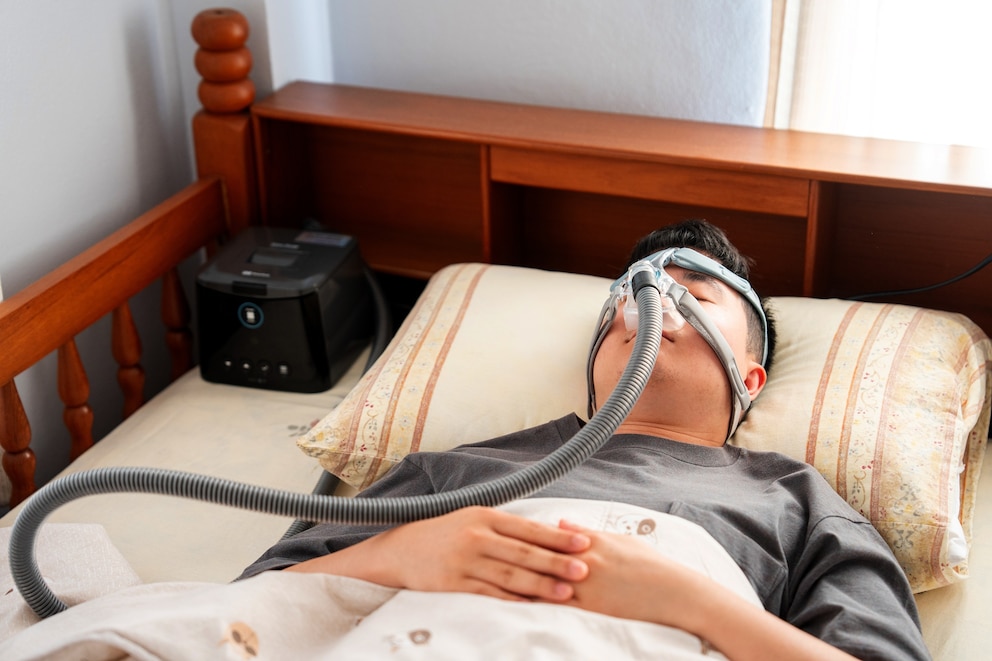
Extreme heat can exacerbate OSA by making it even harder to sleep, the study noted. Higher temperatures can disrupt the body's ability to cool down during the night, which interferes with the natural sleep cycle. This can lead to more frequent awakenings, shallower sleep and worsened airway instability, resulting in more apnea events.
Using existing health-economic models, the researchers estimated over 788,000 healthy years of life were lost or disabled in 2023 due to temperature-related increases in OSA, equivalent to a loss of approximately $68 billion, according to the models.
"When you look at the rate of years of life lost per 100,000 people, this is similar to a disorder like Parkinson's disease, or bipolar disorder, or similar to low physical activity as a risk factor, so it's a significant burden," Lechat told ABC News.
Lechat said that increased access to air conditioning and better diagnosis and treatment of OSA could offset some of the increases caused by climate change.
As our planet warms, heat waves are becoming increasingly more common, having doubled in major U.S. cities since the 1980s, according to the federal government's Fifth National Climate Assessment.
Overnight low temperatures are rising nearly twice as fast as afternoon highs, and this lack of relief during the night poses a significant health risk -- particularly for those without access to air conditioning, according to the assessment.