• Video
  • Shop
  • Culture
  • Family
  • Wellness
  • Food
  • Living
  • Style
  • Travel
  • News
  • Book Club
  • Newsletter
  • Privacy Policy
  • Your US State Privacy Rights
  • Children's Online Privacy Policy
  • Interest-Based Ads
  • Terms of Use
  • Do Not Sell My Info
  • Contact Us
  • © 2026 ABC News
  • Wellness

Woman's blood literally turns blue from common pain medication
6:27
News headlines today: Dec. 23, 2020
New England Journal of Medicine
ByErin Schumaker
September 20, 2019, 9:38 PM

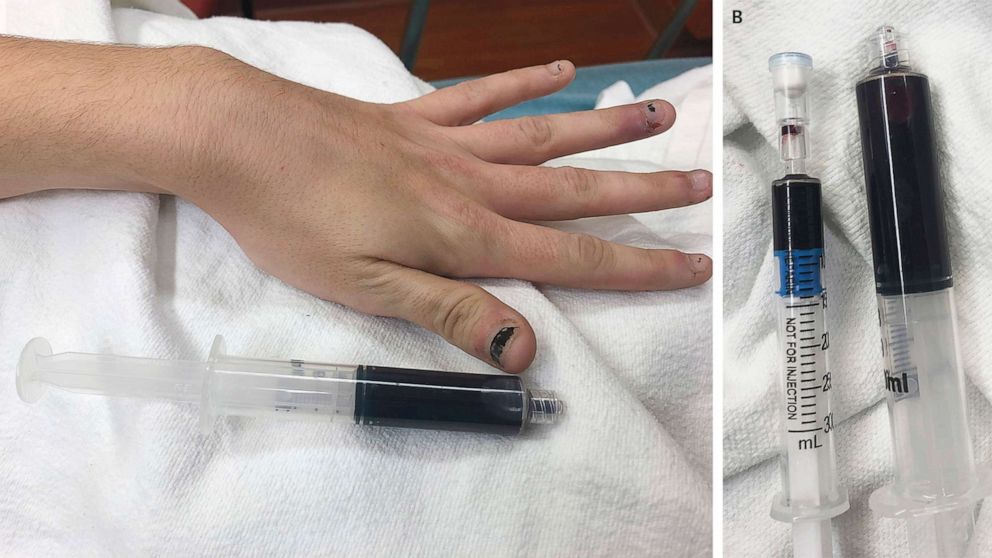
The term "blue blood" took on a new meaning for a 25-year-old woman who checked into a Rhode Island emergency room with complaints of fatigue and shortness of breath, as well as a more unusual symptom: her blood was turned navy blue.

The patient, whose account was documented in a New England Journal of Medicine case study, told doctors she had used an over-the-counter medication to treat a toothache.

"I'm weak and I'm blue," she told the ER doctors.

Dr. Otis Warren, the ER doctor on duty at Miriam hospital that night, diagnosed the woman with "acquired methemoglobinemia," a rare blood disorder in which the body isn't getting enough oxygen. While the disorder can sometimes be genetic, in the case of the Rhode Island patient it was triggered by taking large amounts of a medication containing benzocaine, a common ingredient in topical pain relievers and cough drops.
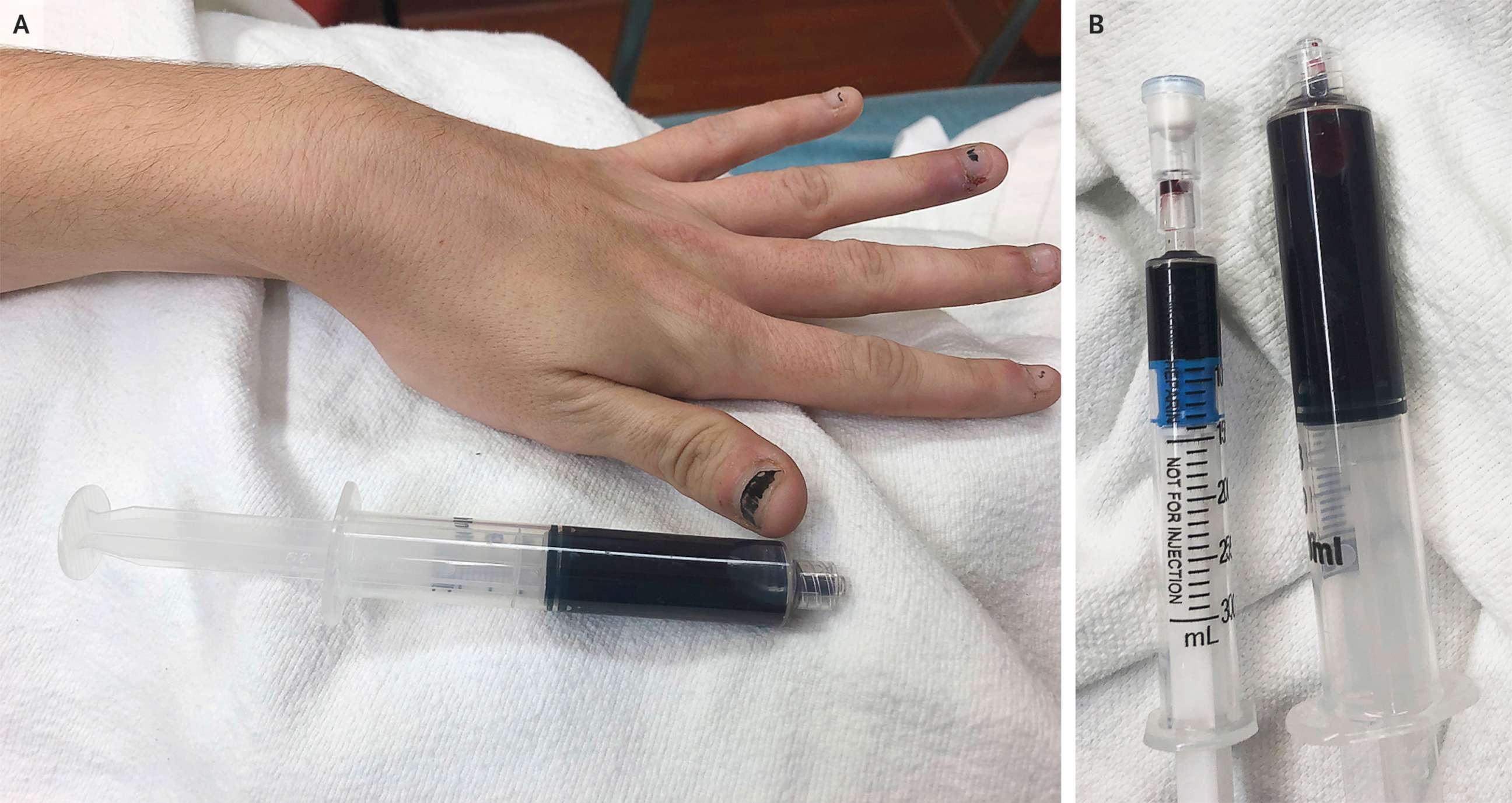
A 25-year-old Rhode Island woman's blood turned navy blue after taking large amounts of an over-the-counter medication containing benzocaine.
New England Journal of Medicine

In 2018, the Food and Drug Administration issued a warning about benzocaine, advising that children younger than 2 should not take products that contained it. The agency also cautioned adults that benzocaine could cause methemoglobinemia, which can be "life-threatening and result in death."

Related Articles

(MORE: FDA warns: Don't let your children sink their teeth into benzocaine)

There have been over 400 cases of benzocaine-related methemoglobinemia since 1971, according to the FDA.

After running tests, doctors found that the Rhode Island patient's hemoglobin and blood oxygen levels were low, which can put patients at risk for heart failure, coma or death. Doctors subsequently administered an antidote called methylene blue, which improved her breathing and bluish skin tone. By the time she left the hospital, her symptoms had completely subsided.

Up Next in Wellness—

Adolescent and young adult cancers increase risk of developing future cancers

April 13, 2026

Teen with kidney disease finds donor living minutes away

April 10, 2026

Her battle with cancer went viral. After her death, the impact of her advocacy is still felt

April 8, 2026

Gabrielle Union shares emotional tribute after dad dies following dementia battle

April 6, 2026

Shop GMA Favorites

ABC will receive a commission for purchases made through these links.

Sponsored Content by Taboola

The latest lifestyle and entertainment news and inspiration for how to live your best life - all from Good Morning America.
  • Contests
  • Terms of Use
  • Privacy Policy
  • Do Not Sell My Info
  • Children’s Online Privacy Policy
  • Advertise with us
  • Your US State Privacy Rights
  • Interest-Based Ads
  • About Nielsen Measurement
  • Press
  • Feedback
  • Shop FAQs
  • ABC News
  • ABC
  • All Videos
  • All Topics
  • Sitemap

© 2026 ABC News
  • Privacy Policy— 
  • Your US State Privacy Rights— 
  • Children's Online Privacy Policy— 
  • Interest-Based Ads— 
  • Terms of Use— 
  • Do Not Sell My Info— 
  • Contact Us— 

© 2026 ABC News