Why the Flu May Be Especially Deadly to Children This Year
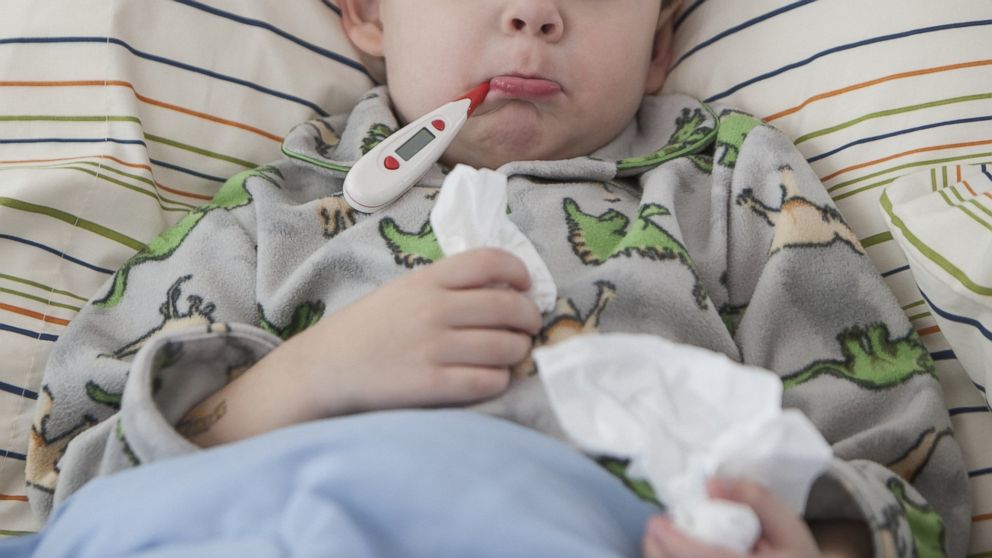
— -- Three children in Minnesota have died of complications from a particularly potent strain of the flu virus, health officials said.
An additional seven children were in the intensive care unit of the Children's Hospital in St. Paul, according to the most recent report from the Minnesota Health Department.
Dr. Pritish Tosh, an infectious diseases physician with the Mayo Clinic and a member of the Mayo vaccine research group, said this year’s strain of flu is especially dangerous and can quickly become a life-threatening condition in children.
“The virus can enter the blood stream and then the brain, creating severe respiratory symptoms including shortness of breath and a very high fever,” he said.
Tosh said that even in a healthy child, the body can overcompensate, sending white blood cells flooding into the lungs. This can overwhelm the body and cause serious consequences.
“If the body’s reaction to the virus is too vigorous, this can cause as much damage as the virus itself,” he said.
Flu strains are named for molecule types surrounding the outside of the virus particle. There are 17 different types of hemagglutinin, or H particles, which allow the virus to bind to cells. There are nine different types of neuraminidase, or N particles, that allow the virus to spread the infection throughout the body.
About 90 percent of flu cases so far this year have been the H3N2 subtype, according the Earlier today, the agency declared this year's flu an epidemic.
H3 subtypes tend to lead to the largest number of hospitalizations and deaths, particularly for children, the elderly and anyone with a compromised immune system, Tosh said. To complicate matters, this year’s strain is not well-matched to what was predicted by the surveillance community, so the current vaccine is not a great match, he added.
“Some would speculate that this means the vaccine won’t work as well, but that has not been proven,” Tosh said. “You should still get your flu shot because it’s the best protection we have.”