Debunking 8 claims about breast cancer screening: What every woman needs to know about detection

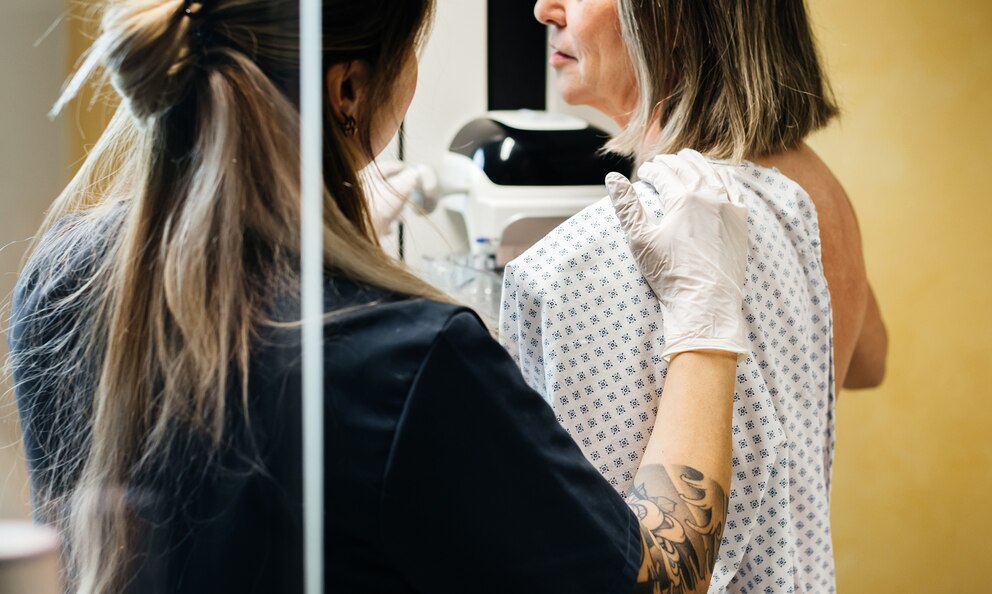
When it comes to early detection, mammograms remain the only screening test proven to reduce deaths from breast cancer in average-risk women, according to the Centers for Disease Control and Prevention.
However, only about 75% of eligible U.S. women schedule regular screenings, according to a JAMA study published earlier this month.
Experts believe that misunderstandings about who needs screenings and how often may be part of the reason some women skip mammograms. Here are eight evidence-based facts about breast cancer screening to help set the record straight.
CLAIM: Only women with a family history need screening
Although some women with family history of breast cancer may need earlier or more frequent screenings, all women need regular screenings, doctors said.
"Only about five to 10% of breast cancers are hereditary," Dr. Aparajita Spencer, a breast surgical oncologist at CHI Memorial in Chattanooga, Tennessee, told ABC News. "Most women with breast cancer do not have a family history."
CLAIM: A lump is the earliest sign of breast cancer
Although a lump is one of the most common symptoms of breast cancer, it is not the only sign and can be missed when performing self-examination.
"The whole point of the mammogram is to pick up the earliest signs of a breast cancer, which are usually calcifications, not really a mass," Dr. Preeti Subhedar, breast surgery chief at Hackensack Meridian Health in New Jersey, told ABC News.
"When people come in with a mammographically or image-detected breast cancer, usually it's fairly small and outcomes are really good," she added.
CLAIM: Breast size affects your cancer risk
Subhedar said that breast size has nothing to do with risk.
"An average-risk woman has a 12% lifetime risk of developing breast cancer," she said.
For high-risk women, this increases to over 20%, according to the American Cancer Society.
Spencer added that breast size and breast density are often confused, but they're not the same. A mammogram will read dense breasts as having a higher proportion of glandular and fibrous tissue compared to fatty tissue. Mammary glands typically produce milk while fibrous tissue forms the breast.
This can slightly raise cancer risk and make tumors harder to catch, which is why the U.S. Food and Drug Administration finalized a rule in 2024 requiring providers to inform women if their breast tissue is dense and may require additional follow-up screenings.
CLAIM: Younger women don't need mammograms
The National Comprehensive Cancer Network recommends annual screening mammograms starting at age 40 for average-risk women.
For women with a strong family history of breast cancer or a known genetic mutation, the American Cancer Society recommends beginning annual screenings with both a mammogram and a breast MRI at age 30, or even earlier if a close relative was diagnosed at a young age.

CLAIM: A negative mammogram means you don't have breast cancer
Experts said a mammogram does not mean a patient doesn't have breast cancer but rather that breast cancer wasn't found on that specific mammogram.
"Mammograms occasionally miss early-stage cancers," noted Spencer. "There is always a chance that you have something that pops up between screenings. We can't say 100%, which is why it's really important to get those yearly screenings."
CLAIM: Mammograms can cause cancer because of radiation
The benefit of early detection far outweighs the tiny risk from the small amount of radiation, experts said.
The total lifetime risk for radiation-induced breast cancer is still very low at one in 5,000 -- compared to about one in every eight women who will develop breast cancer in their lifetime, and roughly one in 43 women who will die from it.
CLAIM: There are safe and effective alternatives to mammograms
"There's no universal replacement for screening mammograms. That is why that is the gold standard," Spencer said.
Mammograms are safe -- even during pregnancy when needed, she added. Other diagnostic tools including, an MRI and an ultrasound, may be used to provide additional information, but they do not replace the mammogram.
CLAIM: A breast biopsy spreads breast cancer
Medical experts agree that breast biopsies are safe, and the benefit of getting an accurate diagnosis far outweighs the minimal risks.
"It is extremely, extremely important that we get a tissue biopsy when someone comes in with an abnormal mammogram because there's a lot of biological information that we learn about a tumor from that biopsy," Spencer said.
Breast cancer is the most common cancer in women after skin cancer and the second leading cause of cancer death, according to the American Cancer Society.
In 2024, more than 300,000 women were diagnosed with breast cancer, and about 40,000 died from the disease. Today, more than 3 million breast cancer survivors live in the U.S. -- a powerful reminder of the importance of early detection, doctors said.
Allyson Heng, MD, is resident physician in neurology at the University of Alabama at Birmingham and a member of the ABC News Medical Unit.