Decriminalizing drugs in Oregon a 'victory for common sense and for science'
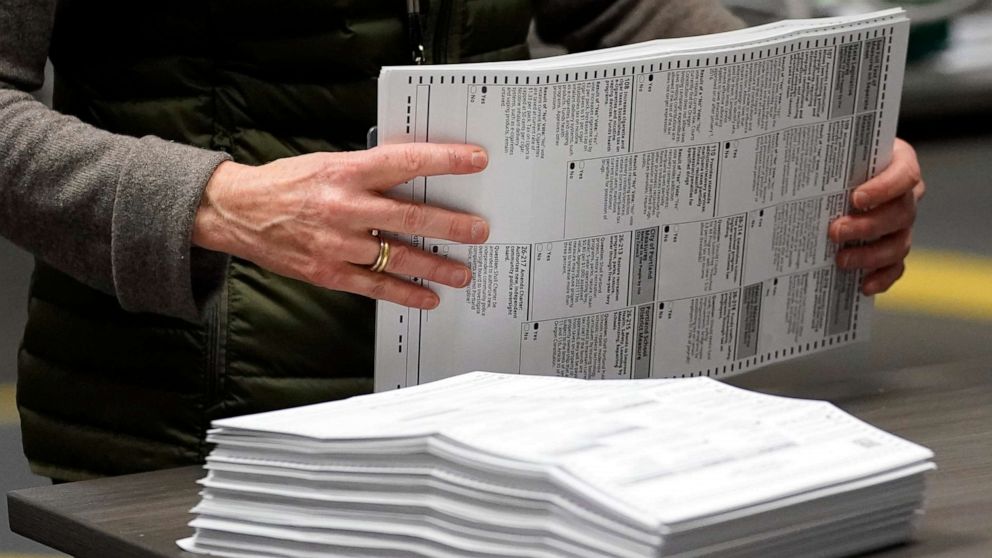
Oregon became the first U.S. state to decriminalize all drugs, with voters overwhelmingly supporting a ballot measure on Tuesday intended to reduce arrests and improve access to addiction treatments.
Passing Measure 110 means Oregon residents no longer can be arrested or imprisoned for possessing small amounts of substances such as heroin, cocaine, methamphetamine or LSD. That doesn't mean the drugs are legal. Instead, the measure reduces the offense to a noncriminal offense and a maximum fine of $100 and mandates establishing an addiction treatment program funded in part by taxes from marijuana sales.
"I think it's a wonderful victory for common sense and for science," Kate Chatfield, senior adviser for legislation and policy at The Justice Collaborative, a criminal justice research and advocacy organization, told ABC News. "It's trying to use an arrest as an opportunity point."
The ballot measure is not a law, meaning a council needs to figure out the details before it's implemented. But if the reform is effectively executed, there are at least two major public health benefits it could yield, according to Leo Beletsky, a professor of law and health sciences at Northeastern University.
Fewer drug arrests should reduce Oregon residents' interaction with the criminal justice and legal systems, and in turn, limit their risk for health problems associated with incarceration, including COVID-19 infection and drug overdose, Beletsky said. In his estimation, reinvesting criminal justice savings in under-resourced health and addiction services would go even further to make the measure successful.
One potential pitfall to guard against is ensuring law enforcement doesn't initiate encounters based on drugs, then arrest individuals for non-drug-related crimes. "You need monitoring, training and other measures to minimize such shifts," Beletsky told ABC News.
That's especially important given the racial disparities often seen among those arrested for drug possession. Despite similar usage rates, Black Americans are almost four times more likely to be arrested for having marijuana, according to the American Civil Liberties Union.
Measure 110 received widespread support from civil rights and physician groups, including the ACLU of Oregon, NAACP Portland, the Oregon Nurses Association and the Oregon chapter of the American College of Physicians, as well from Facebook CEO Mark Zuckerberg and his wife, Dr. Priscilla Chan, who donated $500,000 toward getting it passed, according to The Associated Press.
Advocates hope passing the measure in Oregon, which trends ahead of the curve on drug reform, is a sign that decriminalizing drugs could spread to other states, similar to how marijuana legalization efforts have.
"Oregon has been on the vanguard of reform for decades and will be closely watched as a model for other states," Beletsky said.
The latest in that legalization wave are Arizona, Montana, New Jersey and South Dakota, where voters approved measures to legalize recreational marijuana, and Mississippi, where voters approved a measure to legalize medical marijuana. Perhaps most notably, Tuesday's war-on-drugs rebuttal wasn't limited to liberal states. "The voters are so ahead of the legislatures," Chatfield said.
"Our current approaches have clearly failed and have never worked in the first place," Beletsky added. "Voters are hungry for change in drug policy."