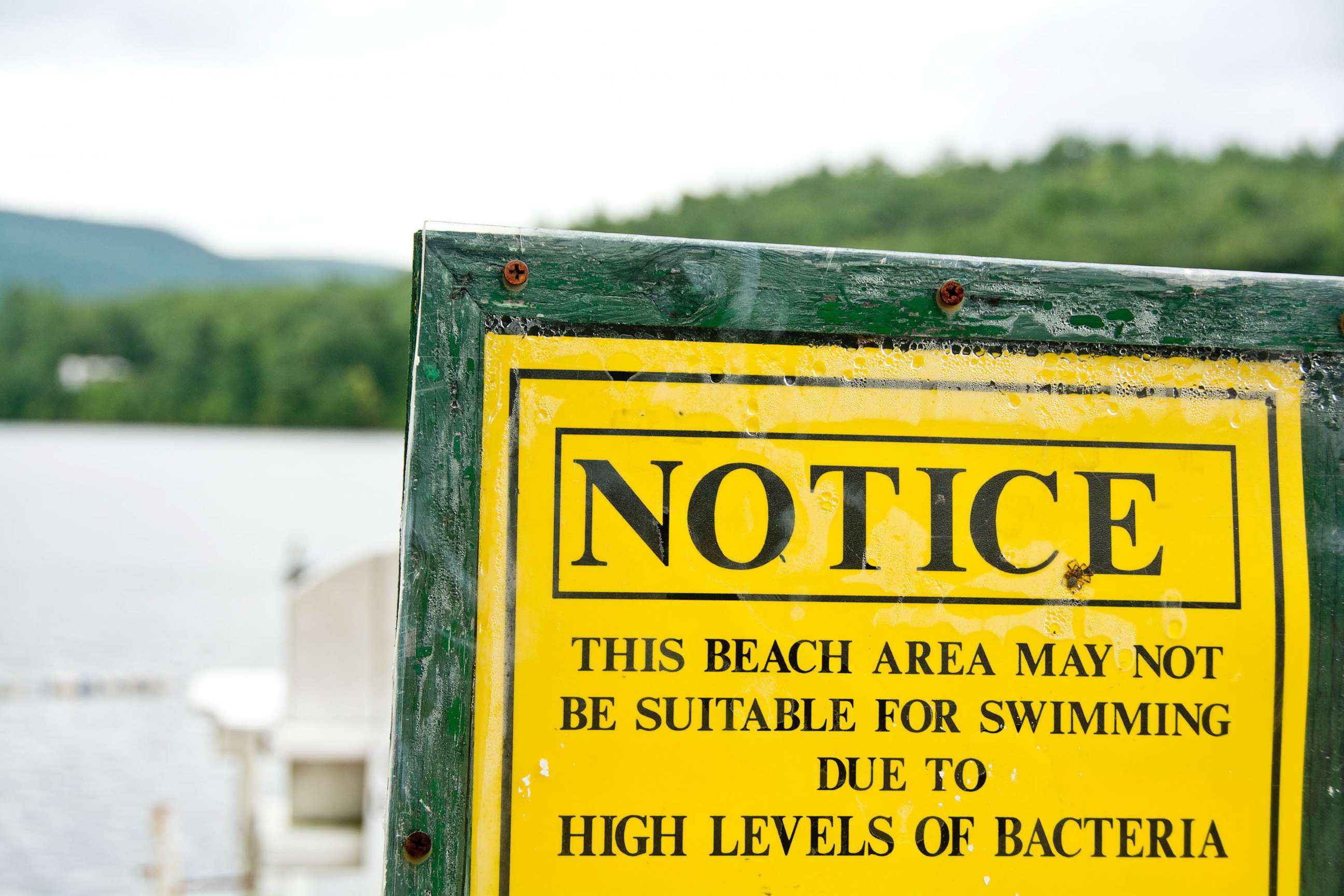
Dozens of beaches across Northeast closed for swimming due to high levels of bacteria in water

Beaches in several states across the Northeast have recently been closed to swimmers due to high levels of bacteria in the water.
Numerous beaches in Massachusetts, New Hampshire and Rhode Island were closed by public health officials due to unsafe water quality.
"When the water quality is unsafe, the beach is required to be 'posted' with a sign that indicates swimming is unsafe and may cause illness," the Massachusetts Department of Public Health wrote on its website.
More than 60 beaches were closed for swimming in Massachusetts after high levels of fecal bacteria were detected in the water, according to the department.
Heavy rainfall from recent storms that hit the Northeastern states may be one reason behind the high levels of human waste, experts said.
A large amount of water from rain or snow can run off the land and carry fecal matter into water at beaches, officials said. Additionally, it can lead to sewage systems overflowing, which can cause untreated sewage to reach nearby bodies of water.
"Water from rain or snowmelt can cause certain types of sewers to overflow if their capacity is exceeded," the Environmental Protection Agency states on its website. "Discharges from combined sewer overflows (CSOs) and sanitary sewer overflows (SSOs) contain a mixture of raw sewage, industrial wastewater and storm water, and have resulted in beach closings."
In Rhode Island, officials have been testing levels of enterococci bacteria, which live in the intestinal tracts of humans and are a sign of water contamination by fecal waste, according to the EPA.
Eight beaches across Rhode Island have closed over the past month after levels of these bacteria exceeded more than 60 colony forming units -- the number of bacteria cells viable to form a small colony -- per 100 milliliters in saltwater and freshwater.
Three beaches remain closed in Rhode Island as of Monday. The state Department of Health said it plans to monitor all beaches through Labor Day.
Additionally, nine beaches in Massachusetts are being monitored for high levels of cyanobacteria.
Cyanobacteria, often referred to as blue-green algae, are a type of bacteria often found in freshwater but can appear in salt water or brackish water, according to the Centers for Disease Control and Prevention.
The bacteria itself doesn't infect people but can produce toxins that make people sick.
The contaminated water can cause symptoms including headaches, stomach pain, dizziness, vomiting and diarrhea. It can also cause irritation of the skin, eyes, nose, throat and lungs.
Cyanobacteria can multiply quickly in warm waters that become rich in nutrients including from fertilizers and septic tank overflows, the CDC said.
Meanwhile, in New Hampshire, seven beaches were closed on Thursday due to "elevated bacteria levels" according to separate statements from the Wareham Board of Health and the town of Rye.
Health officials have not revealed what bacteria has contaminated the water or how widespread the contamination is.
As of Monday, three of the beaches have reopened but the others will remain closed with officials saying, "we want to ensure that the water quality is back to its pristine condition before we welcome you back."