US Hospitals Drill to Prep for Ebola But Real Outbreak Could Be Trickier
— -- As Ebola scares crop up around the country, hospitals nationwide are preparing for what to do if they find themselves face-to-face with the deadly virus.
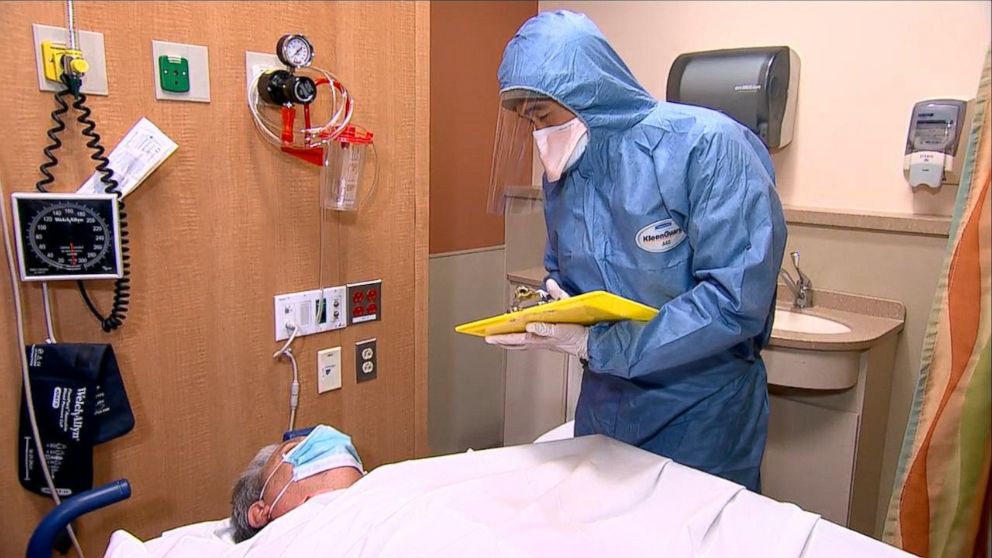
Some hospitals are sending memos to staff, and others are running all-out drills to make sure staff members know everything from how to identify possible Ebola patients to how to get out of protective gear without contaminating themselves.
"You have to be proactive," said Dr. Amesh Adalja, a health security and infectious diseases expert at the University of Pittsburgh Medical Center. "You don't want to be doing this on the fly."
Earlier this week, ABC News chief health and medical editor Dr. Richard Besser watched Morristown Medical Center in New Jersey conduct its own Ebola drill.
"Morristown Medical Center just started doing these drills after the event in Texas," Besser said, referring to the first diagnosis of an Ebola patient on American soil in late September. "Hopefully, it was a wake-up call for hospitals around the country. It was definitely a wake-up call here."
Though Besser said he saw a lot of good practices, he said he worries about the decontamination process. He called decontamination one of the most critical components of caring for Ebola patients because it ensures that health workers don't infect themselves with virus particles on their protective gear as they undress. In Liberia, this was overseen by trained hygienists who continually sprayed Besser down with bleach as he took off each layer of protective clothing and gear.
"In the decontamination room in New Jersey, they had a container of bleach wipes to use themselves," Besser said.
Margaret Goldberg, a spokesperson for the hospital, said in an email to ABC News that Morristown Medical Center used bleach wipes approved by the EPA to kill Ebola and it's possible that these wipes do not exist in Liberia, so they used actual bleach there.
Hospitals from New York to Iowa to California have conducted drills, many of them following guidelines from the U.S. Centers for Disease Control and Prevention. And while it's unlikely that most of them will ever encounter an Ebola patient in the flesh, experts say every little bit of preparedness helps.
For emergency room physicians, that means being quick to identify possible patients and isolate them quickly.
"We're all a little bit on edge because we've never seen it before," said Dr. Ryan Stanton, an emergency room physician in Lexington, Kentucky, and spokesman for the American College of Emergency Physicians. "Stuff we've seen before, like heart attack and stroke, we recognize as soon as we walk in the door. For Ebola, it's not going to come as naturally."
"It's not even needle in haystack," he went on. "It's a needle in hayfield we're going to find."
Dr. Irwin Redlener, who directs the National Center for Disaster Preparedness, said while there are only four hospitals "at a very high level of readiness" to care for patients with potentially lethal diseases like Ebola, many hospitals can care for a limited number of patients at a time.
The real problem would be an epidemic like SARS, for which he called U.S. hospitals "woefully unprepared," Redlener said.
"You only need to see what has happened to funding of the federal Hospital Preparedness Program, which was providing $515 million a year in 2003 and 2004, now cut back to approximately $250 million this year," he said. "That is simply insufficient to make sure that U.S. hospitals are ready for a large-scale bio disaster."
The Ebola scare may actually force the United States to rethink its preparedness, Redlener said, adding that he hopes to see "an immediate restoration" to the funding that was more than halved over the last 10 years.