Experts say elimination of monkeypox possible but containment still a challenge

There are early signs that new monkeypox cases are slowing down in the U.S.
Experts are optimistic that the virus can be completely eliminated from the U.S. While challenges remain, recent improvement in vaccination efforts could lead to complete elimination but it may take years, experts say.
“Elimination is going to become more challenging because you can imagine that even if we drive cases down, there's still going to be potentially sustained transmission,” said Dr. John Brownstein, an ABC News contributor and chief innovation officer at Boston Children's Hospital.
Public health efforts toward behavior modification and vaccination are showing reassuring results with only 78 new cases reported on Sept. 14. Since May, nearly 60,000 cases of monkeypox have been found in over 100 countries globally.
Historically, monkeypox has been found in 10 countries in central and western African, according to the World Health Organization (WHO). But in the spring of 2022, the virus began spreading in North America, Europe and other continents that historically haven't witnessed major, prolonged outbreaks.
“I think the goal is containment by continuing treating and educating,” said Dr. Richard Silvera, an associate program director of the Infectious Diseases Fellowship and assistant professor of medicine at the Icahn School of Medicine at Mount Sinai.
Monkeypox is rarely deadly but often has painful symptoms, including blisters and a rash. The virus primarily spreads through close contact, including hugging or touching someone with a rash.
To contain and hopefully eliminate the virus, experts believe it is important to monitor animals for monkeypox because animals can also carry the virus and pass it to humans.
“The way to eliminate it is to ensure that there's no domestic animal species that becomes a reservoir,” said Dr. Amesh Adalja, a senior scholar at Johns Hopkins Center for Health Security.
In previous testing efforts, several animal species have been found to be susceptible to the monkeypox virus. There is no confirmed reservoir for the virus and experts believe further studies and surveillance will be key in elimination and even global eradication.
"There's a lot to be encouraged by” but it’s “going to depend upon if we're able to contain this in the human population,” said Dr. Anne Rimoin, a professor of epidemiology at the University of California, Los Angeles.
In an effort to contain the global outbreak, the WHO released a public health advisory in July for gay, bisexual and other men who have sex with men. Anyone can get monkeypox but because the current outbreak affected this group first, it has continued to spread among men who have sex with men -- now the most at-risk population. The WHO is encouraging people to share only non-stigmatizing information from trustworthy sources in order to combat misinformation and help slow the spread.
Survey and vaccination data suggest that gay, bisexual and other men who have sex with men are largely aware of the monkeypox outbreak and taking steps to slow the spread of the virus. Rimoin said this is due to the group being “very willing to talk about things that are complicated.”
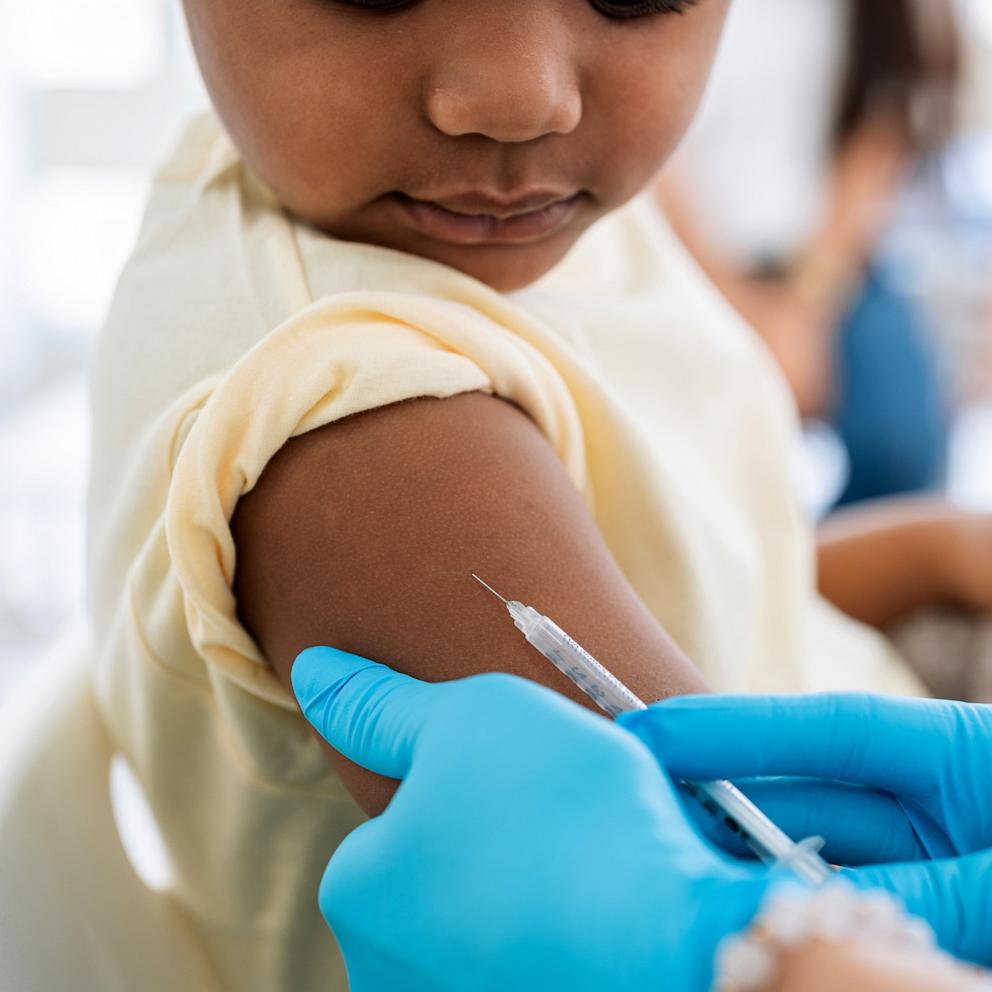
As of mid-September, the U.S. has vaccinated nearly 500,000 people against monkeypox.
“We must continue to aggressively respond using our entire toolkit, including vaccination, testing, and education about risk to inform behavior change," said CDC Director Rochelle Walensky.
Although many experts are cautiously optimistic about the outbreak in the U.S., others say it's possible monkeypox is here to stay.
“We're probably going to see monkeypox cases for years to come,” Brownstein said.
Shelbi A. Swyden, MD, is an emergency medicine resident at Wyckoff Heights Medical Center in Brooklyn, New York, and is a part of the ABC News Medical Unit.