Changes Found in Brain After Single Season of Youth Football, Study Finds
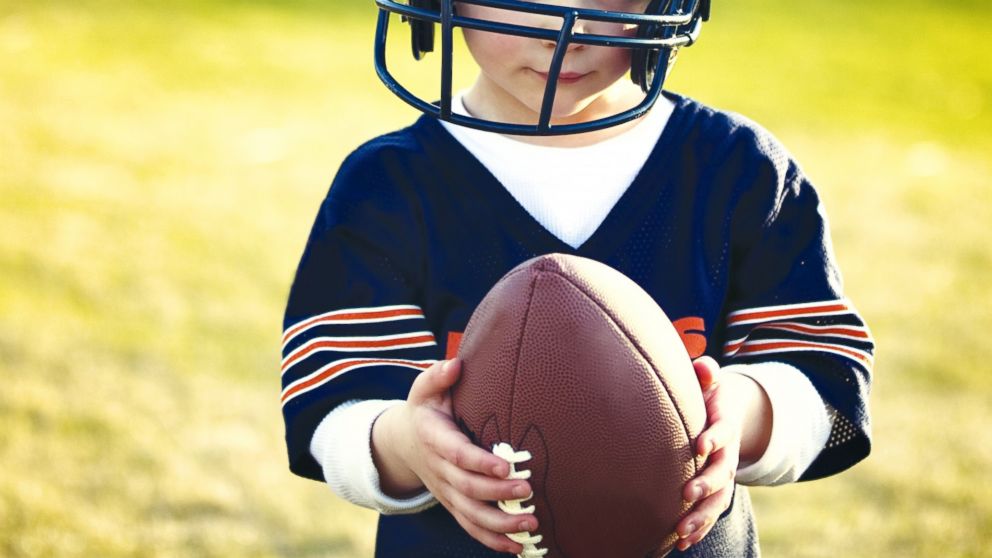
— -- Researchers have found evidence that even a single season of football may affect certain aspects of a young athlete's brain, according to a small study published today in the medical journal Radiology.
The study suggests that the cumulative effects of sub-concussive head impacts -- those that are not sufficiently forceful to cause a concussion -- might lead to detrimental brain changes in young players.
Researchers from multiple institutions, including Wake Forest School of Medicine, examined the brains of 25 participants in a youth football league to see if they could find any disruption in the brain after a single football season.
The long-term effects of head trauma are increasingly being studied by researchers as more and more former professional athletes have been found after their deaths to exhibit signs of CTE, or chronic traumatic encephalopathy. CTE is a degenerative disease that involves a buildup of the abnormal protein called tao, which is also found in dementia patients and is associated with a breakdown of brain tissue.
It's believed to be caused by repetitive trauma to the brain, especially concussions, according to the CTE Center at Boston University, and symptoms include memory loss, confusion, impulse control problems, aggression, depression, anxiety and progressive dementia.
In this study, researchers did not focus on CTE risk and instead looked for differences in the brain before and after a football season. All of the participants were male, between the ages of 8 to 13, and none had a concussion diagnosis during the study period.
The athletes used a special helmet with sensors that helped researchers determine the kind of force the players were exposed to during the season. Both practices and games were videotaped so that researchers could verify the force documented by the helmet sensors.
The players also underwent a neurological examination both before and after their football season using special MRI screening.
Using the advanced MRI screening called diffusion tensor imaging, the researchers looked for changes in the brain's white matter that would indicate a disruption in the brain. The imaging works by looking at how water molecules move in the brain along axons -- the nerve fibers that extend out of neurons -- and producing a measurement called fractional ansiotropy (FA). Healthy white matter will generally have more regular water movement, resulting in a higher FA score. If the water movement in the brain appears more random, the FA is lower, indicating disruptions in the brain, according to researchers.
The study found that the more a player was exposed to force during the football season, the more likely that person had a lower FA score, which has been associated with brain abnormalities in some studies.
"These changes had a strong relationship with the amount of exposure," said Dr. Christopher Whitlow, co-author of the study and chief of neuroradiology at Wake Forest School of Medicine in Winston-Salem, North Carolina. "And players with biggest change [in FA score] had the most exposure."
The study authors noted that the study is small and that more research needs to be done to verify the results. Additionally, a diminished FA score doesn't necessarily mean that a player will have any noticeable symptoms.
"There is more we don’t know about these changes than we do know," Whitlow told ABC News.
Whitlow said he and other researchers plan to follow players for a longer duration to see if these disruptions persist in the months to years after a person stops playing football.
Dr. Max Wiznitzer, a pediatric neurologist in the Neurologic Institute at University Hospitals Rainbow Babies and Children's Hospital, said that even though this study is small, it will be key to helping researchers understand the effects of football on the brain in coming years.
"Why do the study? Because you've got to start somewhere," Wiznitzer, who was not involved in this study, told ABC News. "You have to follow [players] over time and see where the data leads you."
Wiznitzer pointed out that it will be imperative to follow these athletes in the future to see if the imaging continues to show the diminished FA score.
"When you play football, there's going to be some trauma to the brain whether it's sub-clinical or clinical," Wiznitzer said, meaning whether it's able to be diagnosed or not. "We don't know if [these changes] go away the following year."
Dr. Maeve Gamble contributed to this report. She is an internal medicine physician at Western University in Ontario, Canada. She is also a resident in the ABC News Medical Unit.